
- Health Conditions A-Z
- Health & Wellness
- Nutrition
- Fitness
- Health News
- Ayurveda
- Videos
- Medicine A-Z
- Parenting
Trying To Get Fit In 2026? Here’s A 6-Step Weight-Loss Plan From A Fitness Coach

Credits: Canva
When it comes to losing weight, most people put all their energy into workouts and diet plans, often forgetting one crucial part of the process: mindset. How you think about fitness, food, and consistency plays a major role in whether weight loss feels like a struggle or becomes a sustainable habit. Shifting your approach can make shedding extra kilos feel more manageable and long-lasting.
If staying healthy and losing weight are the goals for the coming year, Raj Ganpath, a fitness coach with over 18 years of experience and the founder of The Quad in Chennai, shares six simple but effective principles to keep in mind. He outlined these points in an Instagram post on 29 December.
6-Step Weight-Loss Plan From A Fitness Coach
1. Eat Less
“You need to eat less,” Raj says plainly. However, he said that this does not mean starving yourself or cutting out all your favourite foods. Instead, it is about being mindful of portion sizes and recognising how often we tend to overeat without realising it. According to him, consistent overeating is one of the most common reasons people struggle to lose weight. Paying attention to how much you eat, even when the food is healthy, can make a noticeable difference over time.
2. Eat Well
Eating less alone is not enough if the quality of food is poor. Raj explains that eating well means choosing nutrient-dense foods that support your body. This includes prioritising protein, vegetables, and whole foods, while reducing items that offer little nutritional value. Sugary snacks, deep-fried foods, and heavily processed or starchy items may be comforting, but they do not help when weight loss is the goal. Making better food choices more often than not builds a strong foundation for fitness.
3. Exercise Regularly
Consistency matters more than intensity. Raj advises exercising at least three days a week, with an ideal range of five to six days if possible. The exact form of exercise is less important than showing up regularly. However, he stresses that strength training should be included at least twice a week. Building muscle supports metabolism and overall strength, making weight loss more effective and sustainable in the long run.
4. Move Often
Exercise sessions alone are not enough if the rest of the day is spent sitting. Raj encourages regular movement throughout the day, separate from structured workouts. Simple activities like walking more frequently can add up. He suggests aiming for at least 6,000 steps daily, with 8,000 or more being a better target. This kind of movement supports fat loss, improves circulation, and keeps the body active beyond the gym.
5. Sleep More
Sleep is often ignored, yet it plays a direct role in weight management. “Most of us don’t sleep enough,” Raj points out. Even going to bed 20 to 30 minutes earlier each night can help. He recommends a minimum of six hours of sleep, with seven hours being ideal. Proper rest supports hormone balance, recovery, and energy levels, all of which influence appetite, motivation, and workout performance.
6. Manage Stress
Stress is unavoidable, and Raj acknowledges that no one can live a completely stress-free life. What matters is how stress is handled. Managing stress allows you to stay consistent with healthy habits instead of turning to food, skipping workouts, or neglecting sleep. Whether it is through exercise, meditation, time outdoors, or personal downtime, finding ways to cope with stress is essential for long-term health and weight loss.
Diet And Exercise Works Together For Weight Loss
Weight loss is most effective when diet and exercise work hand in hand. Diet helps create the calorie deficit needed for fat loss, while exercise protects muscle mass, boosts metabolism, and improves heart and bone health.
Strength training is especially important because muscle burns more calories at rest. While diet controls calorie intake, exercise prevents muscle loss, which can otherwise slow metabolism. Together, they create a balanced and sustainable approach that supports lasting results, healthier habits, and reduced chances of regaining weight.
No Time for the Gym? Short Bursts of Intense Activity Daily May Cut Risk of 8 Diseases and Death

Credit: Canva
If you believe only gym workouts matter, you might be mistaken. While gyms offer a structured space to exercise, busy schedules often lead many to skip workouts—and feel guilty about it.
However, a new study suggests that even short bursts of vigorous everyday activity—such as running to catch a bus or climbing stairs quickly—can significantly reduce the risk of several major diseases and even lower the risk of death.
The research, based on nearly 96,000 people and published in the European Heart Journal, found that just a few minutes of intense activity each day was linked to a lower risk of:
- Major cardiovascular disease
- Irregular heartbeat
- Type 2 Diabetes
- Immune-mediated inflammatory diseases
- Liver disease
- Chronic respiratory diseases
- Chronic kidney disease
- Dementia
“We know that physical activity reduces the risk of chronic disease and premature death, and there is growing evidence that vigorous activity provides greater health benefits per minute than moderate activity,” said Minxue Shen from the Xiangya School of Public Health, Central South University, China.
Also read:Just Twice A Week At-home Resistance Training Enough To Build Muscle, Reveal New Guidelines
Longer Workouts or Intense Bursts?
To explore whether exercising more intensely offers greater benefits than simply exercising longer, the researchers followed 96,408 participants for seven years.
Each person wore a wrist-based accelerometer to track movement, including short bursts of activity often overlooked.
The findings showed that compared to those who did no vigorous activity, participants with the highest levels had:
- 63 percent lower risk of dementia
- 60 percent lower risk of type 2 diabetes
- 46 percent lower risk of death
“Our findings suggest that adding short bursts of activity that make you slightly breathless—like climbing stairs quickly or walking briskly between tasks—can have substantial health benefits,” Shen said.
“Even 15–20 minutes per week, just a few minutes a day, can make a meaningful difference,” the Professor added.
Also read: Exercising Could Make Your Brain Younger, Says Doctor
Is Vigorous Activity Safe for Everyone?
The World Health Organization (WHO) recommends that adults (18–64) perform at least 150–300 minutes of moderate-intensity aerobic physical activity, or 75–150 minutes of vigorous-intensity activity per week.
The new study suggests that intensity also plays a key role—and may vary depending on the disease being prevented.
The researchers noted that these findings could help shape more personalised exercise recommendations in the future. However, they cautioned that vigorous activity may not be suitable for everyone, particularly:
- Older adults
- People with certain underlying medical conditions.
IPL 2026: Rohit Sharma's Transformation Impresses Nita Ambani; Fitness Secrets Revealed

Rohit Sharma also smashed his fastest IPL 50 on Sunday against KKR.
IPL 2026 is back, and for fans of cricket, it is the most amazing and eagerly awaited time of the year. Eight exceptional teams, an incredible line-up of cricketing sensations from all over the world, and an unforgettable clash of titans — IPL deserves all the hype it gets. And after last night's incredible battle between Kolkata Knight Riders and Mumbai Indians, former captain Rohit Sharma also deserves all the hype he is getting. Not only did the Hitman score his fastest IPL 50, but he also managed to impress everyone with his transformation. Nita Ambani, Chairperson and founder of the Reliance Foundation and Dhirubhai Ambani International School, and a director of Reliance Industries (owner of the Mumbai Indians team too), was awestruck to see a fitter version of Sharma.
Read more: Checking BMI For Body Weight? It Can Wrongly Mark You As Overweight or Obese, Says Study
When Nita Ambani did not recognise Rohit Sharma
In a recent video shared on the Instagram page of Mumbai Indians, Nita Ambani is seen meeting the squad as they were training ahead of the 2026 IPL. As she encounters Sharma, she says, "My God, Rohit, I didn’t recognise you! You look like a young boy."
Rohit Sharma, now 38, will be turning 39 on April 30, but to a fan's eye, he seems to be ageing in reverse. On May 7, 2025, Sharma announced his retirement from Test cricket. Earlier in 2024, he announced his retirement from T20Is after the 2024 World Cup win. Since then, he has focused primarily on ODIs and, as it turns out, on becoming a fitter version of his current self.
Read more: Exercising Could Make Your Brain Younger, Says Doctor
A fitter Rohit Sharma since retirement
Rohit Sharma smashed an impressive 78 off 38 balls in last night's match against KKR, and perhaps his success can be credited to his recent transformation. His physical transformation took place ahead of the Vijay Hazare Trophy, and he lost an impressive 11 kilos before returning to the game. But what his fans loved most is that he was never really lagging because of the extra weight — he was always fit, quick and proactive, but now he is a lot leaner on the outside. How did the former skipper achieve this goal? Let’s find out:
- Hydration: For Sharma, fitness has to start with hydration, and this involves drinking plenty of water throughout the day in various forms — protein shakes, green tea and carrot juice.
- High-protein meals: According to TheHealthSite, Sharma switched to a high-protein diet, which is one of the most important steps in a weight-loss journey. This means foods like eggs, oats, legumes, millet rotis, brown rice, grilled chicken and salads dominated his diet routine.
- Workout regime: A workout regimen need not be about the kind of exercise one does, but also the timings. Reports suggest that Sharma kick-started his days with 30 minutes of cycling, followed by a core workout. And the best part — he relied on morning workouts for optimal results, as during the early hours of the day, scientists say it is the best time to break a sweat.
Cardio workouts like interval training, running and cycling help build stamina and endurance — these help ensure peak performance during stressful matches.
Checking BMI For Body Weight? It Can Wrongly Mark You As Overweight or Obese, Says Study
Credit: iStock
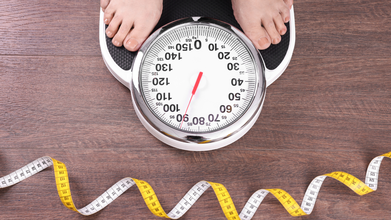
Long considered a standard tool for assessing body weight, Body Mass Index (BMI) may not be as reliable as once believed. A new study shows that relying on BMI can incorrectly classify people as overweight or obese.
When a team of Italian researchers used the gold standard technique of dual-energy X-ray absorptiometry (DXA) to measure body fat in the general population, they found that the traditional WHO-approved BMI classification system misidentified a significant number of people as having overweight or obesity.
Also Read: Abdominal Obesity Greater Risk Factor For Indians, says Dr. Jitendra Singh
How Is The BMI Wrong?
A total of 1,351 adults of mixed gender aged between 18 and 98 years were checked for their body weight using the DXA system.
The results, published in the journal Nutrients, revealed that more than one-third (34 percent) of those with obesity defined by BMI had been misclassified and should be in the overweight category.
For those with an overweight BMI, DXA showed that more than half – 53 percent – had been misclassified – three quarters of those misclassified fall into the normal weight category, while the other quarter should have been classified as having obesity.
Also read: IPL 2026: Rohit Sharma's Transformation Impresses Nita Ambani; Fitness Secrets Revealed
The DXA analysis found that the prevalence of overweight and obesity across the cohort was around 37 percent overall (23.4 percent overweight, and 13.2 percent obesity, compared to 26.2 percent and 14.1 percent with BMI).
“In the past few years, there has been a lot of criticism of the BMI system due to its inability to accurately capture body fat percentage or distribution, to correctly categorise weight status based on adiposity,” said Professor Marwan El Ghoch, of the Department of Biomedical, Metabolic and Neural Sciences, University of Modena and Reggio Emilia, Modena, Italy.
Despite these concerns, BMI as a weight classification system continues to be used in the general population in primary healthcare (i.e., general practitioners) and non-clinical (i.e., policy and health insurance) settings, he added.
The researchers urged revising public health guidelines to consider combining direct body composition or their surrogate measures, such as skinfold measurement or body circumference, with the waist-to-height ratio, with BMI, while assessing weight status in the general population.
Waist-to-Height Ratio May Be More Accurate: The India Story
In January 2025, India revamped its obesity guidelines, and the new approach focused on abdominal obesity and comorbid diseases, rather than just BMI.
According to the redefining team, it was essential to move beyond BMI-only approaches to tackle the ever-growing number of people related to other major health risks. They stated that while BMI can be a screening tool, obesity must be defined by body fat.
“BMI should be used for screening purposes, but obesity should be confirmed ideally by a measure of body fat wherever feasible, or another measure such as waist circumference, WHR, or Waist-to-height ratio,” Dr. Naval Vikram, Professor of Medicine, at AIIMS, New Delhi, was quoted as saying to IANS at the time.
Also read: 41 million children aged 5-19 living with high BMI in India: Study
What Do The New Guidelines Say
It recognizes abdominal fat — closely linked to insulin resistance — as a key factor in the diagnosis. It integrates the presence of comorbidities — such as diabetes and cardiovascular disease — into the diagnostic process.
The revised guidelines also introduce a two-stage classification system, addressing both generalized and abdominal obesity.
Stage 1 Obesity: Increased adiposity (BMI > 23 kg/m²) without apparent effects on organ functions or routine daily activities.
Stage 2 Obesity: Advanced state of obesity with increased BMI more than 23 kg/2, and abdominal adiposity; excess Waist Circumference or Waist-to-Height Ratio.
- Follow Us :


© 2024 Bennett, Coleman & Company Limited