
- Health Conditions A-Z
- Health & Wellness
- Nutrition
- Fitness
- Health News
- Ayurveda
- Videos
- Medicine A-Z
- Parenting
Ultra Marathoner Sufiya Sufi Runner: The Woman Who Set 5 Guinness World Records

Credit: Instagram/Sufiya Sufi Runner
Sufiya Sufi Runner grew up in Ajmer, Rajasthan and dreamed of becoming a part of the aviation industry. After spending years studying and training, she began working at the Indira Gandhi International Airport, Delhi in 2008.
However, life had different plans for her and after spending a decade working long nights at her dream job, Sufiya began to feel like her life had turned robotic and started looking for outlets for her frustration.
Soon after, the now 40-year-old who lives in Manali, discovered running and starting attempted 3km runs in her local park to channel her energy and gain fresh perspective.

Talking about how she found motivation to begin, she exclusively told Healthandme: "I believe that sometimes, frustration pushes people more than motivation to do something in life. That’s exactly what happened to me. After working night shifts for nearly a decade, I felt that my life had become robotic. I wasn’t able to take time out for myself, and my health was declining.
"I felt the need to break out of that daily routine, both for my fitness and to divert my mind. So I decided to start running a little in a nearby park. I chose running because it’s a sport that doesn’t require much equipment or preparation. I began by running three kilometers in the park, and slowly, it turned into my passion. I started enjoying it more and more."
As she continued to gain pace, Sufiya began participating in marathons across Delhi and soon moved on to participating in ultra-marathons. While marathons have a limit on the distance to be covered, ultra-marathons can stretch for endless kilometers.
"I wanted to experiment with many things. I wanted to explore different places and understand whether the so-called human limits, of our body and mind, actually exist or not. To test this, I kept taking on new challenges," she told the publication.
The first ever ultra marathon Sufiya wanted to attempt was the Golden Triangle Run, covering 700 kilometres across Delhi, Agra, and Jaipur which she managed to cover in 18 days.
She said: "It was a test run for me. I wanted to see what impact running 40–50 kilometres daily would have on my body, and how running across different terrains would affect me. It was all an experiment for me."
Fueled by success, Sufiya decided to attempt running from Kashmir to Kanyakumari (K2K) in 2019 - a feat that forced her to quit her aviation job and commit to her passion full-time.
But without thinking twice, the ultra-marathoner gave up on her lifelong dream and began training for one of the longest runs in her career which she completed in 87 days, including a five day stay at a local hospital after her lung collapsed due to an infection.

However, despite successfully running the length of the country, her crowning achievement is the latest Guinness World Record she set for the Fastest Run from Manali to Leh in 98 hours and 27 minutes, breaking her own previous record by more than 15 hours and setting a new record.
Sufiya said: "The Manali–Leh route is among the toughest routes in the world, with high altitude passes and extremely tough terrain.
"My first attempt was in 2021 and it took me 156 hours. I was new to mountain running. Training on plains doesn’t prepare you for mountains unless you acclimatize properly. Although I set the record, I wasn’t satisfied, I felt I could do better.
"In 2023, I attempted it again. My first attempt that year took 113 hours, but I had a stomach infection. Even though the record was broken, I wasn’t satisfied. So the very next week, I started again and completed the distance in 98 hours and 27 minutes.
What makes this feat even more remarkable was her choice to take not just the main roads but also extreme mountain trails, pushing her limits and making the
run significantly more demanding.
What Does Her Training Look Like?
When asked what a typical day of training look like for her, Sufiya noted that she usually alters her exercises and diets depending on her next project and the kind of terrain she'll be running on.
What remains consistent are her yoga sessions and breathing workouts . Breathing workouts, or breathing exercises, improve lung function, reduce stress and promote relaxation.
Techniques like diaphragmatic (belly) breathing, box breathing (4-4-4-4), and 4-7-8 breathing focus on slow, deep inhalation and controlled, prolonged exhalation. Practicing these for 5-10 minutes daily can also lower blood pressure and anxiety.
Apart from this, she also maintains a healthy balance between running drills and training runs as well as strength and core training. Additionally, Sufiya also undergoes a long run every week.
However, for her Manali to Leh ultra-marathon, training alone wasn't enough and she had to adapt herself to the cold and rough terrain. "For my final attempt, I moved to Manali six months in advance, trained there, then spent 40 days in Ladakh training at high-altitude passes," she said.
Along with this, she strictly focuses on her daily protein intake and hydration, noting that coconut water is her favorite drink. For an adult with a healthy weight, the recommended daily amount of protein is 0.75g per kg of body weight per day. That's about: 45g a day for a 60kg woman.
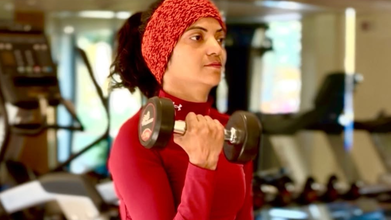
The Five Time Guinness World Record Holder's Advice For Beginner Runners
Talking about the rise in running culture in young Indians, she told the publication: "It actually makes me very happy to see people getting into running, because I think after COVID people have understood how important fitness really is. Things can stay the same in life, but if you are not healthy, you will have to face many challenges ahead. If you can’t work with a healthy body and a healthy mind, I don’t think you can give your hundred percent to anything. I feel people have realized this now.However, she also noted that it is important for runners to not be engrossed in buying multiple new gadgets and merely stick to the classics to maintain mental focus.
"I don’t rely too much on gadgets, because I feel that when you run, too many gadgets disturb your peace. For example, if you’re running with a watch on your hand, a running watch, you keep looking at it again and again, your heart rate, your pace, and somewhere it distracts your mind and creates stress. I do use a watch too.
"There comes a point where you feel that you really don’t need so many gadgets. Sometimes it feels like it’s perfectly fine even without a watch on your wrist. There’s a moment when all these things start to disturb you—too much," she said.
For beginners, Sufiya recommends to always start small and not rush into big distances out of excitement. She also advises practicing meditation, yoga, and staying positive to build a strong mindset.
"For beginners, this is what I would like to say, always start small. I want to say that I started my running journey very small too. It wasn’t like one day I suddenly decided to run and tied my shoelaces and stepped out.
"Any sport, like a form of tapasya (discipline), takes a lot of time, to build your body, strengthen your muscles, and develop the right mindset. So always increase your running gradually. What happens otherwise is that when you suddenly try to cover long distances just out of excitement, there’s passion but no preparation—injuries become inevitable. You push yourself too hard, get injured, and then end up sitting out for three or four months.
"So I think you should start gradually, and patience is extremely important in this journey. These days there is so much competition that people change their game by looking at others and lose focus. I think that’s something you really need to avoid. Stay positive, practice meditation, do yoga, because these things help you immensely in your sport.
"This is my message to everyone.”
Why Just Walking, Skipping Sugar May Not Help Lower Diabetes and BP: Doctors Explain

Credit: Canva
For many working professionals, going to the gym often feels like a luxury. Their days begin early and end late—rushing for buses and metros, juggling deadlines, presentations, meetings, and endless reports.
So when they are diagnosed with conditions like diabetes or high blood pressure, the most practical and affordable option left is walking. Another common step is cutting down on sugar in tea and coffee. While these are good starting points, these may not be enough.
Calling them "most frustrating", Dr. Sudhir Kumar, Neurologist at Apollo Hospital, Hyderabad noted that such "patients are losing a battle they think they are winning".
"Every day, I see patients with obesity, Type 2 Diabetes, or hypertension who tell me: 'I walk every morning, Doctor'. 'I do all the household work.' 'I have stopped adding sugar to my tea'," said Dr Kumar, in a post on social media platform X.
He also cited these as "dangerous health misconceptions", wherein the patients feel they have done their part, but "their blood work and body composition tell a different story".
Popularly known as the Hyderabad doctor on X, the noted neurologist shared some evidence-based reality of why "walking and quitting sugar" may not be enough.
Several studies have pointed out that walking or undertaking household chores is better than a sedentary behavior. However, neither can be a "substitute for strength training", Dr. Kumar said.
Although walking can burn a few calories, "strength training builds the 'engine' that burns glucose even while you sleep".
"If you are not lifting weights or doing resistance training at least twice a week, your insulin resistance will likely persist, regardless of your step count", he said.
Speaking to HealthandMe, Dr. Manisha Arora, Director - Internal Medicine at the CK Birla Hospital, Delhi, explained that cutting sugar and walking are good first steps, but they do not solve the problem of diabetes and high blood pressure.
"Insulin resistance, inflammation, and loss of muscle all contribute to these diseases. Light walking may help, but the intensity and duration of exercise are also important," he added.
What Is Strength Training?
Strength training exercises force muscles to contract against an external force, such as body weight, dumbbells, or bands. Common examples include
- squats,
- lunges,
- step-ups,
- push-ups,
- planks.
Strength training helps
- Decrease insulin resistance
- Lower blood pressure
- Improve cognitive function
- Reduce systemic inflammation
- Protect against neurodegenerative diseases like Alzheimer’s.
Focus On Protein Leverage
Dr. Kumar further mentioned the diet trap that most people fall into, that is., cutting out sweets and sugar, while loading up the plate with carbohydrate-rich foods such as rice, roti, and poha — 80 percent — and zero protein content.
"Refined carbohydrates (even without added sugar) spike insulin similarly to sugar," he said, calling "no sugar as the bare minimum".
The doctor noted that "a protein-deficient diet can lead to muscle loss and increase hunger".
To lower blood sugar levels, the experts urged to cut down on other foods, such as
- refined carbohydrates,
- processed foods,
- low-fiber foods.
"Focus on protein leverage. Prioritize 1.2g to 1.5g of protein per kg of body weight. When you hit your protein goals, your craving for carbs naturally drops," Dr. Kumar said.
To see the real change in blood sugar and BP levels, he advised people to "add two days of resistance training (bodyweight, bands, or weights)", instead of "just walking",.
The neurologist also recommended "starting the meal with protein paneer, eggs, sprouts, lean meat, and to eat carbs last, and in smaller portions".
In addition, a diet high in protein and fiber from whole grains, fruits, and nuts can also help control blood sugar levels.
"The most successful approach to controlling blood sugar results from combining aerobic exercise with strength training, along with balanced nutrition," said Dr Arora.
Why 'Normal Weight' Doesn’t Always Mean Healthy

Credit: iStock
We often assume that having a “normal weight” automatically means being healthy. While body weight is an important parameter, it represents only a small part of overall health. True health is far more complex than what a number on the weighing scale can convey.
Understanding The Limitations Of BMI
Body Mass Index (BMI) is widely used to classify individuals based on their weight relative to height. However, it does not differentiate between fat and muscle. As a result, someone may fall within the normal BMI range yet still have high body fat and low muscle mass, a condition known as “normal weight obesity.” Such individuals may appear healthy but remain at risk for metabolic disorders.
Why Is Body Composition Important?
Body composition analysis offers deeper insight by evaluating fat, muscle mass, and their distribution in the body. A combination of low muscle mass and excess body fat, especially around internal organs, can increase disease risk, even when overall weight appears normal.
The role of fat distribution:
All body fat is not the same. Where fat is stored matters significantly. The waist-to-height ratio is now considered a more reliable indicator than BMI, as it reflects fat distribution. A ratio above 0.5 is associated with a higher risk of conditions such as type 2 diabetes, cardiovascular diseases, and even increased mortality.
Looking beyond numbers:
Health cannot be defined by numbers alone. Factors like physical activity, nutrition, stress levels, and sleep quality play an equally critical role. Even individuals with a normal weight can experience poor metabolic health due to inadequate sleep or chronic stress.
The bigger perspective:
Good health is not just about appearance or weight, it is the result of multiple factors working together. It reflects a balance between internal processes and external lifestyle choices.
In essence, being of normal weight does not necessarily mean being healthy. To truly stay well, it is important to look beyond weight and consider the broader picture of health.
US Basketball Star Luka Doncic Suffers Hamstring Injury, To Undergo Treatment In Europe

Credit: Canva/Instagram
Los Angeles Lakers star Luka Doncic is set to fly to Europe to seek specialized treatment on his Grade 2 left hamstring strain, according to a media report.
Doncic suffered the injury during Thursday's 134-96 loss to the Oklahoma City Thunder.
Though Grade 2 hamstring strains typically involve a monthlong recovery process, Doncic is motivated to return to theLakers' lineup during the playoffs -- which is a shared goal for Austin Reaves, who is out because of a Grade 2 left oblique muscle injury, the basketball player’s agent Bill Duffy told ESPN.
What Is A Hamstring Strain
Hamstring muscles power a player’s acceleration. Sudden bursts of speed without adequate flexibility or strength can cause a strain. It can be a pull, a partial tear, or a complete tear.
Symptoms include:
- Sudden Sharp Pain
- Physical Sensations
- Physical Changes
- Reduced Mobility
Prevention includes stretching, foam rolling, and strengthening exercises like deadlifts, leg curls, and bridges.
Hamstring strains are graded according to their severity. A grade 1 strain is mild and usually heals readily; a grade 3 strain is a complete tear of the muscle that may take months to heal.
Also read: For How Long Should You Be Able To Hold A Plank In Your 20s?
What Are The Common Injuries In Basketball?
Basketball players are more likely to get hurt during matches than during training, with risks coming from tackling, sprinting, twisting, jumping, or even repeating the same movements until fatigue sets in. Collisions, poor conditioning, or re-injuring a previously weakened area can also contribute.
Sprained Ankle
Quick changes of direction and uneven surfaces make ankle sprains one of the most common basketball injuries. This happens when the ankle rolls inward or outward, overstretching the ligaments.
Protect, Optimal loading, Ice, Compression, Elevation, and avoid HARM factors: Heat, Alcohol, Running, Massage, in the first three days.
Groin Strain
Twisting, kicking, or rapid directional changes can strain the inner thigh muscles, also known as adductors.
Prevention is through regular stretching and strengthening exercises such as side lunges and adductor side bridges.
ACL Injury
The anterior cruciate ligament is critical for knee stability. Injuries often occur when the lower leg stays planted while the upper leg twists, during tackles, or awkward landings.
Mild sprains may heal with physiotherapy, but severe tears often require surgery. Persistent swelling or pain should be checked by a professional.
Preventing Basketball Injuries
- Strengthen lower limbs with exercises like squats, lunges, and calf raises.
- Warm up with dynamic stretches and sport-specific drills.
- Cool down after matches to aid recovery.
- Wear proper gear, including fitted boots and shin guards.
- Stay hydrated, eat well, and rest between games.
- Follow Us :


© 2024 Bennett, Coleman & Company Limited