
- Health Conditions A-Z
- Health & Wellness
- Nutrition
- Fitness
- Health News
- Ayurveda
- Videos
- Medicine A-Z
- Parenting
Yoga For Sciatica: 9 Asanas To Relieve Pain Naturally To Improve Mobility
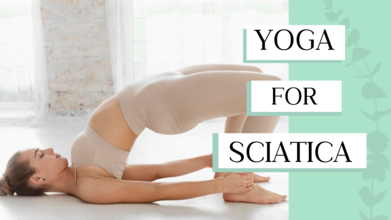
Sciatica is a condition characterized by pain that radiates along the sciatic nerve, typically affecting one side of the body. This pain can range from mild discomfort to severe, debilitating pain that interferes with daily activities. Conventional treatments often involve medication, physical therapy, or in severe cases, surgery. However, many individuals seek alternative, non-invasive approaches to relieve sciatica.
Yoga has emerged as an effective method for managing and alleviating sciatica pain. Certain yoga poses can improve flexibility, reduce inflammation, and strengthen the muscles that support the spine, offering long-term relief from sciatica.
Yoga’s holistic nature makes it particularly beneficial for sciatica relief. Unlike other forms of exercise that might strain the body, yoga gently stretches and strengthens the muscles, promoting overall wellness. The mindfulness and breathing techniques integral to yoga can help manage the stress and tension that often accompany chronic pain, creating a more balanced and relaxed body.
Knowing the connection between yoga and sciatica relief is essential for those seeking non-invasive pain management options. Simply by targeting the muscles and nerves associated with the sciatic region, yoga can significantly reduce pain and improve quality of life.
Yoga Poses for Sciatica Pain Relief
Yoga offers a natural way to relieve sciatica by focusing on flexibility, strength, and balance. The key to using yoga for sciatica lies in selecting poses that target the lower back, hips, and hamstrings—areas commonly affected by sciatic pain. When practiced regularly, these poses can help ease tension in the muscles surrounding the sciatic nerve, reducing pain and preventing future flare-ups.
1. Child's Pose- Balasana
This gentle stretch helps relieve tension in the lower back, hips, and thighs. It’s an excellent starting point for those new to yoga, providing a safe and calming way to stretch the spine and reduce sciatic discomfort.
2. Downward-Facing Dog- Adho Mukha Svanasana
This pose helps stretch the hamstrings and lower back, which can alleviate pressure on the sciatic nerve. It also improves overall body alignment and strengthens the core muscles, offering support to the spine.
3. Pigeon Pose- Eka Pada Rajakapotasana
Pigeon pose deeply stretches the piriformis muscle, which is located near the sciatic nerve. Tightness in this muscle can contribute to sciatic pain, making this pose particularly effective in providing relief.
4. Cobra Pose- Bhujangasana
By gently arching the back, Cobra pose strengthens the spine and opens up the chest, helping to relieve pressure on the sciatic nerve. It also promotes flexibility in the lower back, which can prevent future sciatic pain.
5. Knee-to-Chest Stretch- Apanasana
This pose stretches the lower back and hips, providing relief from sciatic pain by gently easing tension in the lumbar region. It’s a simple yet effective stretch that can be done anywhere, making it easy to incorporate into a daily routine.
6. Seated Forward Bend- Paschimottanasana
This pose stretches the entire back of the body, including the hamstrings, which can become tight and exacerbate sciatic pain. By elongating the spine, it also helps reduce pressure on the sciatic nerve.
7. Bridge Pose- Setu Bandhasana
Bridge pose strengthens the lower back, glutes, and hamstrings, helping to stabilize the spine and reduce sciatic pain. It’s also beneficial for improving overall core strength, which is crucial for spinal health.
8. Reclining Hand-to-Big-Toe Pose- Supta Padangusthasana
This pose stretches the hamstrings and calves while gently strengthening the lower back. It’s particularly useful for relieving sciatic pain that stems from tight hamstrings.
9. Half Lord of the Fishes Pose- Ardha Matsyendrasana
This seated twist helps to stretch the spine and massage the abdominal organs, promoting spinal flexibility and relieving tension in the lower back. It’s an excellent pose for improving mobility and reducing sciatic pain.
Regularly practicing these yoga poses can significantly reduce sciatica pain and discomfort. It’s important to approach yoga mindfully, listening to your body and avoiding poses that cause pain or discomfort.
Are Abs And Core The Same Thing?
Credits: Canva
You must have heard people say, "Tighten those abs!' "Engage you core!" However, have you ever wondered what it really means? Are they the same thing? Is there a difference?
While "abs" and "core" tend to be used synonymously, the reality is that one is simply the exposed tip of the iceberg and the other, a dynamo driving your whole body's power and stability. Whether you're after a six-pack or just want to move with less pain and more power, knowing how your abs differ from your core might entirely overhaul how and why you train.
Although these terms are thrown about as if synonymous, they literally address different muscle groups with redundant but unique functions. And understanding the distinction might change how you train entirely not only for looks, but for functionality, posture, and strength in general.
You must have heard people say, "Tighten those abs!' "Engage you core!" However, have you ever wondered what it really means? Are they the same thing? Is there a difference?
While "abs" and "core" tend to be used synonymously, the reality is that one is simply the exposed tip of the iceberg and the other, a dynamo driving your whole body's power and stability. Whether you're after a six-pack or just want to move with less pain and more power, knowing how your abs differ from your core might entirely overhaul how and why you train.
Although these terms are thrown about as if synonymous, they literally address different muscle groups with redundant but unique functions. And understanding the distinction might change how you train entirely not only for looks, but for functionality, posture, and strength in general.
Abs vs. Core: What's the Real Difference?
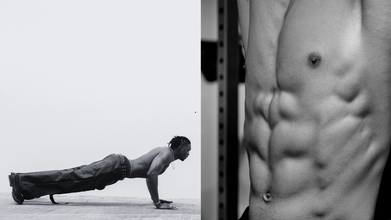
Most everyone has an idea of what abs are when they hear the term, it's all about that coveted "six-pack." But abdominal muscles are more than vanity points.
These are the rectus abdominis (for the six-pack appearance), the external obliques and internal obliques (for side bending and twisting), the transversus abdominis (lowermost layer stabilizing the spine), and the pyramidalis (a small muscle located close to the pubic bone).
Found in the front of your body, these muscles assist in the protection of internal organs, aid in posture, and create forward bending and twisting actions.
Visualize your core as the inner strength system of your body. It's not just the abs a larger, more comprehensive area that encompasses pelvic floor, diaphragm, back extensors, obliques, and even hip flexors. The core stabilizes your entire trunk, supports your spine, and facilitates coordinated movement. Whether lifting groceries or marathoning, your core provides balance and injury protection.
So while abs are part of your core, a solid core is so much more than toned midlines—it's your body's anchor.
Why Engaging Your Core Matters More?
If you’ve ever heard a trainer say “engage your core” and wondered what it really means, here’s the truth: core engagement isn’t just about tensing your stomach. It's about bracing your midsection in a way that stabilizes your spine without holding your breath or excessively sucking in.
Done right, activating your core during workouts:
- Reduces strain on the lower back
- Protects joints and ligaments from injury
- Improves posture and balance
- Improves control and efficiency in movement
Most individuals unconsciously overcompensate by hinging backward at the hips or holding their breath—errors that can diminish the efficiency of a workout as well as heighten the risk of injury.
Pro tip: You ought to be able to breathe naturally while keeping a solid, braced core.
5 Highly Effective Ab Exercises
When exercising specifically for the abs, these exercises isolate the front abdominal wall and obliques:
Bicycle Crunches
One of the best exercises to work both the obliques and rectus abdominis. Lie on back, legs up to tabletop, and rotate opposite elbow to knee in pedaling motion.
Leg Raises
Works lower abs. Lie on your back, hands under your hips, and lift legs up to 90 degrees slowly, then return without contact with floor.
Russian Twists
Ideal for the obliques. Sit, lean back somewhat, raise feet (optional), and twist torso side to side holding a weight or medicine ball.
Reverse Crunches
Begin on your back, knees bent. Contract abs in order to lift hips off the ground while curling knees toward your chest.
Flutter Kicks
Lie on your back, raise both legs off the floor a few inches, and alternate kicking up and down. Keep your core tight the entire time.
These exercises are best for developing definition and endurance in your abdominal muscles—but don't begin and end there.
5 Highly Effective Core Exercises
To get your entire core stronger, from back to hips to pelvic floor, these compound exercises are the key:
Plank Variations
From forearm to side planks, this isometric exercise uses every muscle in the core. Maintain hips level, spine neutral, and core braced.
Dead Bugs
Lie on back with arms and legs up. Lower opposite leg and arm slowly while keeping back flat. Works deep stabilizers.
Bird-Dog
On hands and knees, reach out opposite arm and leg. Great legs, lower back, and core stability exercise.
Glute Bridge with March
Lift hips up into a bridge, then alternate marching one foot at a time. Targets glutes, core, legs, and pelvic stabilizers.
Pallof Press
With a resistance cable or band, press hands straight out from chest resisting twisting. One strong anti-twist core exercise.
These training methods cause your body to function as a functional unit. Outcome? Less injury, improved posture, and enhanced performance in sports and everyday activity.
Should You Train Abs and Core Separately?
It all depends on your aim. If your main target is visual definition, ab-specific training along with proper nutrition and cardio is the priority. But for overall strength and spine development, incorporating core exercises into your regimen is not negotiable.
Your ideal weekly training schedule should have a balanced combination of both isolated ab exercises and compound core exercises. Isolated ab movements support the development of muscular endurance and play a role in visible muscle definition, especially in the rectus abdominis—the traditional "six-pack" muscle.
At the same time, compound core training addresses deeper stabilizing muscles that translate to overall strength, mobility, and spinal stability.
This integrated training not only enhances gym performance but also prepares your body to execute daily movement with more ease and efficiency. Knowing the distinction between abs and the core changes the way you train. It's not all about crunches—it's about developing a strong, functional center that stabilizes your whole body.
When you train for more than just looks and with core integrity, you minimize injury risk, enhance athletic performance, and feel stronger in day-to-day movements. So the next time you roll out on the mat, remember: engaging your abs is awesome, but strengthening your core? That's how you fuel your life.
Your Gym Weights Have More Bacteria Than A Toilet Seat

Credits: Canva
We walk into gyms thinking about gains. Stronger muscles, better stamina, maybe even that perfect mirror selfie. Everything looks clean, polished, and professional. But beneath that shiny surface lies an uncomfortable truth.
Studies reveal something alarming. Dumbbells can harbor 362 times more bacteria than a toilet seat, while fitness bikes may carry 39 times more bacteria than restaurant self-service trays. It sounds shocking, but the numbers tell a clear story. Your workout zone might also be a microbial playground.
Why Gyms Become Bacteria Hotspots
Gyms create the perfect environment for germs to thrive. Think about sweat, shared equipment, warm temperatures, humidity, and dozens of people rotating through the same machines every day.
Every time someone grips a dumbbell, lies on a mat, or adjusts a treadmill setting, they leave behind sweat, skin cells, and natural body oils. Multiply that by multiple users in just a few hours, and you have an invisible layer of bacteria building up.
Dr. Susheela Chaurasia, Consultant Microbiologist at Wockhardt Hospital, explains that gym equipment has several small crevices and surfaces that trap moisture and organic material. These warm and moist conditions create an ideal breeding ground for bacteria, viruses, and fungi.
Among the most common culprits found in gyms are Staphylococcus aureus, commonly known as staph, which causes skin infections, and Pseudomonas aeruginosa, which thrives in damp areas like locker rooms and can trigger respiratory or urinary tract infections.
Even with routine cleaning, high-touch surfaces remain vulnerable because equipment is constantly being reused.
When Workouts Come With Unwanted Side Effects
Have you ever returned home from the gym with an unexplained rash or irritation? It may not just be coincidence.
When you exercise, your pores open up and your immune system temporarily shifts focus. This can make it easier for bacteria to enter through tiny cuts, abrasions, or hair follicles. Wearing damp gym clothes for too long can also encourage fungal infections and skin irritation.
Frequent exposure to contaminated surfaces may increase the risk of recurring skin conditions, joint infections, or respiratory issues, especially in people with lower immunity.
It is not just gym members who are exposed. Trainers, staff, and cleaning crews operate in the same microbial environment daily. This increases the possibility of bacteria circulating within the space.
Read: Fact Check: Is Weight Lifting Safe for Teens?
Hygiene Is Your First Line of Defense
The good news is that you do not need to cancel your membership. You just need to be more mindful about hygiene.
Start with simple habits. Always wipe equipment before and after use. Use your own towel or mat to create a barrier between your skin and shared surfaces. Avoid touching your face during workouts. Wash your hands thoroughly once you are done. Change out of sweaty clothes immediately after exercising.
Experts stress that disinfection is more effective than basic sanitization when it comes to gym equipment. Non-porous surfaces like metal and plastic should be cleaned with recommended disinfectants because bacteria can survive in cracks or poorly cleaned areas.
Also, avoid walking barefoot in locker rooms, steam rooms, or pool areas, since these spaces are prone to fungal growth.
Do Not Bring the Gym Home
Your hygiene routine should not end when you leave the gym. Shoes worn outdoors and inside the facility can transfer germs onto your home floors. Keeping gym shoes separate or leaving them near the entrance can reduce this risk.
Shower soon after workouts, wash gym clothes regularly, and keep any cuts or wounds covered while exercising.
A Shared Space Means Shared Responsibility
Gyms are community spaces. Hygiene is not just personal but collective.
If you are feeling unwell, skipping a workout might actually be the healthier decision for everyone. Fitness is built through consistency, recovery, hydration, sleep, and balanced habits.
So the next time you pick up those weights, wipe them down first. Staying fit should never mean exposing yourself to unnecessary infections.
Lindsey Vonn Airlifted With Broken Leg After ACL Injury Mid-Winter Olympics 2026

Credit: Handout
American Skier Lindsey Vonn was in pursuit of becoming the oldest Alpine skier, man or woman, to win an Olympic medal at the Winter Olympics 2026 in Milan, Italy, However, her dream came to an end after she crashed only 13.4 seconds into the downhill final and ended up with a broken leg.
The 2010 Winter Olympic gold medalist wanted to create a new record despite skiing in a brace merely nine days after rupturing the ACL in her left knee.
The 41-year-old American lost control over the opening traverse after cutting the line too tight and was spun around in the air, according to AP.
Vonn was heard screaming on camera after the crash while being surrounded by medical personnel. After being examined on site, she was strapped to a gurney and flown away by a helicopter, possibly ending the skier’s championship-packed career.
Vonn’s sister Karin Kildow said Vonn “put her whole heart” into making the Olympics. “That’s definitely the last thing we wanted to see,” Kildow told NBC. “When that happens, you’re just immediately hoping she’s OK, and it was scary. When you start to see the stretchers being put out, it’s not a good sign. She dared greatly, and she put it all out there.”
According to supplier Dainese, a mandatory safety air bag had inflated under Vonn’s racing suit during the crash. The air bag, which is triggered by a complicated algorithm when racers lose control, is expected to have softened her fall.
The US Ski Team later assured that Vonn is in stable condition and the Ca' Foncello hospital confirmed she is undergoing surgery to stabilize a fracture in her left leg.
Vonn's teammate and this year's gold medalist, Breezy Johnson later said of the crash: "To have this course burn you and to watch those dreams die, it was one of the most heartbreaking moments of my life.
"It’s not the physical pain, we can deal with physical pain, but the emotional pain is something else. I wish her the best and I hope that this isn’t the end."
Anouk Patty, chief of sport for US Ski and Snowboard also added: "She'll be OK, but it's going to be a bit of a process. This sport's brutal and people need to remember when they're watching (that) these athletes are throwing themselves down a mountain and going really, really fast."
What Is An ACL Injury?
The Anterior Cruciate Ligament (ACL), a vital ligament in your knee that connects the femur, or thighbone, to the tibia, or shinbone, is crucial for maintaining your stability and agility when playing sports. However, it is also among the most susceptible to harm.
An ACL rupture is basically described as a tear in the ligament that typically occurs in sports that involve quick changes in direction, such as basketball, soccer and skiing. Athletes typically hear a loud “pop” in the knee, which immediately gives out, followed by significant swelling.
An ACL tear may be a game-changer for players, keeping them out of the game for months and interfering with their training.
How To Prevent An ACL Injury?
1. Strengthening
Consider your body as a well-tuned device. One has to have a solid foundation in order to prevent ACL damage. This entails concentrating on building the quadriceps, hamstrings, and calf muscles—the muscles that surround your knee. Leg presses, lunges, and squats are excellent exercises for this. However, before that, it is essential to strengthen the gluteus maximus and medius muscles, minimizing rotational force and avoiding knee injuries. Including stability and balance training can help increase the durability of your proximal joints. Recall that a stronger body makes a greater barrier against possible harm.
2. Develop Your Method
In athletics, it's just as important how you move as how much you move. The significance of using correct technique, particularly when jumping and landing. With your knees slightly bent and your weight evenly distributed, practice a smooth landing. Refrain from landing with your knees bending inward as this may cause excessive strain on your ACL. You can improve your overall performance and lower your chance of injury by perfecting your movement patterns.
3. Use Caution When Warming Up
Make sure you're adequately warmed up before engaging in strenuous activity. A thorough warm-up helps your body get ready for the physical demands of your sport by boosting blood flow to your muscles. Include stretches and workouts that are energetic and imitate the actions you will be doing. This lessens the possibility of strain-related ailments and aids in your body's adaptation to the strain.
4. Include Training in Flexibility
An important factor in preventing injuries is flexibility. Stretching on a regular basis can help your muscles absorb shock more efficiently and increase your range of motion. Paying special attention to hamstring, quad, and calves stretches. Flexibility training of hamstrings and power training of all three quads, mainly rectus femoris helps a great deal. Pilates and yoga can also be helpful since they strengthen the core and increase overall flexibility, both of which assist knee stability.
5. Pay Attention to Your Body
Listening to your body is perhaps the most important piece of advice. Do not force yourself to continue if you are experiencing discomfort or exhaustion. Weariness and overuse can affect your form and raise your chance of injury. Get enough rest and recuperation, and if you're unsure about any pain or discomfort, consult your physiotherapist as soon as possible.
- Follow Us :


© 2024 Bennett, Coleman & Company Limited