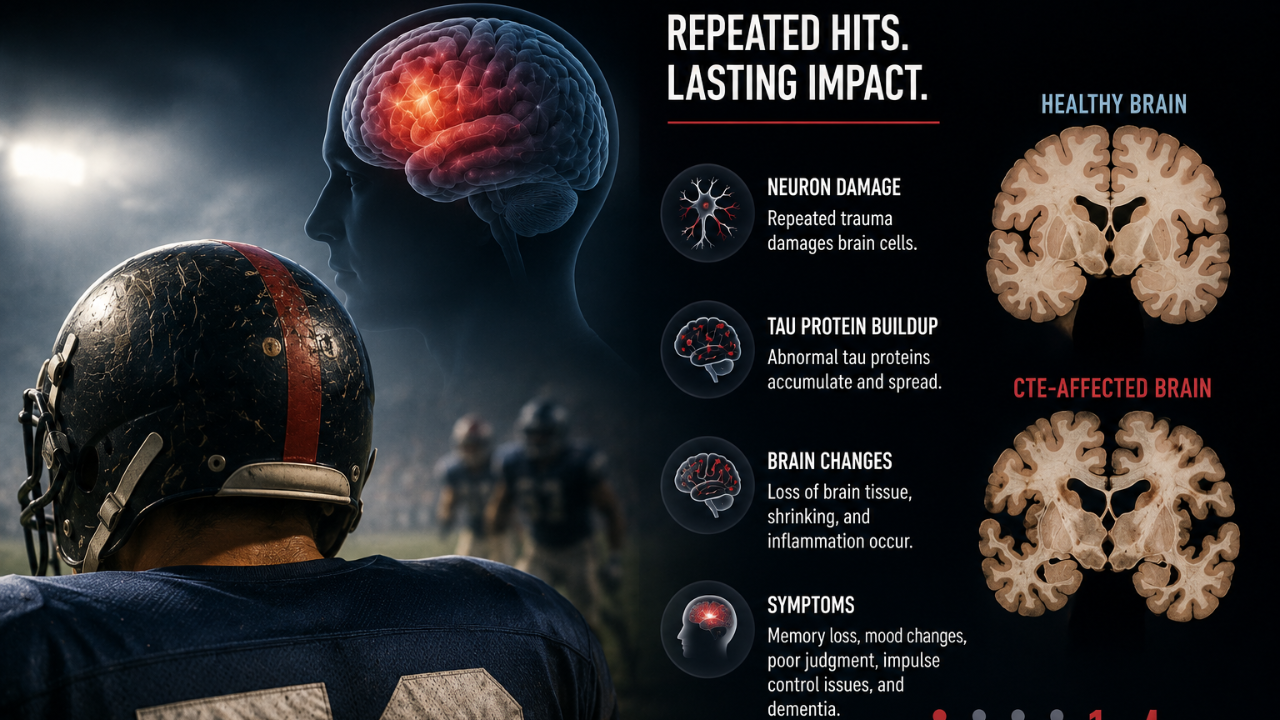
At least 1 in 4 former NFL players who died between 2016 and 2021 had chronic traumatic encephalopathy (CTE), according to a new study published in the BMJ. Researchers say the figure may be a conservative estimate, raising concerns about the long-term effects of repeated head impacts in American football. The study examined 878 former NFL players who died during the six-year period. Of them, 235 had donated their brains for research, and 215, or 91.5%, were found to have CTE. As brain donation was not available for everyone who died, researchers calculated that at least 24.5% of the entire group had CTE. Researchers say the actual number could be substantially higher.What Is CTE?CTE is a progressive neurodegenerative disease associated with repeated blows to the head. Unlike many brain conditions, it can currently be definitively diagnosed only after death by examining brain tissue.Repeated head impacts can cause abnormal accumulation of tau protein in the brain. Over time, these changes can damage and kill brain cells, particularly in areas involved in memory, thinking, mood and behaviour.The damage is not always caused by one dramatic concussion. Researchers focus on the cumulative burden of repeated head impacts, including hits that may not cause obvious concussion symptoms. Also read: US Measles Outbreak: Pennsylvania Reports First Deaths Of 2026 As Trump Pushes Back On VaccinesBrain Damage Can Build Up Over YearsCTE can be associated with symptoms including memory problems, confusion, impaired judgement, depression, anxiety, aggression and difficulties controlling impulses.The new study also found a strong relationship between more advanced CTE and dementia. Among players with the most severe, Stage IV disease, dementia was particularly common. Dr Daniel Daneshvar, a neurologist at Mass General Brigham and lead author of the study, said, "Former NFL players had about a fourfold higher risk of dying from neurodegenerative disease compared with the general population." Also read: Delhi H1N1 Cases Cross 2,300: No New Strain, Flu Mostly Self-Limiting, Says ICMR ChiefThe Risk May Begin Before The NFLOne important finding is that the brain injury associated with CTE does not necessarily begin during an NFL career.Players may accumulate thousands of head impacts during childhood, high school and college football, before ever reaching the professional level. Researchers therefore say prevention needs to focus on reducing repetitive head impacts throughout a player's sporting career, rather than concentrating only on professional football. This also explains why researchers distinguish between concussions and repetitive head impacts. A player can experience numerous hits without being diagnosed with a concussion, yet the cumulative exposure may still have a lasting impact in long term. Can CTE Be Detected Or Treated While Someone Is Alive?One of the biggest challenges is detecting CTE while someone is alive. There is currently no definitive test that can diagnose CTE during life and no cure that can reverse the underlying brain changes. Researchers are studying biomarkers and brain-imaging techniques that could eventually make diagnosis possible without an autopsy. The treatment focuses on managing symptoms like depression, sleep problems, headaches, cognitive difficulties and behavioural changes.