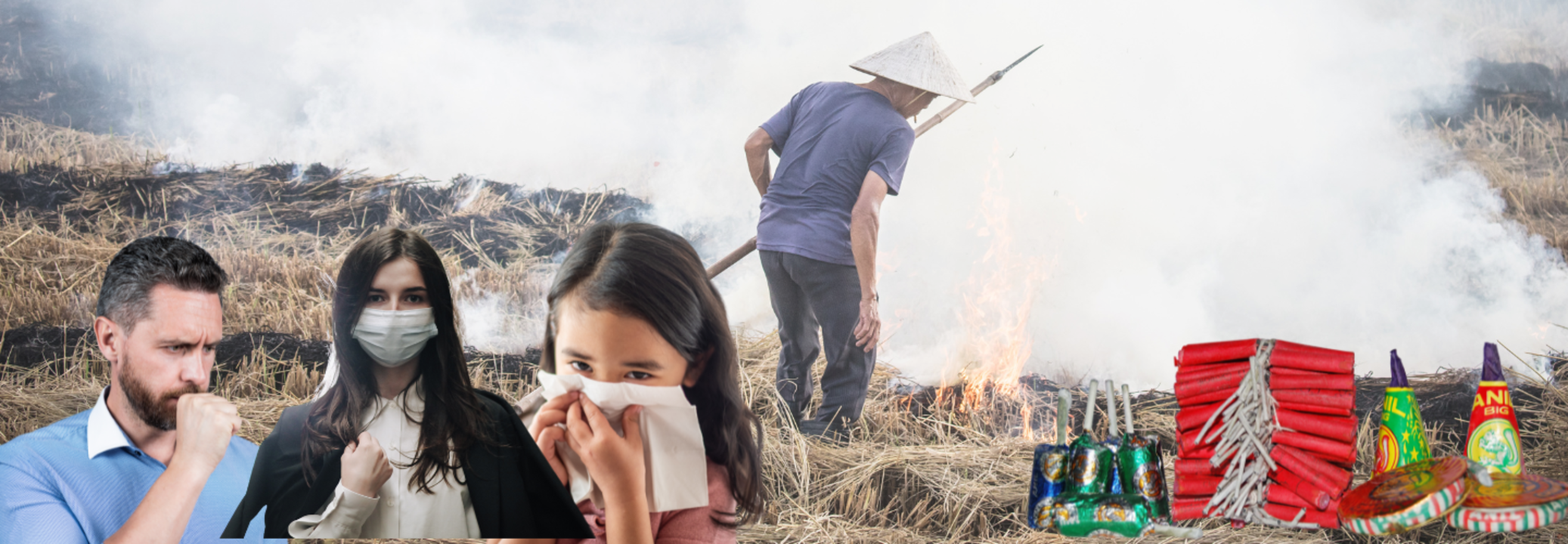
The month of October is when the pollution rates spike in Delhi. Whether it is through stubble burning or crackers, the end result is always a bad Air Quality Index (AQI). Amid all this, a survey revealed that 36% of Delhi-NCR families suffer from some sort of pollution-related health issues. At least one or more members experience issues like sore throat, cough, and breathing difficulty. The survey was conducted by digital platform LocalCircles where it received 21,000 responses to calculate the impact of air pollution on the people of the national capital region. FindingsApart from the 36% of families with one or more member being affected by the pollution, it also found that 27% of families have one or more members with a runny nose and congestion. 27% of the respondents said that there were no issues related to poor air quality. The survey also asked the respondents ways to cope with the poor air quality and found only 18% of the respondent wanted to use air purifiers. A large number of respondents also plan to increase their immunity-boosting foods and drinks. the survey also revealed that 22% of the respondents considered leaving the city for a few days around Diwali. How Dangerous Is Pollution?As per the World Health Organisation (WHO), air pollution is a risk for all-cause mortality as well as specific diseases. The WHO mentions that these specific diseases are linked with exposure to air pollution that could lead to stroke, ischaemic heart disease, chronic obstructive pulmonary disease, lung cancer, pneumonia, and cataracts. In many cases, it can also lead to premature death. The pollutants that are found in contaminated air are particulate matter (PM), carbon monoxide (C)), ozone (O3), nitrogen (NO2), sulphur dioxide (SO2), and lead.How To Protect Yourself From Air Pollution?While it is inevitable to go out, as there are various reasons, including work, a jog, or just some time to go out to feel good, or with friends, when the pollution is at its peak, it is also important to limit your outdoor time. Wearing a mask that can filter PM.2 particles can help too. Use an air purifier at home, and ensure that your house has good ventilation. Try to use more public transport or carpool. Eat a balanced diet, and exercise regularly. Yoga also helps, as it helps you control your breathing. It is also important that you go for regular checkup and inform your doctor for any health changes.