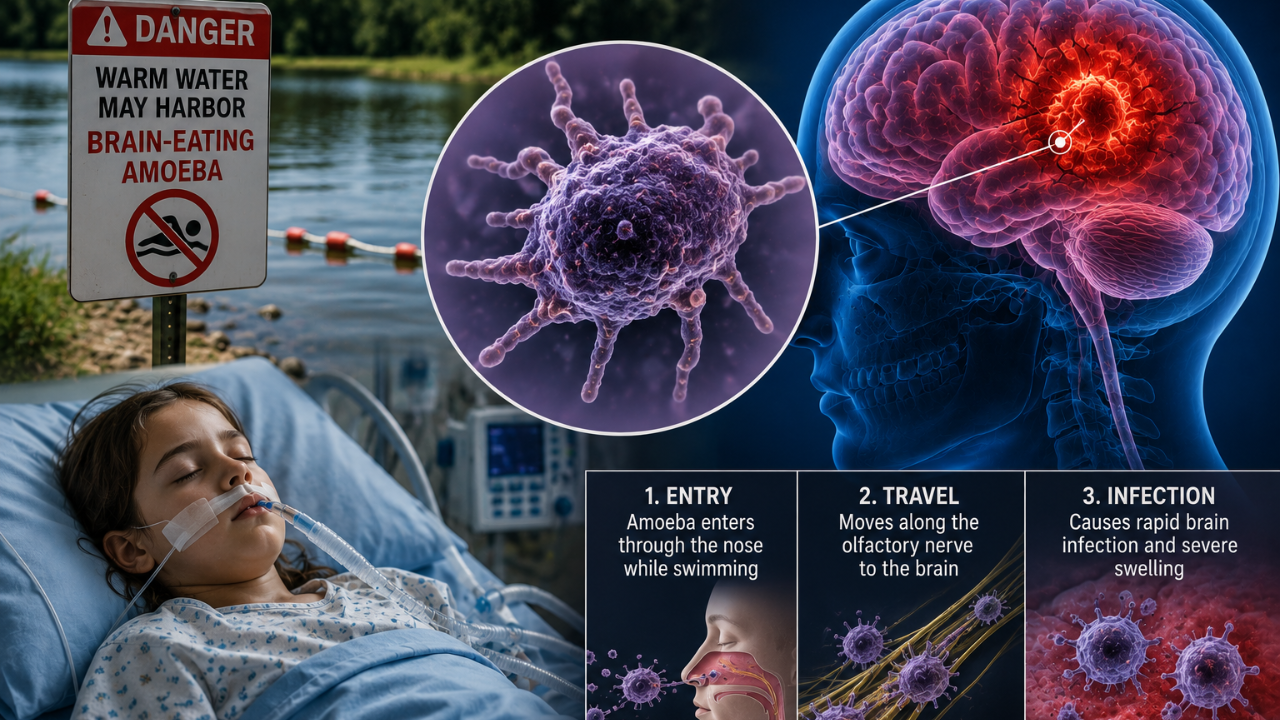
An 8-year-old Louisiana girl has died after contracting Naegleria fowleri, the rare “brain-eating amoeba” infection believed to have been acquired while swimming in Lake Claiborne.The girl, identified by her family as Lillian Smart of Ruston, died on August 22, just one day after her eighth birthday. She had been hospitalised since August 15 after developing the infection. The Louisiana Department of Health confirmed the case on August 19 but has not publicly identified the child. The tragedy has renewed attention on an extremely rare and fatal infection. Why Naegleria Fowleri Can Become Deadly So Quickly? Naegleria fowleri is a microscopic, free-living amoeba found naturally in warm freshwater, including lakes, rivers and hot springs. It does not cause infection simply because someone swims in contaminated water. The major risk occurs when water containing the amoeba enters the nose.The amoeba then can travel along the olfactory nerves through the nasal cavity and reach the brain, where it causes primary amebic meningoencephalitis (PAM). Also, swallowing contaminated water does not cause PAM, and the infection does not spread from person to person. PAM causes severe inflammation and destruction of brain tissue.The illness can initially resemble other infections, with symptoms including headache, fever, nausea and vomiting. As the disease progresses, patients may develop advanced symptoms like stiff neck, confusion, hallucinations, seizures, and eventually coma. One of the biggest challenges is the speed at which the infection progresses. According to recent CDC data cited in coverage of the Louisiana case, 173 Naegleria fowleri infections were documented in the US between 1937 and 2025, with only four known survivors. That puts the fatality rate at roughly 97%. Also read: Louisiana Records 4th ‘Brain-Eating Amoeba' Case In Nearly 90 Years: What To Know About Naegleria FowleriEarly Symptoms Mimic Other IllnessesThe initial symptoms of PAM can look like bacterial or viral meningitis, which can make the infection difficult to recognise immediately. An individual may initially experience fever, headache, nausea and vomiting before developing neurological symptoms.By the time the amoeba is identified, significant brain inflammation may already have occurred. Diagnosis can involve testing cerebrospinal fluid or brain tissue for the organism. So, rare early symptoms and rapid progression makes early diagnosis of this infection particularly difficult.Also read: Brain-Eating Amoeba: What To Know About The Microscopic Killer That Took A 12-Year-Old Boy’s Life In DaysThere Is No Cure For Naegleria FowleriThere is no single drug that reliably cures PAM. Because so few cases occur, there have been no large clinical trials establishing a standard treatment regimen. Doctors have used combinations of antimicrobial and antifungal medicines in survivors and severe cases, with treatment often including drugs such as amphotericin B and miltefosine, alongside intensive supportive care.The CDC notes that successful treatment has involved combinations of several medicines, but outcomes remain poor. Simple Precautions Can Reduce The RiskThe CDC recommends avoiding activities in warm freshwater, particularly when water temperatures are high. For people who do enter such water, precautions include:Using a nose clip or keeping the nose above waterAvoiding jumping or diving into warm freshwaterAvoiding stirring up sediment in shallow, warm areasAvoiding putting the head underwater in potentially contaminated water