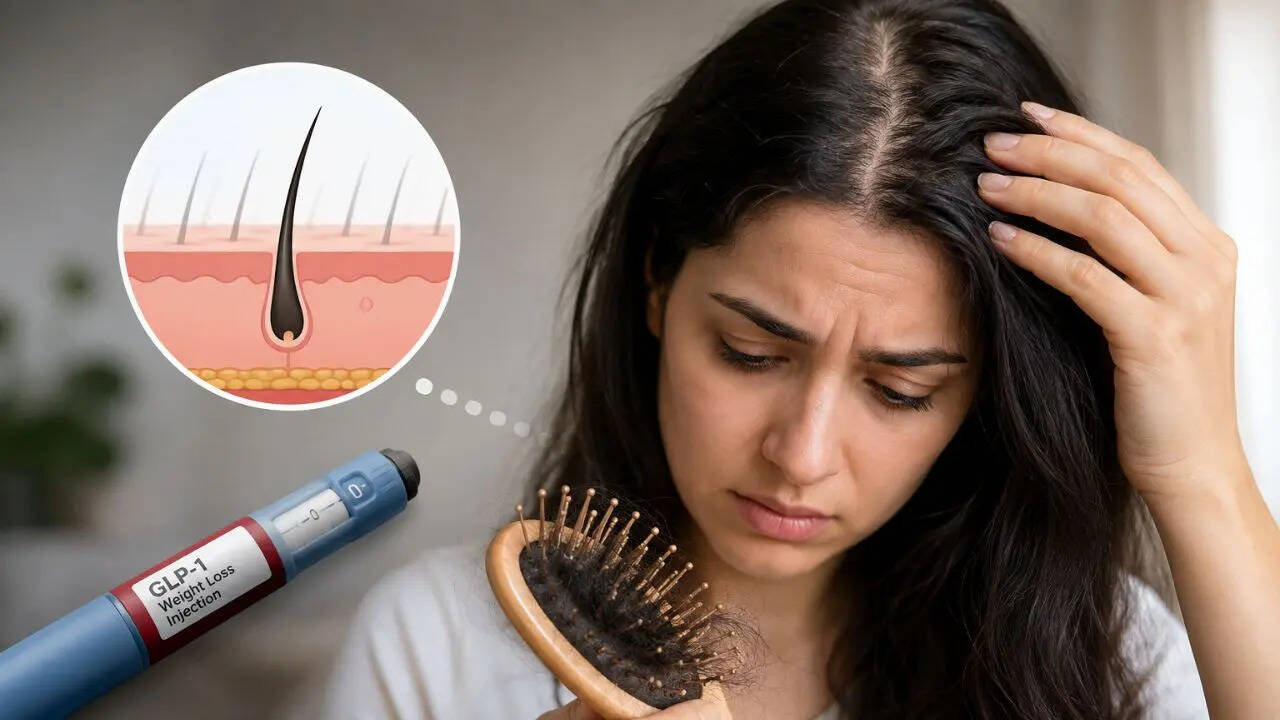
The growing popularity of GLP-1 weight loss drugs like Ozempic, Wegovy and Mounjaro has brought another side effect into focus. After the widely discussed 'Ozempic Face,' dermatologists are now warning about 'Ozempic Hair,' a term used to describe excessive hair shedding that can occur after rapid and weight loss. Experts say the condition is not caused by the medication directly damaging hair follicles. Instead, it is largely linked to rapid weight loss, nutritional deficiencies, and the body's metabolic response to sudden calorie restriction. Why Are GLP-1 Users Facing Excessive Hair Loss? According to Dr. Gaurav Garg, Senior Dermatologist, Hair Transplant Surgeon, Dermato-Surgeon and Medical Director at Dermalife Skin and Hair Clinic, New Delhi, cases have become increasingly common in dermatology clinics. "We are seeing a significant rise in patients complaining of excessive hair shedding after taking GLP-1 weight loss medications. Around 40% of the weight loss drug users visiting our clinics are experiencing mild to significant hair loss, with many noticing hair falling out in large clumps while washing or combing. In most cases, the medication itself is not directly damaging the hair. The problem is rapid weight loss, nutritional deficiencies and the metabolic shock experienced by the body," Dr. Garg said. He added that the increasing use of these medications without proper medical supervision is further contributing to the problem. "Ozempic isn't the enemy of your hair; malnutrition and metabolic shock are. By ensuring gradual weight loss and proper nutritional support under expert guidance, many of these problems can be prevented," he said.Also read: UK Woman Spends £4,000 On Wegovy, Mounjaro, But Loses Less Than 14 Pounds In 15 Months What Is 'Ozempic Hair'? 'Ozempic Hair' is not a medical diagnosis but a popular term for telogen effluvium, a temporary phase of hair loss due to stress. Rapid weight loss acts as a physical stressor, causing a larger number of hair follicles to enter the resting phase prematurely. Hair shedding usually becomes noticeable three to four months after a user starts taking GLP-1 drugs. Reduced appetite during treatment may also result in deficiencies of all the nutrients that are important for hair growth. For example, protein, iron, zinc and biotin.Also read: GLP-1 Microdosing: People Are Experimenting With Weight Loss Drugs & What Do Experts Have To Say About It? Experts Warn Against Self-Medication Dr. Garg cautioned that weight loss injections are increasingly being used for cosmetic purposes rather than for legitimate medical conditions. "One of the biggest concerns today is that these weight loss injections are increasingly being viewed as quick-fix cosmetic solutions rather than prescription medicines meant for specific medical conditions. Many people begin taking them after watching social media content or on the advice of friends, without understanding the nutritional consequences. Hair shedding in most cases is temporary, but prevention is always better than treatment. These medications should never be used casually or without expert supervision," he said. He stressed that people undergoing medical weight loss should receive appropriate dietary counselling, consume adequate protein, and undergo regular monitoring to reduce nutritional complications. Echoing these concerns, Dr. Ramanjeet Singh, Director, Department of Dermatology, Medanta Hospital, said the trend reflects the risks of unsupervised use of GLP-1 medications. "The emerging trend of 'Ozempic Hair' highlights the risks associated not only with rapid weight loss but also with the indiscriminate use of these medications without proper medical evaluation. We are increasingly seeing individuals obtaining weight loss drugs without specialist consultation or using them beyond recommended doses in pursuit of faster results. Hair shedding in such cases usually represents telogen effluvium triggered by rapid metabolic changes and nutritional deficiencies rather than permanent damage to the hair follicles," Dr. Singh said. He added that the condition is generally reversible with timely intervention, balanced nutrition and medically supervised weight management.Dermatologists advise people considering prescription weight loss medications to undergo a medical evaluation before starting treatment. Maintaining adequate protein intake, avoiding crash diets, correcting iron and vitamin deficiencies where necessary, and seeking early dermatological care if excessive hair shedding develops may help reduce the severity and duration of hair loss.