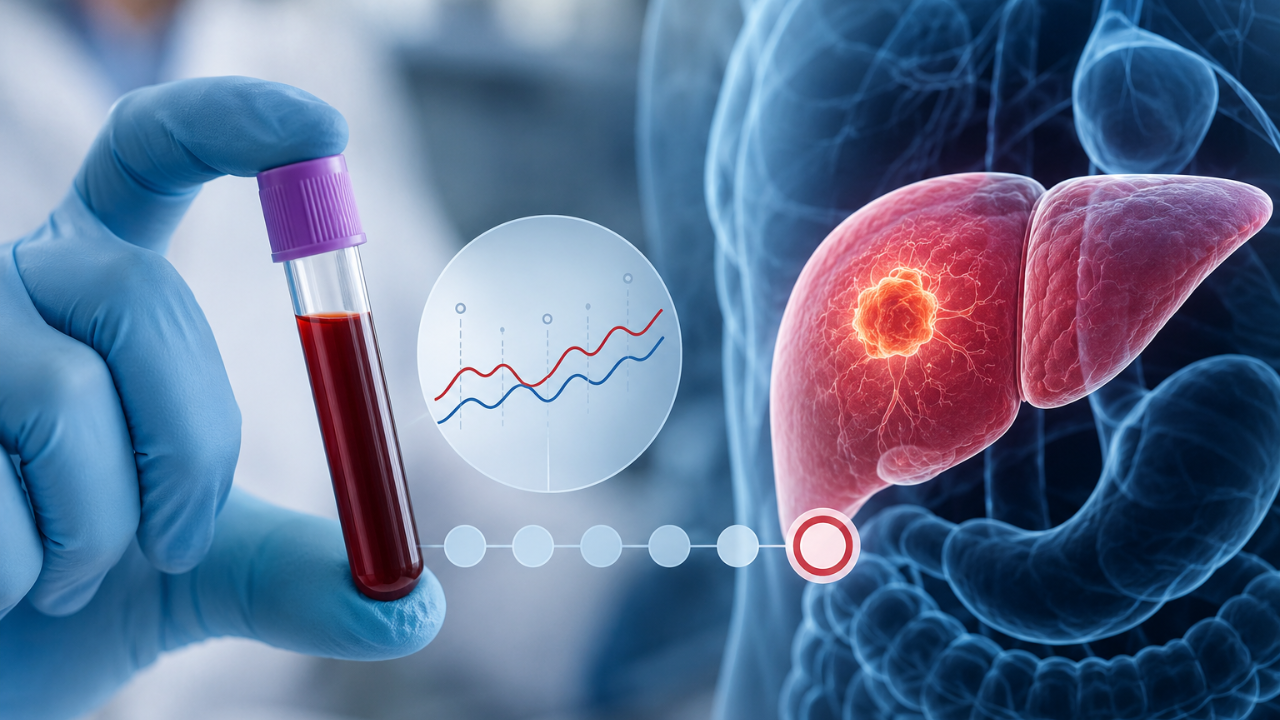
An artificial intelligence (AI)-powered blood test has accurately detected liver cancer in patients from two geographically and biologically distinct populations. It is being considered a breakthrough that can help researchers develop accessible and effective screening for people at high risk of the disease.About The Study The study by researchers from Johns Hopkins University, validated an AI-based blood test in 377 participants from Guatemala and Romania, two populations with different genetic backgrounds and major causes of liver disease. The findings suggest the technology may be effective across diverse populations. It marks an important step in deploying AI in real-world clinical use.The test is based on DELFI (DNA Evaluation of Fragments for Early Interception), an AI platform that analyses patterns in cell-free DNA fragments circulating in the bloodstream. Rather than searching for a single mutation, the algorithm detects subtle changes in how DNA is fragmented, which is a sign of cancer.Also read: Love Diet Coke? A Major New Study Has Some Concerning News For Your BrainBetter Than Conventional Blood TestResearchers found that when the DELFI blood test was combined with the commonly used liver cancer biomarker alpha-fetoprotein (AFP), along with a patient's age and sex, it detected 89% of liver cancers overall and 79% of early-stage cancers. This was significantly better and effective than AFP testing alone, which has limited sensitivity for detecting tumours at an early stage.The study also provided new insights into why the test performs well, showing that DNA fragmentation patterns carry biological signals linked with liver cancer across different patients from different backgrounds. According to the researchers, this strengthens confidence that the AI technology could be applied beyond a single country or healthcare setting and can be used to improve liver cancer detection systems.Also read: Bone Marrow Transplant: The Quiet Revolution Transforming India's Fight Against Blood CancersHow Does The AI Test Work?Healthy and cancerous cells release tiny fragments of DNA into the bloodstream. The DELFI platform uses AI to examine the size, distribution, and genomic patterns of these fragments. Instead of looking for a specific mutation, it recognises fragmentation signs that indicate the presence of liver cancer, making it possible to identify the disease using just a simple blood sample.While the findings are promising, the researchers emphasised that the test is not yet ready for routine clinical use. Larger human clinical studies will be needed before it can become part of standard liver cancer screening programmes.If future trials confirm these results, AI-powered blood tests could become a valuable addition to current cancer detection processes, helping doctors detect liver cancer earlier and improving outcomes for people at highest risk.Also read: WHO Cancer Agency Flags 3 Common Medicines As Carcinogenic: What It Means For Millions Of PatientsWho Is At Risk? Hepatocellular carcinoma (HCC), the most common type of liver cancer, is often diagnosed only after symptoms develop, reducing the chances of successful treatment. People living with cirrhosis, chronic hepatitis B or hepatitis C infection, and metabolic dysfunction-associated steatotic liver disease (MASLD) are at particularly high risk of contracting this disease.The existing screening methods, including ultrasound and AFP testing, can miss early cancers, while access to imaging is limited in many parts of the world. A blood-based test that performs consistently across diverse populations could help improve screening and identify cancers when they are still treatable.