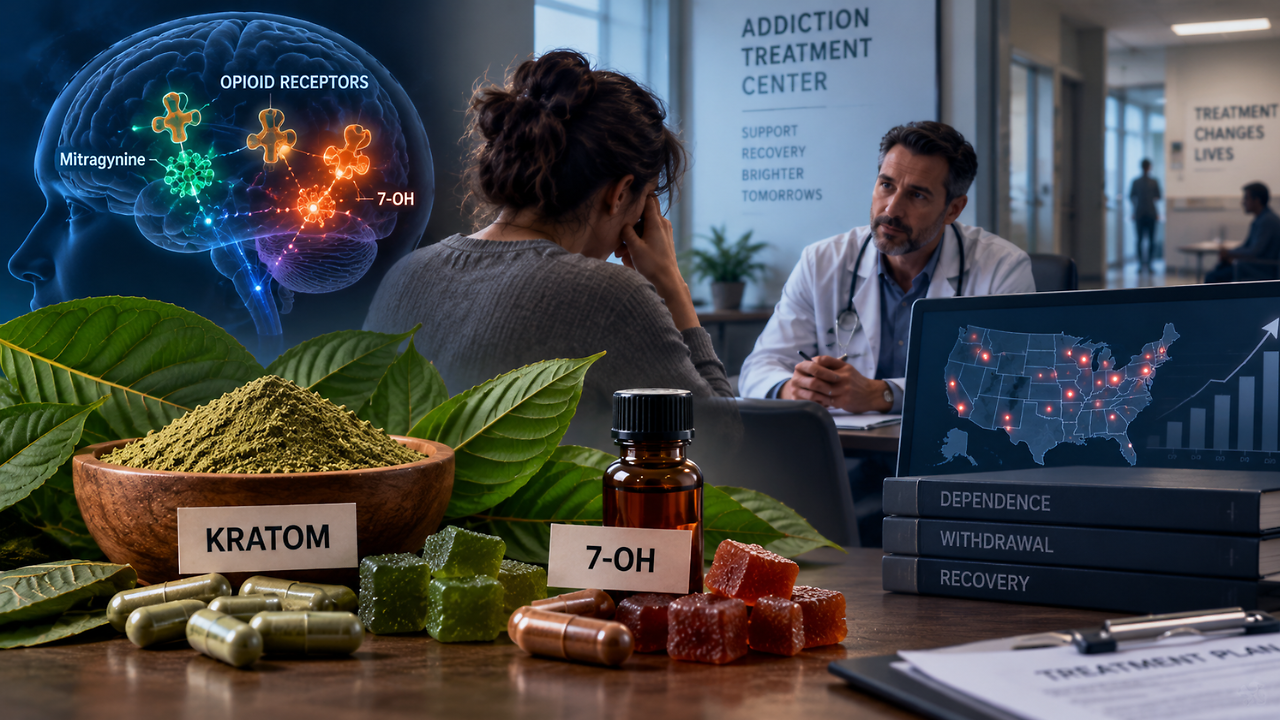
Kratom is a plant-based product sometimes used as a natural way to boost energy, manage pain or ease opioid withdrawal. It is is showing up frequently among patients in addiction clinics across the US.According to STAT, at Boulder Care, a telehealth addiction clinic, the number of new patients using kratom increased from 3% in September 2025 to 8% in July 2026, before reaching 14% in August.Clinicians say the growing problem is not only traditional kratom leaf. Increasingly, patients are using products containing high concentrations of 7-hydroxymitragynine, or 7-OH, a potent compound associated with opioid-like effects.Dr Ayesha Appa, head of medical affairs at Boulder Care described "the increase as quite an explosion.”Kratom May Become AddictiveKratom is made from the leaves of the Mitragyna speciosa tree, which is found in Southeast Asia. The leaves have traditionally been used for their stimulant and pain-relieving effects. They are now sold in the US as powders, capsules, teas, extracts and other products.At lower doses, kratom can produce stimulant-like effects, including increased alertness and energy. At higher doses, its effects can become more sedating and produce opioid-like effects.The plant's main alkaloid is mitragynine. Another compound, 7-OH, occurs naturally in trace amounts in kratom leaf.Kratom can interact with opioid receptors in the brain, which are involved in pain, reward and dependence. Regular use can therefore make the brain adapt to the substance. When someone who has developed dependence suddenly stops taking it, withdrawal symptoms can occur, like irritability, restlessness, muscle aches, fatigue, sweating and other flu-like symptoms.The FDA says epidemiological evidence suggests that some people develop substance use disorder after using kratom, although it also notes that the abuse potential of kratom has not been fully characterised in well-designed human studies.Also read: Warning Letter Sent To Companies Selling Illegal Opioid Compound7-OH Is Particularly Concerning7-OH is different from the small amounts naturally present in ordinary kratom leaf. Some products now sold as kratom contain concentrated 7-OH, including tablets, gummies, drink shots and other products. The FDA describes these products as potent opioids, warning that they have not been proven safe or effective for any medical use.The American College of Medical Toxicology says clinical experience has linked 7-OH with opioid-like effects, including intoxication, respiratory depression, dependence and withdrawal.CDC data show that kratom-related poison-center reports increased dramatically over the past decade. US poison centers recorded 3,434 kratom exposure reports in 2025, compared with 258 in 2015, an approximately 1,200% increase. Hospitalisations following single-substance kratom exposures also rose from 43 in 2015 to 538 in 2025.The shift toward concentrated products is another concern. Poison Centers reported 901 exposures involving 7-OH between January and June 2026, compared with 593 during all of 2025.Also read: Kratom Leaves in a ‘Wellness Drink’ Is Making People Addicted; Influencer Calls Out, Hundreds Join InTraditional Kratom And 7-OH Traditional kratom leaf contains a mixture of naturally occurring alkaloids, including mitragynine and small amounts of 7-OH. Commercial 7-OH products can contain far higher concentrations of the compound.The stronger products may produce more pronounced opioid-like effects and carry greater risks of dependence and withdrawal.Kratom is also not an FDA-approved treatment for pain, opioid withdrawal or any other medical condition. Its long-term effects remain vague.