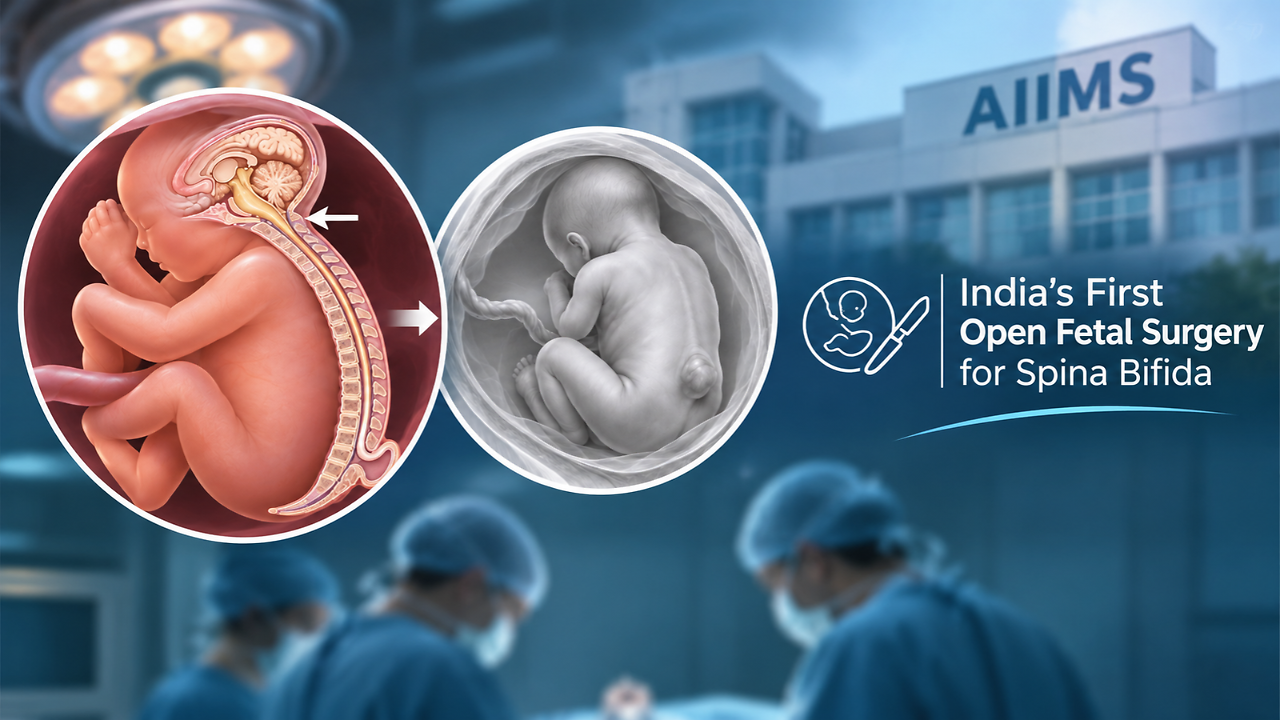
In a major milestone in fetal and paediatric neurosurgery in India, doctors at the All India Institute of Medical Sciences (AIIMS), New Delhi, have performed the country's first open fetal surgery to repair myelomeningocele, the most severe form of spina bifida. The six-hour procedure was carried out at 25 weeks of pregnancy, in which surgeons were able to repair the baby's spinal defect before birth. The surgery, performed on November 12, entailed repairing a cerebrospinal fluid leak in the lower back while the baby was still in the uterus. According to AIIMS press release, the operation followed more than five weeks of preparation in multiple disciplines, including detailed fetal imaging, counselling, planning anaesthesia and surgical simulations.The procedure was done by more than 30 clinicians and nurses from neurosurgery, maternal-fetal medicine, obstetrics, anaesthesia, plastic surgery, radiology and neonatology.Professor PS Chandra, Head of Neurosurgery at AIIMS, who facilitated the entire surgical execution by the neurosurgery team, said that prenatal surgery could help reduce the incidence of hydrocephalus and Chiari malformations linked with spina bifida.What Is Myelomeningocele?Myelomeningocele is an open neural tube defect in which the spinal cord and its protective coverings protrude through an opening in the developing spine. It occurs when the neural tube, which eventually develops into the brain and spinal cord, does not close completely during early pregnancy.The condition can cause permanent nerve damage, muscle weakness or paralysis, loss of bladder and bowel control, and complications involving the brain and spinal cord. Some affected babies also develop hydrocephalus, a condition in which excess cerebrospinal fluid accumulates in the brain.In many cases, surgery to close the spinal defect is performed after birth. However, exposure of the spinal cord to the surrounding amniotic fluid during pregnancy can contribute to further neurological injury.India continues to face a burden of neural tube defects. A 2024 review of 27 Indian studies estimated their pooled prevalence at 9.46 per 1,000 births.Also read: India’s Xenotransplantation Push: Can Pig Organs Help Bridge the Organ Shortage? | InterviewIs Fetal Surgery The Way Forward? Unlike conventional postnatal surgery, open fetal repair involves operating on the fetus while it is still inside the uterus. The surgeon accesses the uterus, exposes the affected area of the baby's spine and closes the defect, protecting the exposed spinal cord and its coverings. The aim is to limit further damage to the developing nervous system and improve certain neurological outcomes.Professor Deepak Gupta, who led the neurosurgical part of the procedure, said, “This establishes an important new capability for fetal care and paediatric neurosurgery in India. In rigorously selected cases, prenatal repair seeks to limit ongoing injury to exposed neural tissue, reduce the subsequent need for cerebrospinal-fluid diversion for hydrocephalus, and improve selected neurological outcomes. It is not a cure, and long-term multidisciplinary care remains essential.”Evidence for prenatal repair comes from the landmark Management of Myelomeningocele Study (MOMS), an international clinical trial. It found that 40% of children who underwent prenatal surgery required a cerebrospinal fluid shunt by 12 months of age, compared to 82% of those who underwent surgery after birth. Prenatal repair also helped with better motor outcomes and a lower incidence of hindbrain herniation linked with Chiari II.But fetal surgery comes with its risks. It can increase the chances of premature delivery. It also carries risks related to the opening and subsequent healing of the mother's uterus. It is therefore performed only on carefully selected pregnancies at specialised centres equipped with resources.Milestone In Fetal Surgery The AIIMS procedure brings a complex fetal intervention, which is already done in other countries, to India's public healthcare system.Professor Neena Malhotra, who led the maternal-fetal medicine and obstetric part of the surgery alongside Professor K Aparna Sharma, said, “This accomplishment reflects the collective commitment of an exceptional multidisciplinary team.”Professor Sharma added, “Fetal intervention in this case is a very well-reasoned and planned decision to optimise the outcomes of both the baby and the mother. The safety of both mother and fetus depends on detailed counselling, high-quality anaesthesia, and coordinated surveillance before and after surgery.”AIIMS said the procedure was performed free of cost under the Government of India's Janani Shishu Suraksha Karyakram (JSSK). The mother and fetus will continue to receive close monitoring throughout the remainder of the pregnancy, delivery and newborn period.Also read: First Human Spinal Cord Transplant Reported In Russia But Can It Reverse Paralysis?Can Spina Bifida Be Prevented?Prevention of spina bifida remains essential even though the option of fetal surgery is available. Neural tube closure takes place within the first 28 days after conception, often before a woman realises she is pregnant.Adequate folic acid intake before conception and during early pregnancy can significantly reduce the risk of neural tube defects. Preconception counselling, folic acid intake and dietary interventions with folate are therefore important to prevent spina bifida.