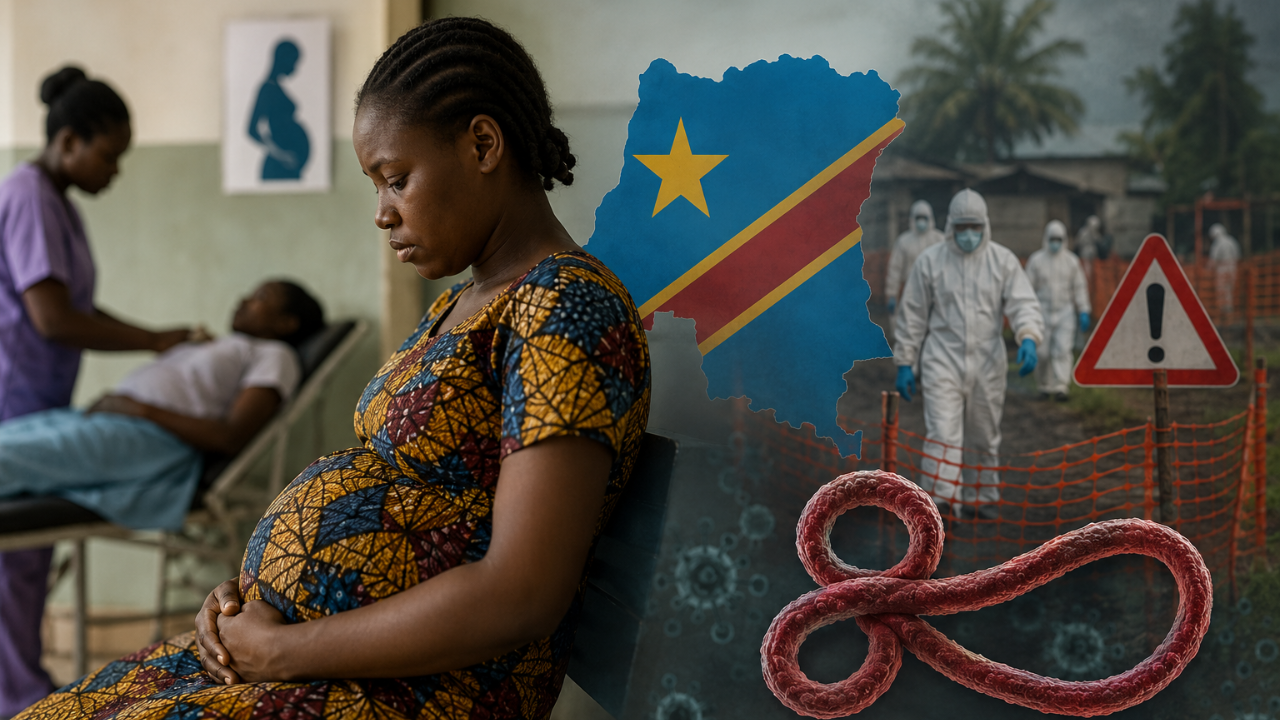
The Democratic Republic of Congo (DRC) is battling two public health crises at once. While the rapidly expanding Ebola outbreak has sparked global health emergency, health experts warn that another crisis is unfolding quietly: a sharp rise in maternal deaths as pregnant women avoid hospitals out of fear of infection.According to the United Nations Population Fund (UNFPA), maternal deaths in Ituri province, the epicentre of the outbreak, have nearly doubled since late May. Between May 25 and July 19, 2026, the weekly maternal deaths increased from an average of 3.1 to 5.8, while deaths occurring outside health facilities also rose significantly. Rising Maternal Deaths In DR Congo During Ebola OutbreakOne of the biggest reasons rising maternal deaths in Congo is fear. Many pregnant women have stopped attending antenatal appointments because early Ebola symptoms, such as fever, weakness, and body aches, can resemble pregnancy-related illnesses. They worry they could be wrongly identified as Ebola patients and isolated from their families.A recent Associated Press report shed light on ground reality by bringing forward the case of Esther Lutula, a pregnant woman from Bunia, who stopped visiting health centres after hearing reports of patients being isolated. Like many expectant mothers, she chose to stay home despite understanding the risks of pregnancy complications. "No woman should die giving life because she is afraid to seek care," said Noemi Dalmonte, Deputy Country Representative for UNFPA in the DRC, noting that misinformation and fear are preventing women from accessing essential and lifesaving maternal services. Also read: DR Congo Ebola Outbreak Becomes World’s Second Largest As Death Toll Surpasses 1,500Health System Under PressureThe Ebola response in DR Congo has pressurised an already fragile healthcare system. Health workers have been reassigned to work on outbreak control, while others have died, fled conflict, or gone unpaid. Some health facilities have also faced attacks, disrupting routine maternity care. Surveillance teams continue to struggle with staff shortages, delayed reporting, and limited resources, making it harder to provide essential health services beyond Ebola treatment. The World Health Organization (WHO) says the current outbreak, caused by the Bundibugyo strain of Ebola, is spreading in a difficult humanitarian setting marked by insecurity, population movement, and limited healthcare access. Unlike earlier outbreaks, there is currently no approved vaccine or specific treatment for this strain, although vaccine trials are underway. Also read: Milestone In Kala-Azar Treatment: WHO Updates Treatment Guidelines, Recommends Shorter & Safer RegimensWhy Pregnancy Is Even More Risky During Ebola?Ebola infection during pregnancy is linked to extremely poor outcomes. Nearly all infected pregnancies result in the loss of fetus.In some previous outbreaks, more than 90% of infected pregnant women died. Delays in treating common obstetric emergencies, like severe bleeding, infections, or obstructed labour, further increase maternal mortality. Health experts stress that many of these deaths are preventable if women receive timely pregnancy care and better clinical services during delivery.Also read: Uganda Declared Ebola-Free As Congo Outbreak Grows To 3,262 Cases, 1,437 DeathsDRC Ebola Outbreak The DRC's Ebola outbreak has already become the world's second-largest on record, with more than 3,500 reported cases and over 1,500 deaths. However, organisations warn that other indirect casualties, including maternal deaths, could increase dramatically if routine health services continue to crumble. UNFPA is urging governments and humanitarian partners to strengthen maternity services alongside Ebola control efforts, restore community trust, and ensure that pregnant women can safely access healthcare without fear. "The fear of Ebola should not become another cause of maternal death," the agency has warned.