
- Health Conditions A-Z
- Health & Wellness
- Nutrition
- Fitness
- Health News
- Ayurveda
- Videos
- Medicine A-Z
- Parenting
Anktiva Approved In Saudi Arabia As World’s First Lung Cancer Therapy — All You Need to Know

Credits: Canva
The Saudi Arabian Food and Drug Authority has cleared Anktiva, an IL-15–based immunotherapy created by billionaire physician-scientist Patrick Soon-Shiong and his biotech firm ImmunityBio, for the treatment of bladder cancer and lung cancer. This marks the first time the therapy has received national regulatory approval outside the United States.
The move signals an important global step for Anktiva, which currently holds a limited approval from the U.S. Food and Drug Administration. In the U.S., the drug is authorised only for patients with BCG-unresponsive, non–muscle-invasive bladder cancer (NMIBC) that includes carcinoma in situ. American regulators have so far resisted expanding its use to other bladder cancer subtypes. Saudi regulators, however, have adopted a broader stance, approving Anktiva for two cancer types under their domestic regulatory system.
What Is Anktiva?
Anktiva is an interleukin-15 receptor agonist designed to stimulate the body’s own immune defences. It works by activating and expanding natural killer (NK) cells and memory CD8⁺ T cells, which play a key role in immune surveillance. Unlike chemotherapy or gene-based treatments, Anktiva does not attack tumour cells directly. Instead, it boosts existing immune pathways to help the body recognise and destroy cancer cells.
ImmunityBio describes Anktiva as “the first FDA-approved immunotherapy that activates what’s called a natural killer cell to target and kill non-muscle-invasive bladder cancer cells.” In clinical practice, the drug is used alongside BCG (Bacillus Calmette-Guérin) in patients whose NMIBC has not responded to BCG alone. It is administered directly into the bladder through a catheter, followed by a structured maintenance schedule
Clinical Evidence Supporting FDA Approval in NMIBC
The FDA’s approval, issued on April 22, 2024, was based on results from a single-arm clinical study involving 77 patients with BCG-unresponsive stage 0 NMIBC. Participants received intravesical Anktiva combined with BCG, with maintenance therapy continuing for as long as 37 months.
The main efficacy results were as follows:
- Complete response rate: 62%
Durability:
- 58% of patients who responded remained disease-free for at least 12 months
- 40% stayed disease-free for 24 months or longer
For patients facing the prospect of radical cystectomy as the only curative option, these results were considered clinically significant. Still, the absence of a randomised control group has remained a point of contention among regulators and experts.
Regulatory Tension in the United States
Although the FDA approved Anktiva for NMIBC cases involving carcinoma in situ, it declined to extend the indication to patients with papillary-only disease. ImmunityBio pushed back against the decision, arguing that the same clinical data had already been deemed sufficient to support approval in a closely related patient group.
Rachel Sherman, MD, former principal deputy commissioner of the FDA, publicly criticised the agency’s stance, saying: “it is incomprehensible to me that the FDA refuses to file a supplemental BLA, stating the study is not sufficient to support a regulatory review, when it has already approved a product based on that very same study in essentially the same indication and population.”
The FDA has also expressed concerns about how the drug has been marketed. It issued a warning letter to ImmunityBio over promotional materials that cited survival benefits and cystectomy-avoidance rates not supported by robust evidence.
Saudi regulators, by contrast, have taken a more permissive view, approving Anktiva for both bladder and lung cancer and highlighting a willingness to act in areas of high unmet medical need.
With this decision, Saudi Arabia becomes the first country to approve Anktiva beyond NMIBC, potentially placing itself at the forefront of evaluating the therapy’s wider role across multiple cancer types.
Flu Season Update: CDC Reports Declining Cases Across The US

Credits: Canva
Flu cases are starting to fall, yet experts caution that the United States still faces risks. In the week ending January 10, fifteen more children died from the flu, bringing the total pediatric deaths this season to 32, as per NBC News.
Flu Season: Latest CDC Data
On Friday, the Centers for Disease Control and Prevention (CDC) reported an 18% drop in confirmed flu cases compared with the previous week. Visits to doctors for respiratory illnesses decreased by more than 5%, and hospitalization rates fell by nearly 55%. Influenza-related deaths, however, rose by 2%.
So far this flu season, the CDC estimates that 18 million people have been infected, including 230,000 hospitalizations and 9,300 deaths.
“It seems like there is some cautious good news that cases are declining,” said Jennifer Nuzzo, director of the Pandemic Center at Brown University School of Public Health. “But I’m going to put a giant asterisk on this because that does not mean the worst is behind us.”
Last year, flu cases dipped around this time before climbing again in early February.
Flu Season: State-by-State Variation
CDC data reflect a national trend, but not all states have necessarily reached their peak. “We are not going to all experience this at the same time,” said Beth Carlton, a public health professor at the University of Colorado, as per NBC News. “Nationwide, the trend is downward, but different states and communities may see spikes as the virus spreads.”
Flu often appears first in densely populated areas like New York City before moving to rural regions, but the virus can behave unpredictably.
Flu Season: Impact on Schools
Although flu cases may be falling overall, other winter illnesses such as norovirus, Covid, and strep throat are still causing school closures in states including Arkansas, Kansas, Kentucky, Tennessee, and West Virginia.
High flu activity continues in Idaho, New Mexico, New York, and parts of Appalachia, while Montana, South Dakota, Vermont, and Wyoming report lower case numbers.
“The number of people hospitalized for influenza around New Year’s was extremely high—the second highest in the past decade, with last year being the highest,” Carlton said.
Flu Season: A Difficult Flu Season
This year’s severe flu season is driven by a heavily mutated strain of influenza A called H3N2 subclade K. Its mutations make it less similar to the strain used in this year’s vaccine. Influenza-like illnesses, including RSV and Covid, are also unusually high, Nuzzo said.
“Typically these viruses peak at different times, but this year they are peaking together, making the season particularly harsh,” she noted.
While there were concerns that the vaccine would be less effective against subclade K, recent research shows the current flu shot still offers protection, particularly against hospitalization. The vaccine covers three strains: H1N1, H3N2, and one B strain.
Flu Season: Pediatric Risk
As per NBC News, last year marked the deadliest flu season for children since the CDC began tracking pediatric deaths, with 289 children dying—more than during the 2009 H1N1 pandemic.
“That double peak last season clearly had consequences,” Nuzzo said. “Any decline this season is welcome, but we can’t assume the worst is over.”
Among children eligible for the flu shot whose vaccination status was known, 90% of pediatric deaths occurred in unvaccinated kids.
Following recent CDC guidance, flu shots are no longer recommended for all children, a change from the previous advice that everyone six months and older should be vaccinated annually.
India Ranks Third in Non Alcoholic Fatty Liver Disease Cases, Study Finds
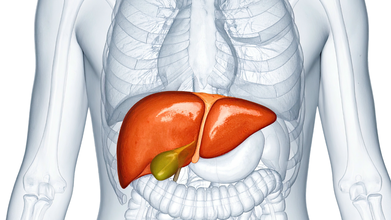
Credit: Canva
Once a rare condition, non-alcoholic fatty liver disease (NAFLD) now affects one in three Indians, scientists say.
NAFLD, now called as metabolic dysfunction-associated steatotic liver disease (MASLD), is when excess fat builds up in the liver, unrelated to heavy alcohol use, due to obesity, Type 2 diabetes, high blood pressure and cholesterol.
It ranges from simple fat accumulation to inflammation and damage, which can progress to fibrosis, cirrhosis or liver cancer, The disease often has no symptoms and is managed with lifestyle changes such as diet and weight loss.
A JAMA study has now found that about 40 percent of the global population is now suffering from NAFLD, with abdominal obesity identified as its single biggest risk factor. Between 2010 and 2021, India recorded a 13.2 percent increase in age-standardized prevalence, ranking just behind China at 16.9 percent and Sudan at 13.3 percent.
What Did The Study Find?
Researchers found that nearly 70 percent of people with Type 2 diabetes and about 80 percent of those with obesity are affected by NAFLD. They also discovered that NAFLD prevalence is higher in men than in women, with rates of 15,731 per 100,000 population in men compared with 14,310 in women.
Additionally, the disease peaks earlier in men, between 45 and 49 years of age, while women show the highest prevalence between 50 and 54 years.
Why Is NAFLD on the rise?
Poor diets (high carbs/sugar), sedentary habits and rising obesity are some of the key reasons why an uptick in NAFLD cases has been seen pan-India. Increased intake of refined carbs, sugary drinks, processed foods and unhealthy fats can increase the risk of obesity, diabetes, hypertension and high cholesterol which can pave the way for this liver disease.Experts also note that working long hours at desks without any proper physical activity can lead to weight gain and fat accumulation in the liver.
According to the Union health ministry, the prevalence of the condition could be in the range of 9-53 percent. Multiple other health studies also suggest nearly 40 percent of urban Indians may have some form of fatty liver disease
Hepatologist Dr Cyriac Abby Philips, popularly known as LiverDoc on social media, noted on X that many patients do not realize that timely lifestyle changes can completely reverse the condition. “All it takes is being in charge of your body and health. No shortcuts—go slow and steady,” he wrote.
If left untreated, NAFLD can progress to Non-Alcoholic Steatohepatitis (NASH), where liver inflammation begins. Over time, this inflammation can lead to scarring of the liver, known as fibrosis. Advanced fibrosis results in cirrhosis, which severely affects liver function.
NAFLD can also increase the risk of chronic liver disease, liver failure and hepatocellular carcinoma. Many patients diagnosed with liver cancer have a history of untreated fatty liver.
NHS England Expands Access To Life Saving Prostate Cancer Drug

Credits: Canva
NHS expanded access of a life-extending prostate cancer drug after a campaign ran by a patient and a charity. This drug is abiraterone, which had been available on the NHS in Scotland and Wales since 2023, but now in England and Northern Ireland, except in the most severe cases.
In the UK, the cancer drug is prescribed for patients with prostate cancer at a very advanced stage. However, now, the drug will be available to prostate cancer patients in England on the NHS, even for those where cancer has not metastasized or spread. This could save hundreds of lives.
The assistant director of health improvement at charity Prostate Cancer UK, Amy Rylance said that the decision was "a momentous, life-saving victory for the thousands of men whose lives will not be saved".
The charity estimated that this will enable 7,000 men a year to start their treatment, with around 1,470 cancers being avoided rom getting worse. This could save somewhere around 560 lives.
The drug is soon to be available on NHS England in weeks.
What Is Abiraterone?
As per the Cancer Research UK, abiraterone is a hormone therapy drug. The Prostate Cancer UK notes that this is most commonly offered to men whose cancer has stopped responding to other types of cancer drugs.
As per Mayo Clinic, it is used in combination with prednisone to treat patients with metastatic castration-resistant prostate cancer and metastatic high risk castration-sensitive prostate cancer. This medicine is only available on doctor's prescription and is available as a tablet.
What Is Prostate Cancer?
The prostate is a small walnut-shaped gland in men that produces seminal fluid that nourishes and transports sperm. It occurs when abnormal cells form and grow in that gland.
Experts say that not all prostate cancer is deadly. There are cancers that are slow-growing and will not affect a man's lifespan, which is found in 1 in 3 men over 50. Then there is a small number of very aggressive prostate cancers which move quickly and cause harm, this is why regular screening is important.
Read: Olympic Cyclist Sir Chris Hoy Shares His Diagnosis Of Prostate Cancer From A Common Shoulder Pain
Are There Any Tests For Prostate Cancer?
In the UK, there is no prostate cancer screening programme like those for breast, bowel and cervical cancer. The onus is therefore on men to request a blood test from their general practitioner once they are over 50. When not aware, it can become life-threatening as it did for Sir Chris Hoy, the six-time Olympic cyclist, who opened up on his diagnosis of the same through a shoulder pain last year.
Despite more men dying from prostate cancer than women from breast cancer, as per BBC, there are no reliable tests for this. The blood test that men over 50 request from their general practitioner measure prostate-specific antigen (PSA), released by the prostate, a small gland located below the bladder involved in the production of semen.
However, experts say that PSA levels can be high for many other reasons too, including enlarged prostate, inflammation, infection, recent vigorous exercise or sex.
- Follow Us :


© 2024 Bennett, Coleman & Company Limited