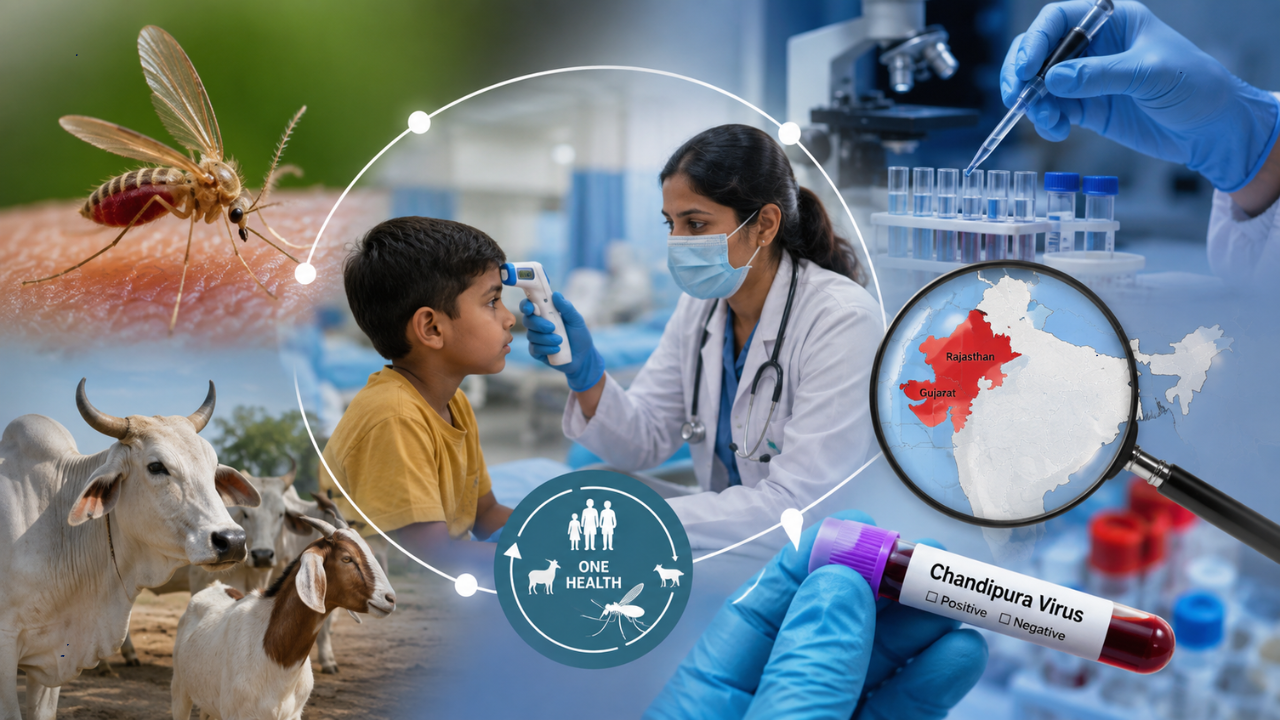
Even as the ongoing Chandipura virus outbreak in Gujarat and Rajasthan has reportedly claimed 22 lives, most of them children, the Centre has launched a comprehensive 'One Health' investigation that combines human, animal and vector surveillance to better understand how the virus spreads and how future outbreaks can be contained.The Union Ministry of Health and Family Welfare has deployed a National Joint Outbreak Response Team (NJORT) comprising experts from the National Centre for Disease Control (NCDC), the Indian Council of Medical Research (ICMR) and the Department of Animal Husbandry and Dairying (DAHD). The team will support the two states in outbreak investigations, strengthen surveillance and recommend evidence-based public health measures.What Will the Multidisciplinary Probe Do?The investigation aims to improve understanding of the Chandipura virus by studying:How the virus spreadsThe full clinical spectrum of the diseaseIts epidemiologyPotential treatment approachesMeasures to strengthen outbreak responseThe exercise brings together experts in epidemiology, virology, entomology, veterinary sciences and laboratory diagnostics to study infections ranging from mild fever to Acute Encephalitis Syndrome (AES).Also read: Breastfeeding Can Help Reduce Mothers' Risk of Type 2 Diabetes, Breast Cancer and MoreSurveillance Intensified in Affected AreasAs part of the investigation, authorities have stepped up surveillance among patients presenting with:Acute Febrile Illness (AFI)Acute Encephalitis Syndrome (AES)Researchers are also conducting community-based serosurveys to estimate asymptomatic infections and understand the true extent of virus transmission. At the same time, laboratories are working to strengthen diagnostic tests and develop improved animal models to better understand the disease.Scientists Probe the Virus Transmission CycleWhile sandflies are the established vectors of Chandipura virus, the scientists are also investigating whether other arthropods—including mosquitoes, ticks and mites—could play a role in transmission, the Ministry said.Large numbers of vector samples collected from affected areas are currently undergoing laboratory analysis. However, officials have stressed that it is too early to identify the vector responsible for the current outbreak until scientific investigations are complete.Livestock Also Under InvestigationAnimal surveillance has been expanded to determine whether domestic animals could act as reservoirs for the virus.Blood samples collected include:cattlebuffaloesgoatsMilk samplesRead More: Maharashtra Becomes Second Indian State To Ban Sale Of Fake Paneer: Here's Why It Can Be HarmfulAround 70 animal blood samples have been collected so far and are being tested for Chandipura virus and other relevant pathogens. Authorities have clarified that no conclusions can be drawn until laboratory investigations are completed. The scientists' team is also examining whether the virus has undergone genetic changes.While scientists investigate how the virus spreads and whether it has evolved, HealthandMe spoke to infectious disease experts who stressed that parents should focus on recognising symptoms early, as there is no specific antiviral treatment or vaccine for Chandipura virus.No Need to PanicDr. Subramanian Swaminathan, Senior Consultant, Infectious Diseases, Gleneagles Chennai, says the recent cases are a reminder to remain vigilant—not alarmed."The virus can cause severe illness, particularly in children under 15 years, but prompt recognition and early hospital care can make a difference," he said.He added that not every fever during the monsoon is Chandipura virus, but children with warning signs in affected areas should be evaluated without delay.Symptoms Parents Should Never IgnoreThe doctor advised seeking immediate medical attention if a child develops:Sudden high feverPersistent vomiting or diarrhoeaExcessive sleepiness or unusual drowsinessConfusion or altered behaviourSeizuresRapid deterioration in consciousnessDr. Divya Shetty, Infectious Diseases Specialist at Apollo Hospitals, Seshadripuram, added that the illness can progress rapidly."Within 24–48 hours, children may develop neurological symptoms such as lethargy, irritability or altered consciousness. In severe cases, deterioration to coma can occur within 48–72 hours."Why Cases Rise During the MonsoonAccording to Dr. Shetty, Chandipura virus is endemic and cyclical in Gujarat, with cases typically increasing during the monsoon.Sandflies are the primary vectors.They breed in humid conditions during the rainy season.Researchers are also investigating whether Aedes aegypti mosquitoes may play a role in transmission.Can Chandipura Virus Spread From Person to Person?"There is no documented human-to-human transmission. Chandipura virus is a vector-borne infection," Dr. Shetty told HealthandMe.How To PreventThe experts stressed that there is no approved antiviral treatment or vaccine for Chandipura virus. Treatment focuses on supportive care, including:Maintaining hydrationControlling feverMonitoring for brain involvementTo reduce the risk of infection, they recommended:Using mosquito nets and insect repellentsKeeping surroundings cleanFilling cracks and crevices in mud walls where sandflies breedSeeking immediate medical care if warning symptoms develop.