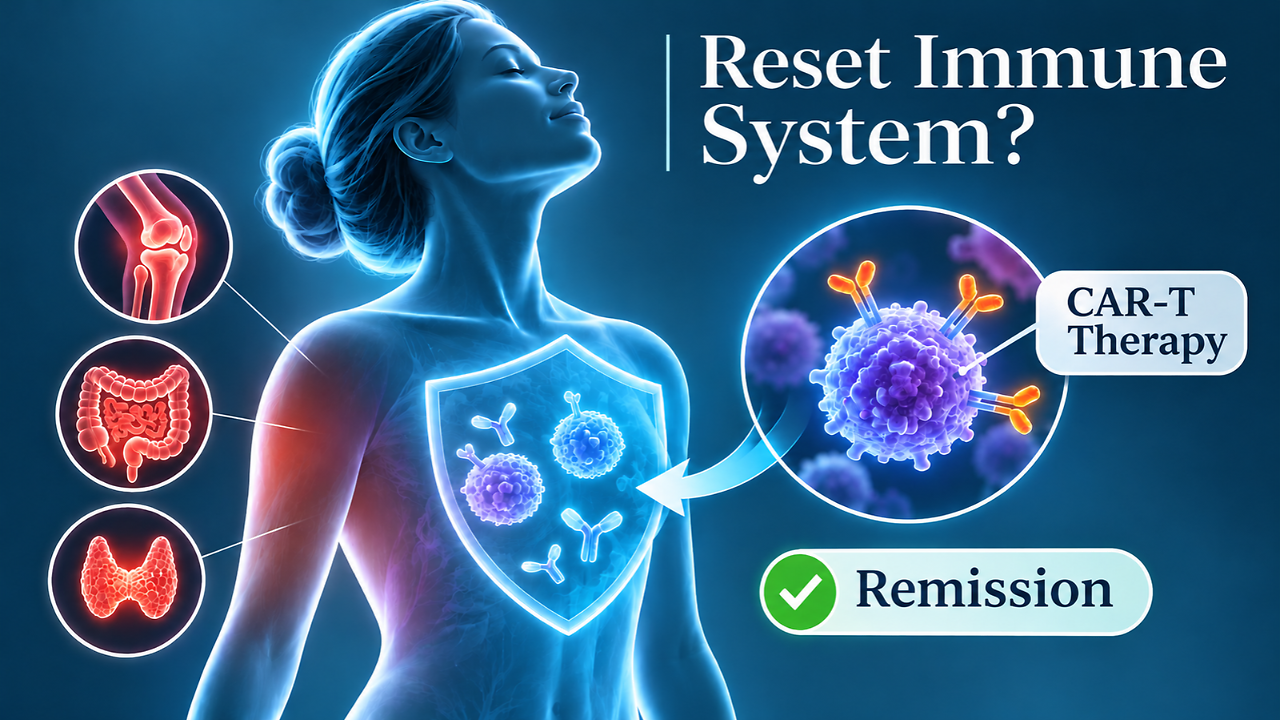
Autoimmune diseases are treated with therapies that suppress an overactive immune system that attacks the body’s healthy cells. So scientists are exploring if it is possible to ‘reset’ the immune system by removing the cells that attack the body.A remarkable case from Germany may have made this possibility a reality. A 47-year-old woman suffering from three severe autoimmune diseases achieved remission after receiving a single infusion of experimental CAR-T cell therapy after years of unsuccessful treatments. She no longer required daily blood transfusions and remained in remission nearly a year after therapy.The case, published in the journal Med, highlighted the potential of CAR-T therapy beyond cancer, especially for severe autoimmune diseases that do not respond to existing treatment. Woman Suffered From Three Autoimmune Diseases Also read: 40-Year-Old Thought He Had Flu But It Was A Rare Autoimmune Disease Failing His Kidneys: What Is Goodpasture SyndromeThe woman had been living with three autoimmune conditions that caused her immune system to attack different components of her body.Autoimmune haemolytic anaemia (AIHA): Her immune system destroyed her red blood cells, which resulted in severe anaemia and a need for frequent blood transfusions.Immune thrombocytopenia (ITP): Her immune system attacked platelets, the blood components responsible for helping blood clot, increasing her risk of bleeding.Antiphospholipid syndrome (APS): Her body produced antibodies linked with dangerous blood clots, which required her to be on blood-thinning medication.She had been living with the conditions for more than a decade, and she had already undergone nine different treatments, including steroids, antibody therapies and immunosuppressive drugs, which did not offer any improvement.Her illness had significantly affected her daily life, leaving her severely fatigued and unable to carry out normal activities. CAR-T Therapy Helped Her Enter Remission Also read: Christina Applegate Suspects Breast Implants May Have Caused MS-Like Symptoms: What Is the Condition?CAR-T therapy involves collecting a patient's T cells, genetically modifying them to recognise a specific target and infusing them back into the body.In this case, the researchers engineered the patient's T cells to target CD19, a protein found on B cells. B cells normally help protect the body by producing antibodies, but dysfunctional B cells can generate antibodies that mistakenly attack healthy tissues.The engineered CAR-T cells were designed to eliminate these problematic B cells, allowing the immune system to rebuild its B-cell pool.The patient began improving rapidly after treatment. Within seven days, she no longer required blood transfusions. Within approximately 25 days, her haemoglobin levels had returned to normal, her platelet counts stabilised and the antibodies related to the disease linked to blood clotting had fallen significantly. Her doctors reported complete remission across all three conditions. What Is 'Immune Reset'?Also read: Nick Jonas Opens Up About Living With Type 1 Diabetes For More Than 2 Decades: What Does It EntailImmune reset is to essentially eliminate the dysfunctional immune cells responsible for driving disease rather than suppressing them.After CAR-T treatment, the patient's B cells began returning approximately 322 days later. Most appeared to be naive B cells, meaning they had not previously been exposed to antigens and did not carry the same established immune memory of her autoimmune disease.This suggests CAR-T therapy may have cleared the problematic B-cell population and allowed a new population to develop without immediately restarting the autoimmune attack.Researchers believe this could offer something conventional therapies often struggle to do, which is prolonged remission without ongoing treatment. Side Effects Of CAR-T Therapy While the patient's response was remarkable, this is a single case report and cannot establish how effective or safe CAR-T therapy would be for a larger population.CAR-T treatment can cause serious complications like cytokine release syndrome, neurological toxicity, infections and prolonged immune suppression. Although the patient did not experience severe cytokine release syndrome or neurological toxicity, she had some abnormalities during follow-up.Researchers are now investigating CAR-T therapy in several autoimmune conditions, including lupus, systemic sclerosis and inflammatory muscle diseases.