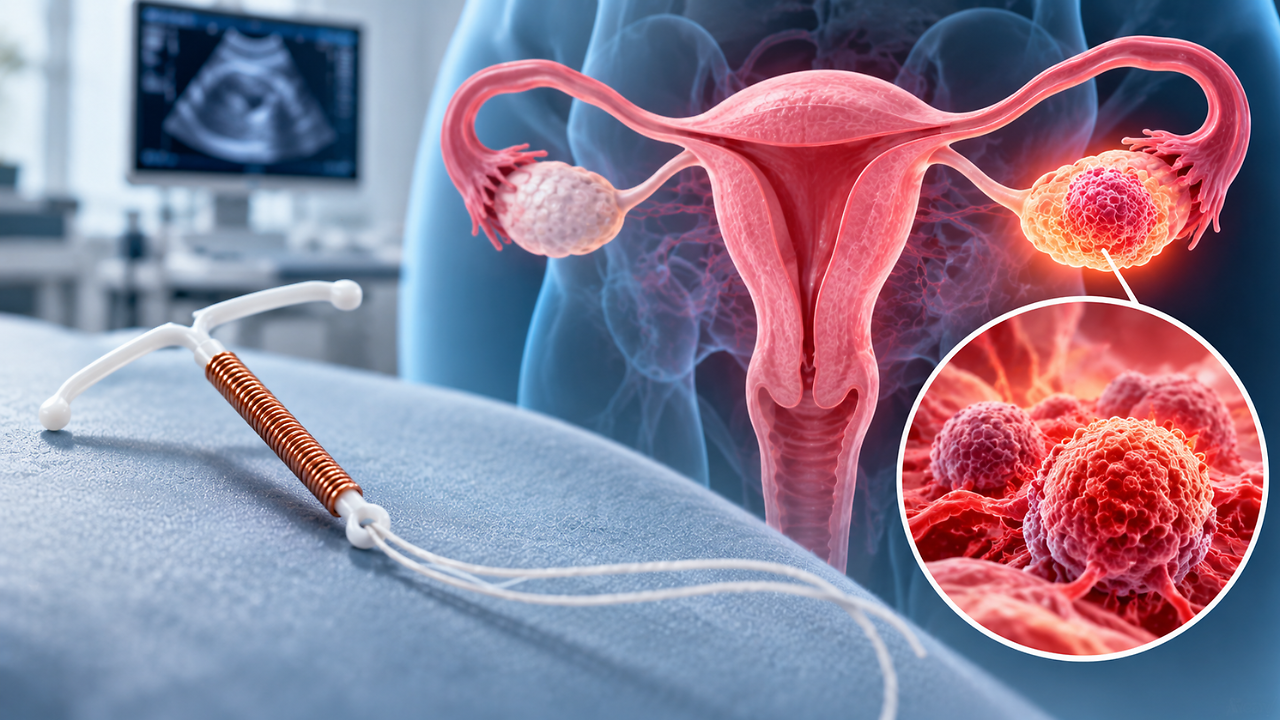
When Caroline Bailey started experiencing stabbing abdominal pain, she believed her contraceptive coil was at fault. Bailey’s pain became so severe that the 54-year-old was forced to pay multiple visits to her doctor, desperate to have the device removed. But she instead ended up receiving a life-changing diagnosis Her scans revealed a 13cm tumour pressing against the coil. In June 2023, Bailey was diagnosed with stage three ovarian cancer, a diagnosis that left her fearing that she may not have long to live. But now after chemotherapy and surgery, she has no evidence of disease. Looking back, she believes the coil may have saved her life by prompting her to get medical intervention diagnosis. “I started to have the worst stomach pains – like a stabbing pain in the middle of my abdomen,” she said. “So, I kept going back into the doctors and said, 'I think the coil needs to come out'.” As the pain worsened, Bailey returned to her doctor. She described how she “crawled into the doctors on my hands and knees”, still hoping to have the coil removed. “I wanted to rip it out myself, but you can't. I thought it was killing me,” she said.Doctor Suspected Ovarian Cancer Also read: Can Panty Liners Pose A Cancer Risk? What Science SaysBailey, who had been diagnosed with endometriosis in her mid-20s, initially believed her symptoms could be due to the coil. She said there was no history of ovarian cancer in her family. However, a doctor wanted to investigate whether ovarian cancer could be causing her symptoms and gave her a form for a CA125 blood test. The CA125 test measures the level of a protein in the blood. Elevated levels could signal presence of ovarian cancer. Bailey's result was 72 units per millilitre (U/ml). According to the charity Ovarian Cancer Action, women over 40 with a CA125 level above 35 U/ml should be referred for further investigation. Subsequent scans revealed the 13cm tumour, and a biopsy confirmed stage three ovarian cancer. The cancer had spread to her omentum, a layer of fatty tissue in the abdomen near the stomach. “I couldn't believe the size of it. I actually thought, 'I won't live for another two years',” Bailey said. Six-Hour Surgery Followed By Chemotherapy Also read: Pope Leo XIV’s Lung Cancer Diagnosis: When Should You Worry About Lung Nodules?Bailey began chemotherapy, undergoing four rounds of treatment that reduced the tumour from 13cm to 8cm. She also underwent a six-hour operation that included a total hysterectomy, removing her womb and cervix, as well as her omentum and appendix. The surgery left her with no evidence of disease. However, she was told that ovarian cancer is an be unpredictable and may return. Bailey underwent two more rounds of chemotherapy in January 2024 and continued to get follow-up CT scans. Around the same time, genetic testing revealed mutations that increased her risk of breast and ovarian cancer. She is now having consultations about a double mastectomy, followed by reconstruction and implants, as part of a trial. Her family members are also undergoing genetic testing. What Are The Symptoms Of Ovarian Cancer? Ovarian cancer can be difficult to identify because its symptoms may resemble those of less serious conditions. Persistent or frequent symptoms should not be ignored, particularly when they are new or different from usual. According to the NHS, the main symptoms are: A swollen tummy or persistent bloatingPain or tenderness in the abdomen or the area between the hipsLoss of appetite or feeling full quickly after eatingNeeding to urinate urgently or more often than usualBailey said she wished it had been easier to get her symptoms taken seriously. “I wish it was easier for women to get diagnosed,” she said. Her experience also highlights the importance of seeking medical intervention when symptoms, even when there appears to be an obvious explanation. Ovarian cancer was the 16th most common cancer, with approximately 7,700 new cases every year in the UK, according to Cancer Research UK.