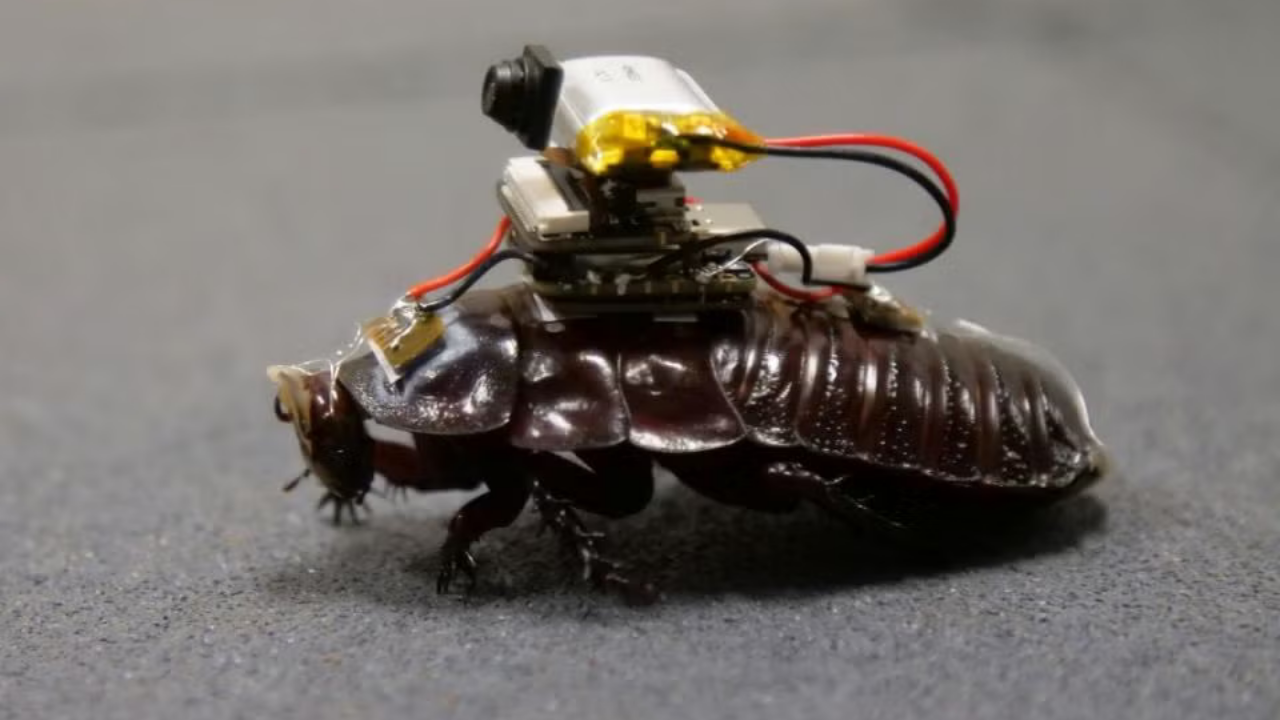
A team of Australian scientists has developed cyborg cockroaches for medical missions. Researchers from the University of Queensland fitted Giant Burrowing Cockroaches with a removable navigation system that enables them to be remotely piloted through complex terrain and rubble. The cockroaches are equipped with cameras and miniature medical injectors to deliver supervised emergency care to people trapped in collapsed buildings or caves. What's The Purpose? Called ‘Paraborgs’, the cyborg insects go beyond searching for survivors to actively assisting them. In the paper, published in Advanced Science, the researchers said the long-term vision is to deploy swarms of specialized cyborg insects at disaster sites, with each performing a complementary role. “The vision is not to replace first responders, but to give them another way to see, reach and potentially help people when direct access is impossible,” said Dr Vo-Doan from the UQ Biorobotics Lab. Director of the UNSW Medical Robotics Lab Associate Professor Thanh Nho Do said the Paraborg technology could extend the reach of emergency medicine. “From a biomedical perspective, the opportunity is to bring treatment to a patient when the patient cannot yet be brought to treatment,” Associate Professor Do said. “The long-term goal is targeted, human-supervised intervention in places conventional medical technologies cannot access.” Why Cockroaches? Dr Vo-Doan said the research demonstrates how cyborg technology can be adapted across different insect platforms. “Rather than building one robot to do everything, we can harness the natural strengths of different insects and equip them for different missions,” Dr Vo-Doan said. The larger cockroaches provide greater capacity to carry specialized rescue and medical equipment. The cockroaches, like the team’s previous cyborg insect models, are anaesthetized during electrode and microchip fitting. They live for as long as other cockroaches once the harnesses are removed. What About Cyborg Beetles? The team has previously demonstrated cyborg beetles capable of controlled climbing. They have shown they can remotely guide the movement of common darkling beetles using a video game controller. The beetles are fitted with removable microchip backpacks that use electrodes to stimulate the insect's antenna or hardened forewings. The programmable controls allow for precise directional guidance without affecting the lifespan of the beetle. How Can The Cyborg Cockroaches Aid In Rescue? Superintendent Tim Hassiotis, Manager Natural Disaster and Humanitarian at Fire and Rescue NSW, said the technology could extend the reach of rescue teams. “If cyborg insects can safely enter spaces we can’t, locate casualties and ultimately help deliver emergency care, they could become another valuable tool in the future of urban search and rescue,” Superintendent Hassiotis said. What Could The Future Hold? Dr Vo-Doan said the longer-term vision was to deploy swarms of specialized cyborg insects, with individuals performing complementary roles. “Some could carry cameras and environmental sensors, while others could carry specialized emergency or medical equipment,” he said. “Hopefully, within the next 5 to 10 years, we could see cyborg insect rescue teams deployed to help people in real emergencies, provided we have the resources to accelerate the research and field testing.”