
- Health Conditions A-Z
- Health & Wellness
- Nutrition
- Fitness
- Health News
- Ayurveda
- Videos
- Medicine A-Z
- Parenting
Deck’s Fraser Olender Says Vaping Triggered His Heart Attack: Expert Breaks Down The Risk
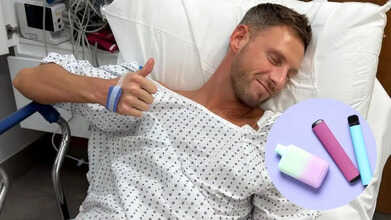
Fraser Olender, known from Below Deck, recently shared that he was hospitalized with a lung injury and a heart attack linked to vaping. The 33-year-old posted photos from his hospital bed and explained that the episode began with sudden chest pain and trouble breathing. He later learned that he had developed EVALI, or E-cigarette or Vaping-Associated Lung Injury, along with a coronary artery vasospasm that reduced blood flow to his heart. His experience has renewed questions about the real risks of vaping, especially for young adults who may assume it is a safer option.
Deck’s Fraser Olender Says Vaping Triggered His Heart Attack
Olender described being rushed to the hospital after severe chest discomfort and breathlessness. Over the next week, doctors ran tests and confirmed that he had EVALI, a condition first identified in 2019. It can include several serious complications, such as bronchiolitis obliterans and acute respiratory distress syndrome. Many patients require intensive care.
During his evaluation, doctors also found that his arteries had tightened suddenly, cutting off oxygen to part of his heart. This led to an ST-elevation myocardial infarction, a type of heart attack usually caused by a blocked artery. In his case, there was no blockage. The spasm alone was enough to trigger the event.
What Is Coronary Artery Vasospasm?
A coronary artery vasospasm occurs when the vessels supplying blood to the heart contract sharply. Reduced blood flow deprives the heart muscle of oxygen. When this lasts long enough, it can cause injury similar to a traditional heart attack. Vaping can contribute to these spasms by irritating blood vessels, upsetting the balance of oxygen in the lungs, and releasing chemicals that cause inflammation.
Cardiologists note that nicotine and other compounds in vape aerosols can cause the blood vessels to narrow, raise heart rate, and place stress on the heart even in otherwise healthy adults.
Why Doctors Warn About EVALI
EVALI has been linked to a wide range of vaping products. Symptoms include shortness of breath, chest pain, gastrointestinal upset, and fatigue. The condition inflames the lungs and interferes with oxygen exchange, which increases pressure on the heart. For some people, the damage appears suddenly, even after periods of regular use without symptoms.
Olender’s Recovery and Warning to Others
Olender wrote that the pain during the episode was intense and unrelenting. Multiple rounds of morphine offered little relief. He said the incident convinced him to quit vaping immediately.
He urged others to stop as well, calling the habit a needless risk. He added that soon after quitting, he noticed improvements in his skin and overall energy, something he had not expected.
Vaping is often marketed as a cleaner alternative to smoking, yet its long-term effects on the lungs and heart remain uncertain. Olender’s story highlights the need for awareness. Sudden heart complications, vessel spasms, and lung injury can occur in people with no prior health issues. Doctors continue to study the chemicals released in aerosols and how they affect blood vessels, lung tissue, and the cardiovascular system.
1 In 7 Indians Affected By Mental Health Disorders; Govt To Launch NIMHANS-2 To Boost Care

Credit: Canva
One in seven Indians, or over 14 percent of the population, suffers from some form of mental health disorder. Amid an increasing treatment gap -- up to 90 percent -- seen in several states, especially in North India, the government today reiterated the plan of launching a second National Institute of Mental Health and Neurosciences (NIMHANS) in the northern states.
NIMHANS-2 was first announced by Finance Minister Nirmala Sitharaman during the Union Budget 2026-27, to deliver specialized care for mental health and neurological disorders in north India.
Health experts and policymakers, as part of the government-led Post-Budget Webinar series, highlighted the growing burden of mental and neurological disorders in India and also stressed the urgent need to strengthen institutional capacity to meet emerging healthcare demands.
"One in seven Indians is affected by mental health disorders, while several states continue to face a treatment gap ranging from 70 to 90 percent," the experts said.
Noting that Non-Communicable Diseases (NCDs) account for over 60 percent of deaths in the country, they added that "neurological and mental health conditions are among the leading contributors to disability-adjusted life years (DALYs)," among the citizens.
Need For Tertiary Neuro-psychiatric Care
To address these, the experts called for ramping up tertiary mental health institutions and expanding specialized services.
The session, moderated by Vijay Nehra, Joint Secretary, Ministry of Health and Family Welfare, highlighted that North India currently lacks adequate tertiary neuro-psychiatric care facilities. These include areas such as:
- advanced neuroimaging,
- neurocritical care,
- specialized neurological services
Further, making a virtual address at the Post-Budget Webinar, Union Health Minister JP Nadda also highlighted the government’s focus on strengthening mental healthcare services in the country.
"NIMHANS-2 will be established in North India to expand advanced clinical care, training, and research," Nadda said.
"In addition, the Central Institute of Psychiatry, Ranchi, and the Lokopriya Gopinath Bordoloi Regional Institute of Mental Health, Tezpur, will be upgraded as regional apex institutions to strengthen mental healthcare services in the eastern and north-eastern regions," he added.
Meanwhile, the experts also stressed the need to improve services in underserved and geographically remote regions, including the northeastern states, through better infrastructure, capacity building, and targeted deployment of trained mental health professionals.
They also discussed strategies for expanding advanced neuro-psychiatric care and reinforcing India’s overall mental healthcare ecosystem. They proposed:
- Adopting a hub-and-spoke model supported by digital health platforms
This would allow tertiary institutions and centers of excellence to provide technical guidance, specialist consultations, and clinical support to district hospitals and community-level health facilities.
"Such a model would strengthen referral pathways and ensure that specialized mental health services are accessible to people even in remote and rural areas," the experts said.
- Integrating services under Tele-MANAS
Both existing and upcoming campuses of NIMHANS must be integrated , as this will enable a robust nationwide tele-mental health network that ensures
- timely counselling,
- psychological support,
- specialist consultations
- Digital follow-up systems
The experts called for the seamless integration of healthcare facilities, aligned with the vision of the Ayushman Bharat Digital Mission and the ABHA ID ecosystem. This, they said, will
- enable continuity of care,
- Improve monitoring of patients,
- Lead to better clinical outcomes
- A national Brain-Mind Cloud Network
The Network proposed under the National Health Mission would connect premier institutions such as All India Institute of Medical Sciences (AIIMS), state medical colleges, and primary healthcare centers through a digitally integrated platform.
It could also facilitate
- unified mental health records,
- AI-based screening tools,
- data-driven clinical decision support systems,
- tele-neuro-psychiatric hubs at regional centers.
HMPV Virus Cases Surging In California, New Jersey: Is It Dangerous?
Credit: Canva
California and New Jersey in the US are seeing an uptick in cases of human metapneumovirus (HMPV) -- a virus with no vaccine or treatment.
According to the US Centers for Disease Control and Prevention (CDC), HMPV can cause upper and lower respiratory disease. There is currently no vaccine to prevent it, and no specific antiviral therapy to treat it.
"Most people will recover on their own," the agency noted, but advised people who get sick to drink plenty of liquids, stay home, and rest.
As per the CDC's respiratory dashboard, the cases of HMPV steadily ticked up since November 2025. It accounted for over 5 percent of positive tests the week of February 14 through February 21.
While HMPV is not a "new" virus, having first been discovered in 2001, cases haven't spiked to this level in the US since an outbreak in April 2025, USA Today reported.
The New Jersey Respiratory Surveillance Report cited that about 4 percent of residents in the state are testing positive for HMPV. The HMPV cases, accompanied by RSV, COVID, and flu cases, are surging, increasing the number of people seeking emergency medical care.
As per the public database, WastewaterScan Dashboard, HMPV is rampant in Northern California -- specifically San Francisco, Marin, Vallejo, Napa, Novato, Santa Rosa, Sacramento, and Davis, the Independent UK reported.
What Is HMPV? Is It Dangerous?
HMPV was first discovered in 2001 and is part of the Pneumoviridae family along with the Respiratory syncytial virus (RSV).
HMPV most likely spreads from an infected person to others through:
- the air by coughing and sneezing
- close personal contact, such as touching or shaking hands
- touching objects or surfaces that have the viruses on them, then touching the mouth, nose, or eyes
In the US, HMPV circulates in predictable patterns each year, typically beginning in winter and lasting through spring.
The usually self-limiting and mild symptoms typically last 4 to 5 days. These include:
- cough,
- fever,
- nasal congestion,
- shortness of breath
People at risk include:
- elderly people,
- children,
- people with comorbidities
"The HMPV is not deadly, and there is no evidence of mortality or a severe transmission rate," former Indian Council of Medical Research (ICMR) scientist, Dr. Raman Gangakhedkar, told IANS, during the virus's outbreak in India in 2025.
“The virus may cause pneumonitis-like illness, but the mortality rates are almost unknown so far. HMPV has a global prevalence of about 4 per cent,” he added.
While no vaccine or treatment can prevent HMPV infection, to avoid the infection, individuals must:
Practice good hygiene and cover your mouth and nose with a tissue when coughing or sneezing, or use your elbow, not your hands, for it. And wash your hands properly, especially in healthcare settings.
India working on grand preventive and holistic health vision: PM Modi
Credit: PIB
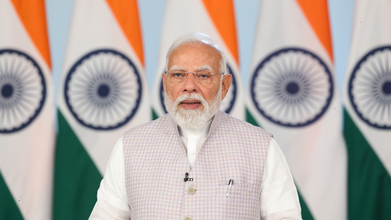
India is currently working on a vision of preventive and holistic health, said Prime Minister Narendra Modi today, while addressing a series of post-budget webinars.
The Prime Minister highlighted that sectors like health, education, skill, tourism, sports, and culture are the primary vehicles for meeting the goal of “Sabka Saath Sabka Vikas-Fulfilling Aspirations of People”.
Also Read: GLP-1 Weight Loss Drugs Could Now Treat Addiction, Says Study
“India is today working on a grand vision for preventive and holistic health. In the past few years, the country's health infrastructure has been strengthened. Hundreds of new medical colleges have opened in districts,” PM Modi said.
“Through the Ayushman Bharat scheme, access to health services has been extended to every village via wellness centers,” he added.
Emphasizing the vision of preventive and holistic health, the Prime Minister noted the rapid strengthening of health infrastructure and the global popularity of Yoga and Ayurveda.
Demand For Care Economy And Telemedicine
PM Modi specifically drew attention to the emerging 'Care Economy' and the rising demand for caregivers globally, urging experts to develop new training models to empower the youth.
"The population of senior citizens will increase in the country in the coming decade. In many countries of the world, there is a high demand for caregivers,” he said.
"Hence, skill-based employment opportunities for lakhs of youth in the health sector are present. I request that new training models be developed," PM Modi added.
The Prime Minister also spoke about the success of telemedicine in reaching remote areas. However, he stressed the need for further simplifying the user experience and building greater public awareness.
"I believe there is still a need to increase awareness and ease of use in telemedicine," PM Modi said.
Experts Push For Emergency Healthcare Services in India
In a separate session, health experts, policymakers, public health experts, and clinicians deliberated on the Budget Announcement under Para 88: “Strengthening of Emergency & Trauma Care Centers”.
In the Union Budget 2026–27, the Government had announced a major initiative to strengthen emergency healthcare services across the country.
The Government also proposed to strengthen and increase emergency and trauma care capacities by 50 per cent in District Hospitals by establishing emergency and trauma care centers.
The experts highlighted the country's significant burden of emergency medical conditions, including road traffic injuries, heart attacks, strokes, poisonings, burns, snake bites, etc.
While these require timely intervention within the “golden hour” to prevent deaths and long-term disability, emergency beds constitute only a small share of total hospital bed capacity in many district hospitals, highlighting the need for strengthening emergency care infrastructure and systems, the experts noted.
The discussion also highlighted the role of implementation research and data-driven approaches in identifying gaps and improving emergency care systems at the district level.
“Strengthening emergency and trauma care at the district level requires a systematic and outcome-oriented approach that goes beyond infrastructure to focus on performance and service delivery,” said Dr. V.K. Paul, member, NITI Aayog, who moderated the session.
Dr. Paul stressed the need for greater convergence across hospital systems, ambulance networks, and government programs, supported by digital technologies and real-time monitoring.
He also called for continued skilling and upskilling of emergency care personnel to build a strong and responsive emergency care system.
- Follow Us :


© 2024 Bennett, Coleman & Company Limited