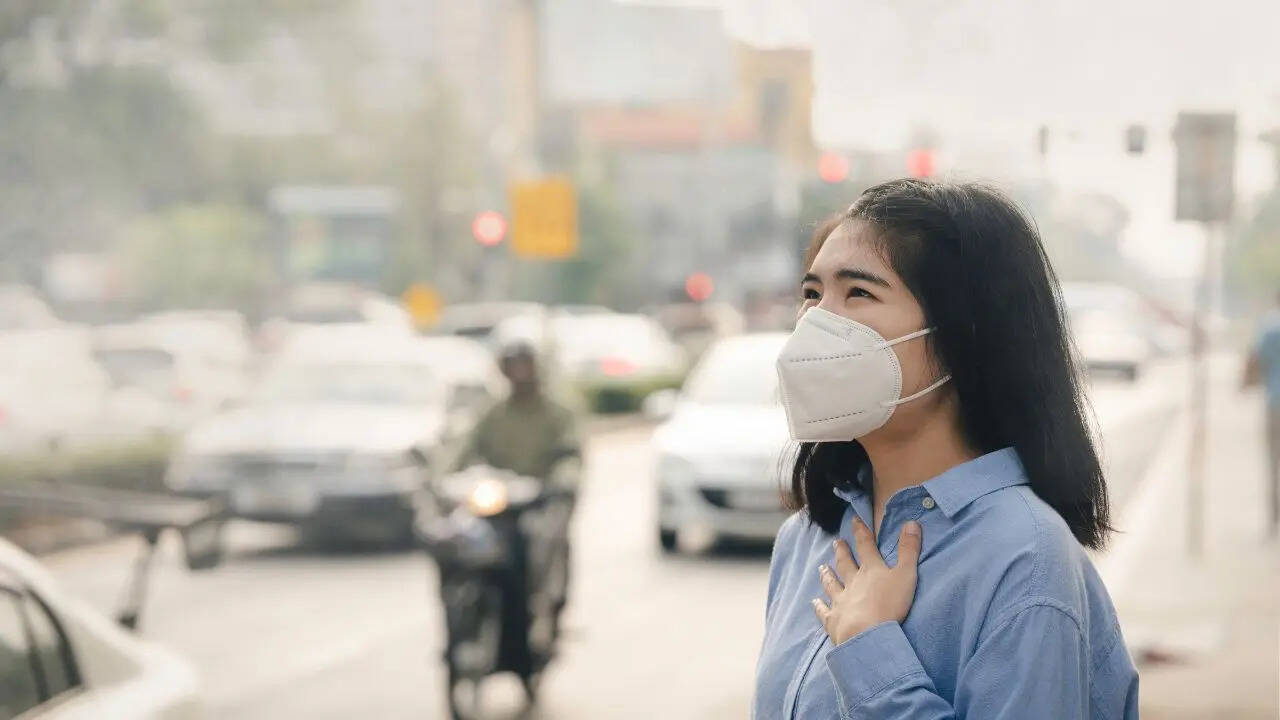
Anti-pollution measures under GRAP-3 came into force in Delhi on Saturday as air quality slipped into the “severe” bracket. By noon, the national capital reported an Air Quality Index of 405, according to figures released by the Central Pollution Control Board (CPCB). Earlier in the day, Delhi’s AQI hovered close to 390 during the morning hours.Delhi Air Quality Hits ‘Severe'Each winter, Delhi and the surrounding NCR (National Capital Region) bring in curbs under the Graded Response Action Plan, which divides air quality into four levels: Stage 1 (Poor, AQI 201–300), Stage 2 (Very Poor, AQI 301–400), Stage 3 (Severe, AQI 401–450) and Stage 4 (Severe Plus, AQI above 450).Under GRAP-3, non-essential construction and demolition activities have been halted, along with stone crushing and mining operations. The measures also include restrictions on older diesel goods vehicles within Delhi. Schools up to Class 5 are required to move to a hybrid learning model, while offices across Delhi-NCR may function with only 50 per cent staff strength, as per Press Information Bureau. Hazardous AQI levels have become a recurring feature across several parts of Delhi during the winter months. Quoting environmental experts, an IANS report linked the sharp decline in air quality to a mix of stagnant wind conditions, vehicle emissions, industrial pollution and seasonal factors such as crop residue burning in neighbouring states.What Changed in GRAP?The biggest shift under the updated GRAP framework is that stricter steps will now come into force earlier, instead of waiting for air quality to deteriorate further.As per Press Information Bureau, under the revised system, measures that were earlier reserved for Stage 4 will now apply at Stage 3 itself. This means that once the AQI reaches the 301–400 range, public, municipal and private offices will function with only 50 percent staff. Central government offices will also move to work-from-home at this stage, rather than waiting for the AQI to cross 450.In the same way, actions that earlier fell under Stage 3 have now been pushed to Stage 2. As a result, staggered timings for government offices will begin as soon as the AQI enters the 201–300 category.Stage 2 measures have also been advanced to Stage 1. This brings uninterrupted power supply arrangements into effect earlier, at an AQI level of 101–200, to reduce the need for diesel generator use and limit additional emissions.Delhi AQI: GRAP Stage 3 Restrictions AnnouncedIn response to the worsening situation, the Delhi government confirmed that the Commission for Air Quality Management (CAQM) has activated all measures under Stage III of GRAP, which falls under the “Severe” air quality category with AQI levels between 401 and 450, across the entire NCR.These Stage 3 curbs will apply in addition to the existing Stage I and Stage II measures. Authorities, including NCR Pollution Control Boards, have been instructed to step up enforcement to prevent further deterioration of air quality across the region.Ban on the transportation of construction materials such as sand and cement, particularly on non-paved roadsComplete suspension of demolition and construction work unless unavoidable, including earthwork, piling and trenchingAdvisory for private firms to permit work-from-home or hybrid arrangements to reduce traffic-related pollutionRestrictions on inter-state diesel buses entering or operating within DelhiProhibition on BS-3 petrol and BS-4 diesel four-wheelers in Delhi and nearby NCR districtsShutdown of stone crushers, mining operations and hot-mix plants that do not run on clean fuelBan on the use of diesel generator sets, except for emergency and essential servicesGRAP III Imposed in Delhi-NCR: What’s AllowedEven as Stage III of the Graded Response Action Plan comes into force, certain essential activities and services will continue to operate to minimise disruption to daily life.Essential infrastructure and public service projects permitted include:Metro, railway, airport, highway, defence, healthcare and sanitation-related projectsConstruction work linked to critical infrastructure, provided strict dust control and proper waste management norms are followedVehicles used by persons with disabilitiesRecommended measures under GRAP III include:Greater use of public transport to reduce private vehicle emissionsHybrid or online classes for students up to Grade 5 to limit outdoor exposure and traffic movement