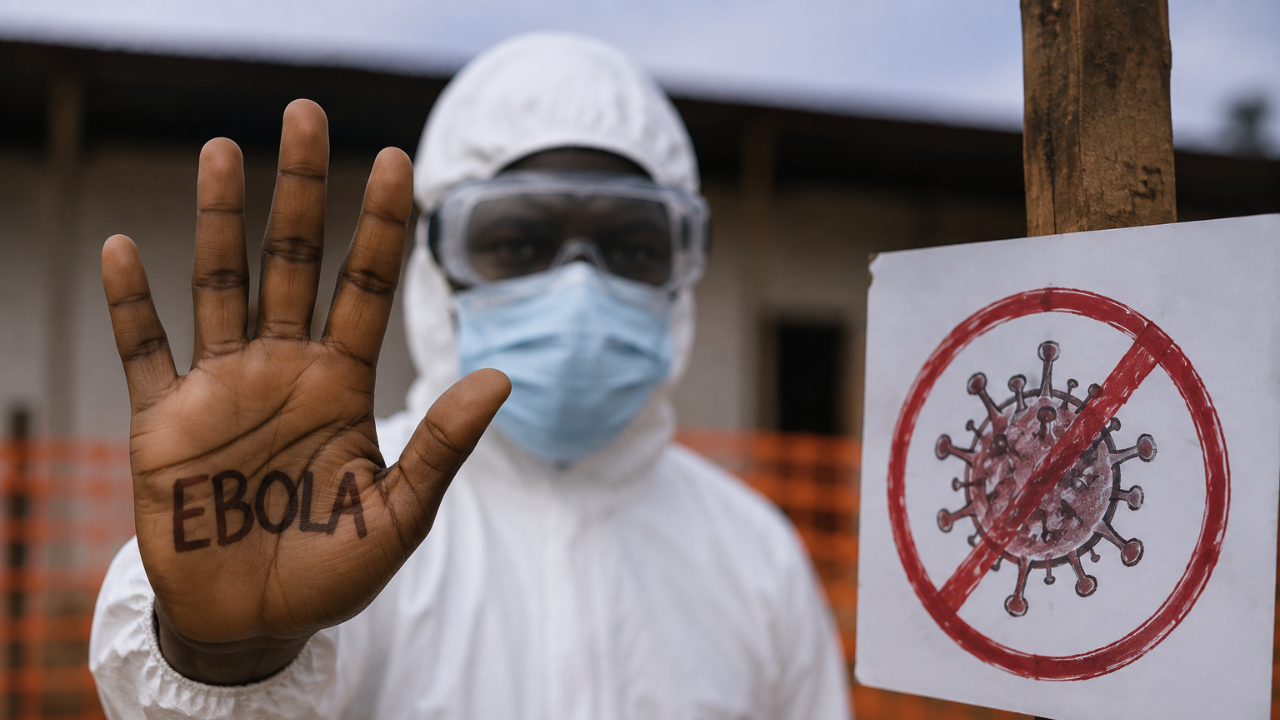
The Ebola outbreak in the Democratic Republic of Congo (DRC) has become the deadliest one in the country’s history, with the death toll reaching 2,325, according to the latest reports.The number has now surpassed the 2,299 deaths recorded during the 2018–2020 Ebola outbreak, which had previously been the country’s worst. The current outbreak has also become the largest in the DRC by number of confirmed cases, with 4,945 infections recorded so far. The latest figures indicate that the outbreak has reached another grim milestone just three months after it was officially declared on May 15.Ebola Is Spreading RapidlyThe DRC’s National Public Health Institute reported 101 new confirmed cases in the 24 hours leading up to its latest update, highlighting how quickly transmission is continuing.The outbreak was first detected in Ituri province, but the virus has since spread to six provinces, including North Kivu, South Kivu, Haut-Uele, Tshopo and Bas-Uele. More than 3,400 cases have been reported in Ituri alone. The United Nations has described the outbreak as the fastest-growing Ebola epidemic on record.“Ebola is winning in the Democratic Republic of the Congo. We cannot let the virus outrun our response,” UN humanitarian chief Tom Fletcher said, calling for “speed, scale, and solidarity” before the outbreak gets even further ahead of containment efforts. Also read: Ebola Outbreak Is Claiming 1 Life Every 30 Minutes In DR Congo: UN Humanitarian OfficialThe Most Deadly Outbreak One of the biggest reasons behind rapid transmission is that people are still being diagnosed too late. Thomas Parisch, a public health specialist with Médecins Sans Frontières, said that normally the proportion of people dying should fall as outbreaks progress because contact tracing improves and patients receive treatment earlier.“Instead, we're still seeing many cases detected very late,” he said, with some infections only being identified after patients have died in their communities. The case-fatality ratio has climbed from around 20% in early June to approximately 46%, according to Reuters. That does not mean the virus itself has become more lethal. Rather, the increase is a warning that many patients are reaching healthcare facilities too late for treatment to be effective. Also read: Ebola 2026 Outbreak Spreading Faster Than Any Before, On Track To Become Deadliest: WHO ChiefNo Approved VaccineThe current outbreak is being caused by the Bundibugyo species of Ebola, a relatively rare strain.Unlike the Zaire species responsible for several previous major Ebola outbreaks, Bundibugyo currently has no approved vaccine or specific treatment. WHO says experimental vaccines and treatments are being investigated, but they remain under evaluation. This makes early diagnosis, isolation, contact tracing and supportive medical care particularly important.The outbreak is also unfolding in an extremely difficult environment. Conflict, population movement, weak healthcare infrastructure, misinformation and shortages of resources are making it harder for health teams to identify and isolate infections quickly. Health workers have also demonstrated strikes due to unpaid wages. Also read: Amid Rapidly Expanding Ebola Outbreak, DR Congo Is Seeing An Alarming Increase In Maternal Deaths; Here's WhyEfforts Towards Containing The Outbreak Despite the challenges, WHO chief Dr Tedros Adhanom Ghebreyesus said significant progress has been made towards containing and eradicating the virus. It includes:More than 21,000 community health workers have been trained.Treatment centres, safe burial teams, laboratories and community engagement teams are operating across the affected provinces, reaching hundreds of thousands of people.A total of 886 patients have recovered, even without specific therapeutics and vaccines, which are progressing through trials.For the first time, two vaccines specifically designed against Bundibugyo virus have entered Phase 1 safety trials in humans.Two new animal studies of a vaccine against Zaire ebolavirus — the more common species — have shown promising evidence of cross-protection in animals, Tedros said.