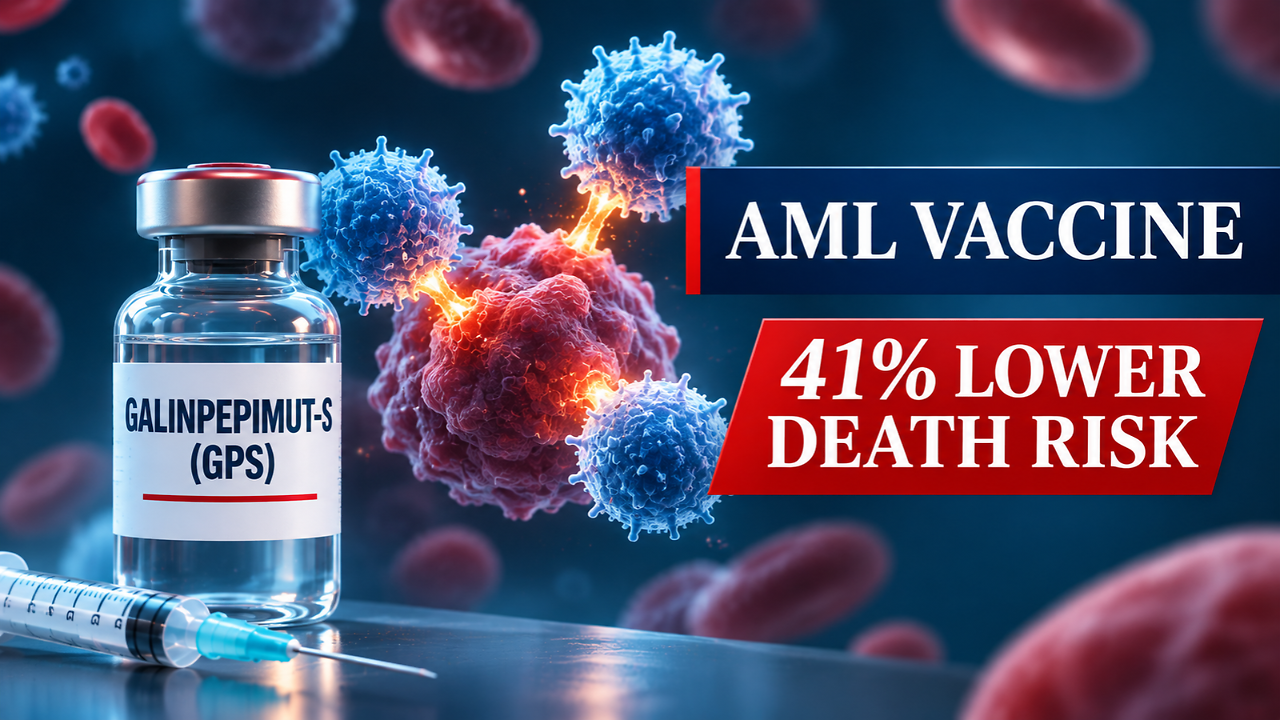
Amid growing research in vaccination for different cancers, an experimental cancer vaccine cut the risk of death by 41% in patients with acute myeloid leukemia (AML) in a late-stage clinical trial. Showing promise in treating the aggressive blood cancer, the findings have given hope to patients whose cancer has returned after treatment and those who have limited options.The vaccine, called galinpepimut-S (GPS), is being developed by US-based pharma company SELLAS Life Sciences. Results from the Phase 3 REGAL trial showed that patients who received the vaccine lived longer than those given the next best available treatment.What Is Acute Myeloid Leukemia?Also read: Health Canada Warns Against Faulty Radon Detectors: How The Invisible Gas In Your Home May Cause Lung CancerAcute myeloid leukemia is an aggressive blood cancer that begins in the bone marrow, the soft tissue inside bones responsible for producing blood cells. It develops when abnormal immature blood cells multiply rapidly and interfere with the production of healthy red blood cells, white blood cells and platelets.Common symptoms include persistent fatigue, fever, frequent infections, easy bruising, unusual bleeding and breathlessness.Treatment usually involves chemotherapy, specific medicines in eligible patients and in some cases, stem-cell transplantation. AML can return after treatment, making it difficult to achieve remission.What Did The Trial Find? Also read: World Cervical Cancer Elimination Day 2026: WHO Calls For HPV Vaccination, Screening & Early TreatmentThe trial involved 126 patients who had achieved remission after treatment but were unable to undergo a stem-cell transplant.According to the findings, the vaccine reduced the risk of death by 41%. Patients receiving GPS had a median overall survival of 24 months, compared to 14.7 months among those receiving standard treatment. The results also showed a hazard ratio of 0.59 and a p-value of 0.035.SELLAS plans to discuss the findings with the US Food and Drug Administration (FDA), preparing to submit an application for approval in the first half of 2027. How Does The Leukemia Vaccine Work?Also read: Daraxonrasib: Europe Approves First RAS-Targeted Drug For Metastatic Pancreatic CancerUnlike preventive vaccines, GPS is a therapeutic cancer vaccine. It is developed to help immune system identify and destroy residual cancer cells in the body after treatment.The vaccine targets a protein called Wilms' Tumour 1 (WT1), which is found in more than 95% of people with AML, according to Memorial Sloan Kettering Cancer Center (MSK), where the vaccine was developed.GPS contains synthetic peptides, which are short chains of amino acids derived from the WT1 protein. These peptides help the immune system to produce specialised T cells that recognise and attack cancer cells carrying WT1.In simple terms, the vaccine trains the immune system to identify leftover cancer cells that may be too small to detect through routine testing but could eventually cause cancer recurrence.Unlike personalised cancer vaccines that are manufactured using an individual patient's tumour, GPS is an off-the-shelf vaccine that can be used in multiple patients.Side Effects Of GPS GPS was generally tolerated well in the Phase 3 trial as no safety concerns were identified. Most side effects were mild to moderate. Reactions at injection sites were among the most commonly reported side effects.The company, however, has only announced topline results. The detailed findings from the trial's secondary endpoints related to relapse-free and leukemia-free survival, will be presented at a future medical conference.If the findings are supported by regulatory authorities, GPS could become a new treatment option for patients whose AML has relapsed and those who cannot opt for a stem-cell transplant.