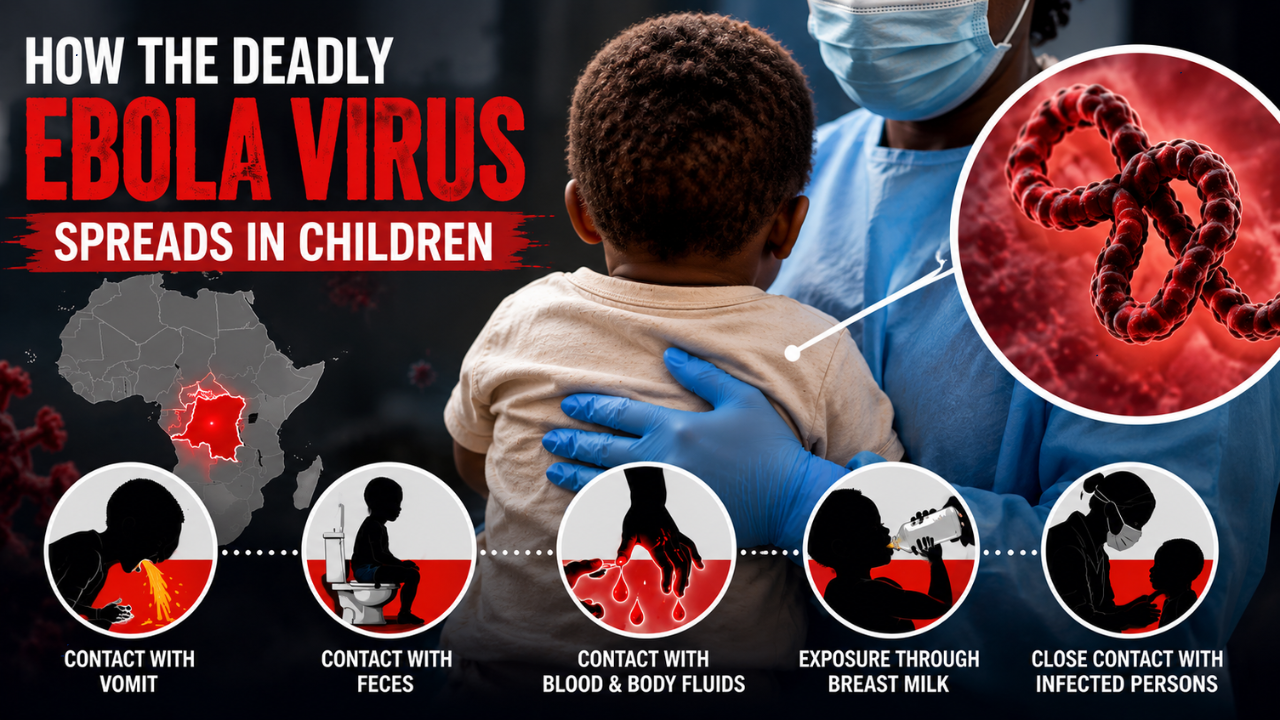
Two orphaned babies have died of Ebola in the Democratic Republic of Congo, in an outbreak that could rival the worst on record.Baby Buswaza was brought to a church-run orphanage in eastern Congo after her mother died in late May. The newborn was running a fever and, within days, died from what was later found to be Ebola, Reuters reported.Buswaza was buried in late May in a sealed, waterproof body bag to prevent the spread of the disease.More Suspected Cases at OrphanageSix more babies have been identified as suspected Ebola cases at the orphanage of 69 children in Bunia, a city in Ituri province at the epicentre of the outbreak in Congo.They were taken to hospital, where five of them later tested negative and were discharged from an isolation tent at the Evangelical Medical Centre (CME) by medics.Another baby—an orphaned triplet girl nicknamed "Cherie" or "darling" who was less than a year old—with confirmed Ebola died on June 10, Dr. Freddy Kibwana, head of the CME, told Reuters. "The child has left us," he said. How Children Can Be at Risk of EbolaAlso read: US Pushes Europe for Ebola Travel Curbs Ahead of FIFA World Cup: Which Countries Have Bans And Do They Work?Children and babies can easily become vectors for the disease through bodily fluids like vomit, faeces and saliva, which are highly infectious when people have Ebola. "This epidemic has hit an area already in humanitarian crisis," said Babou Rukengeza, a senior health adviser with Save the Children aid group. "This place is the only refuge for these children."“This outbreak is moving at a terrifying speed. I have responded to several Ebola outbreaks over the years, but this is the fastest spread I have ever seen. Children are paying a devastating price," he added.The expert noted that “when parents die, children suddenly lose the biggest support system they could possibly have and face fear, grief, stigma, and social exclusion".Can Ebola Be Passed From Mother to Child?In addition to fluids like blood and saliva, Ebola has also been detected in amniotic fluid and the placenta, as per the World Health Organization, so it is possible Buswaza's mother transmitted the virus to her in the womb or during childbirth.If the mother caught the virus after giving birth, she may also have transmitted it to her child through breastmilk, where the virus has also been detected.Ebola Cases And Death Toll ClimbAccording to the US CDC, the confirmed cases in Congo have risen to 635, while there are 127 confirmed deaths. In Uganda, there are 19 confirmed cases and two confirmed deaths, along with one probable case and one probable death.Using genetic fingerprinting, the illnesses have been identified as Bundibugyo virus, one of the four types of orthoebolaviruses that cause Ebola disease in people. There is no vaccine for Bundibugyo virus, and treatment consists of supportive care. Ebola Outbreak: WHO Raises Risk AssessmentMeanwhile, the WHO has revised the risk assessment in Congo and Uganda. The risk has been revised to “very high at the national level in DRC and high for Uganda,” the WHO said.It is also high for countries sharing land borders with DRC and Uganda, while low for the rest of the Africa region and at the global level.The WHO explained that the risk in DRC remains very high because “the outbreak has continued to expand rapidly in terms of numbers of cases and geographical spread with more areas affected. Epidemiological links and the full chain of transmission are not yet clearly established, and the source of the outbreak remains under investigation”.Moreover, the ongoing conflict is restricting movement of frontline responders and surveillance teams, while community fear and misinformation are hindering case detection, contact tracing and isolation, and potentially facilitating disease spread.There are also other challenges such as limited healthcare infrastructure and delays in laboratory confirmation, although these are being scaled up by DRC with support from partners, the WHO said.