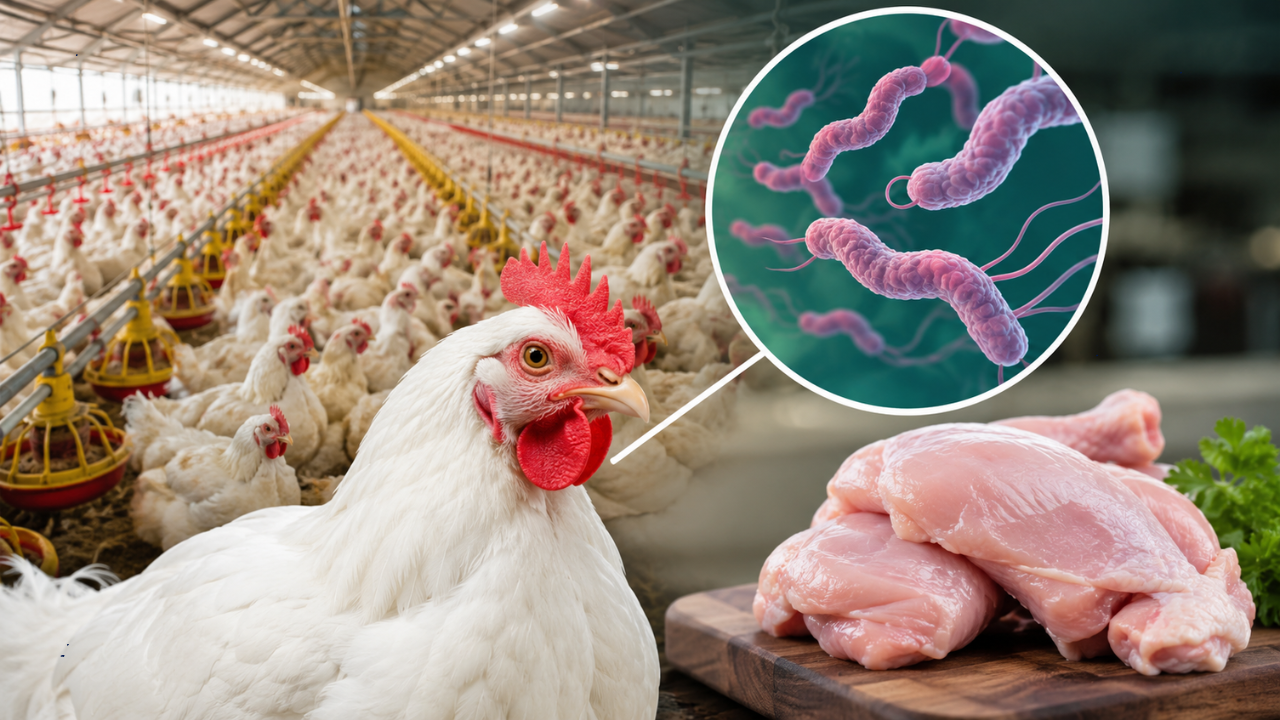
Industrial chicken farms may be fueling the spread of diarrhea-causing Campylobacter bacteria, according to a new study.Researchers from the University of Oxford found that industrial poultry farming has driven more than a 100-fold increase in the spread of Campylobacter. Published in the Proceedings of the National Academy of Sciences (PNAS), the study found that the expansion of commercial poultry production has enabled bacterial strains once largely confined to wild birds to mix extensively within farmed chicken populations."Industrial farming has created one of the largest animal habitats on the planet. Our findings provide new evidence that human-driven environmental change can increase the spread of infectious diseases," said Professor Sam Sheppard, senior author of the study from the University of Oxford."As chicken populations have grown, bacteria that were once largely confined to wild birds have gained far more opportunities to enter poultry flocks, spread and become established. Understanding these evolutionary consequences is essential if we are to reduce future risks from zoonotic disease and antimicrobial resistance," he added.Poultry Farming Has Accelerated Bacterial SpreadResearchers analyzed nearly 2,800 Campylobacter genomes collected from chickens and wild birds across 30 countries, including the UK and the US, between 1979 and 2024.The analysis showed that the rapid global expansion of chicken farming has created ideal conditions for the bacteria to spread, exchange genetic material, and acquire traits that improve survival in commercial poultry environments.Since the 1960s, the global chicken population has increased sevenfold to around 31 billion birds, with chickens now accounting for about 70% of all bird biomass on Earth. While this growth has helped make animal protein more affordable, it has also created favorable conditions for bacterial adaptation and transmission, the researchers argued.How Are the Bacteria Thriving?The genomic analysis identified several genetic changes linked to adaptation in poultry, including genes associated with:Antimicrobial resistanceOxidative stress toleranceMetal acquisitionMotilityAccording to the researchers, these traits may help Campylobacter survive and spread more efficiently in modern poultry production systems. The study also suggests that densely populated commercial chicken flocks may act as ecological "pathogen sponges," absorbing and amplifying bacterial strains from multiple sources. Growing Concern Over Antimicrobial ResistanceThe researchers warned that rising antimicrobial resistance (AMR)—when bacteria become resistant to drugs used to treat infections—is making Campylobacter infections increasingly difficult to treat.They also cited an earlier University of Oxford study, which found that 80% of human Campylobacter infections in Oxfordshire were linked to poultry meat, with many of those infections resistant to antibiotics.What Is Campylobacter?Campylobacter is the world's leading bacterial cause of diarrhea. According to the World Health Organization (WHO), it is one of the four leading global causes of diarrheal disease. Nearly one in 10 people worldwide falls ill from foodborne diseases each year, resulting in the loss of an estimated 33 million healthy life years.Although infections are usually mild, they can become severe or even fatal in very young children, older adults, and people with weakened immune systems.Common SymptomsDiarrhea, which may be bloodyAbdominal painFeverHeadacheNauseaVomitingSymptoms typically last three to six days. Deaths are rare and generally occur in people with severe underlying health conditions or those at the extremes of age.Campylobacter bacteria are destroyed by thorough cooking. The WHO recommends proper cooking, safe food handling, and good kitchen hygiene to reduce the risk of infection.