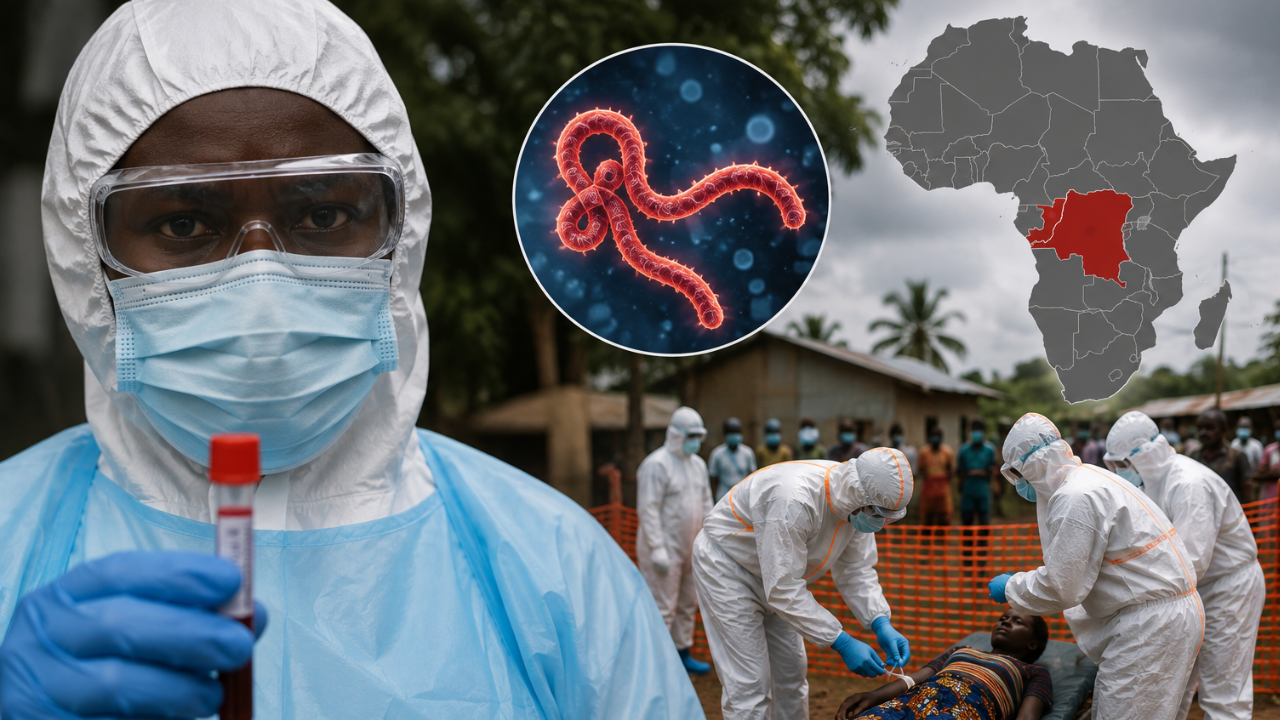
The Ebola outbreak in the Democratic Republic of Congo (DRC) is expanding at a rapid pace. According to a senior United Nations humanitarian official, the virus now estimated to be claiming one life every 30 minutes. Tom Fletcher, UN Under-Secretary-General for Humanitarian Affairs and Emergency Relief Coordinator, issued the warning on August 14, calling for urgent international response as the outbreak continues to overwhelm communities and health systems in the Democratic Republic of Congo.“The outbreak is the fastest growing on record,” Fletcher said, according to reports, urging the international community to step up support.The latest warning comes as the outbreak has crossed a grim milestone. According to Reuters, DRC had recorded 4,449 confirmed Ebola cases and 2,061 deaths as of August 11.What Makes It One Of The Most Rapidly Spreading Ebola Outbreaks? DRC Ebola outbreak is not caused due to the commonly known Zaire strain. The current outbreak is caused by the Bundibugyo virus, a rarer variant for which there is currently no approved vaccine or treatment.The outbreak was officially declared in mid-May, but WHO has since found evidence that transmission may have started months earlier. Early patients were reportedly misdiagnosed with illnesses such as malaria or typhoid, allowing the virus to spread before Ebola was identified.Currently, the virus has also moved far beyond its epicentre in Ituri province. WHO reported in July that cases had spread across five provinces and 46 health zones, with the outbreak concentrated in Ituri but also affecting North Kivu, South Kivu, Haut-Uele and Tshopo.More recent reporting indicates that the outbreak has now reached a sixth province, while more than 2,100 deaths have been reported.Also read: Ebola 2026 Outbreak Spreading Faster Than Any Before, On Track To Become Deadliest: WHO ChiefDRC Ebola Outbreak Is Challenging To Contain Ebola is transmitted via through direct contact with the blood or other bodily fluids of an infected person, or through contaminated materials. This makes early detection, quarantine and contact tracing extremely essential. At the moment, all those systems are under enormous pressure in eastern DRC.Apart from an overwhelmed healthcare system, conflict, uncontrolled population displacement, poor infrastructure, lack of protective equipment and mistrust of health authorities are making it harder for health workers to identify contacts and reach patients. Health workers have also gone on strike due to nonpayment of wages, which has further weakened the response.Reports suggested that 60% to 70% of newly detected infections are occurring outside known contact chains, a crucial sign that indicates contact tracing is struggling to keep up with transmission.Vaccine For Bundibugyo Ebola StrainAlso read: Ebola Death Toll Tops 2,000 In DRC: New Study Reveals Likely Source Of Bundibugyo Virus OutbreakThe widely used Ervebo vaccine targets the Zaire variant of Ebola, not Bundibugyo virus. WHO says there is currently no licensed vaccine or specific treatment for Bundibugyo virus, although several candidates are now being investigated.WHO experts have recently recommended a clinical trial to determine whether Ervebo could provide some protection against Bundibugyo, after encouraging results in animal studies.Meanwhile, clinical trials of potential vaccines and treatments are underway in affected areas. Progress Made Despite the challenges, WHO chief Dr Tedros Adhanom Ghebreyesus said significant progress has been made towards containing and eradicating the virus. It includes: More than 21,000 community health workers have been trained.Treatment centres, safe burial teams, laboratories and community engagement teams are operating across the affected provinces, reaching hundreds of thousands of people.A total of 886 patients have recovered, even without specific therapeutics and vaccines, which are progressing through trials.For the first time, two vaccines specifically designed against Bundibugyo virus have entered Phase 1 safety trials in humans.Two new animal studies of a vaccine against Zaire ebolavirus — the more common species — have shown promising evidence of cross-protection in animals, Tedros said.