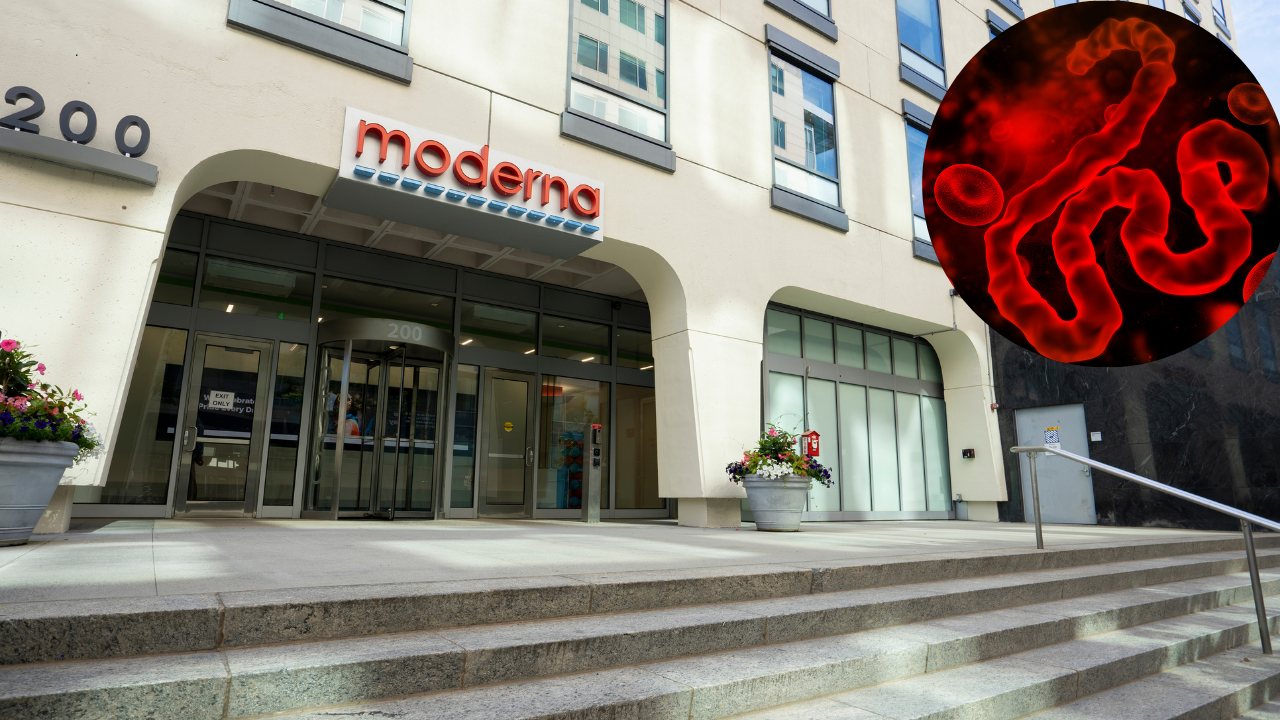
Moderna has launched the first-in-human Phase 1 clinical trial of its investigational vaccine against the Bundibugyo ebolavirus (BDBV), the strain behind the ongoing Ebola outbreak in the Democratic Republic of the Congo.The biotechnology company said Health Canada has authorized the study, which will evaluate its vaccine candidate, mRNA-1469, in healthy adult volunteers at three clinical sites across Canada.The trial comes as the Bundibugyo Ebola outbreak continues to worsen, with 3,748 confirmed cases and 1,657 deaths reported across 49 health zones in five provinces of the Democratic Republic of the Congo, according to World Health Organization (WHO) data as of August 1.The epidemic is now the second-largest and fastest-spreading Bundibugyo Ebola outbreak on record.What is mRNA-1469?Also read: Russia's New Ebola Vaccine To Protect Against Rare Bundibugyo Strain, Says Health MinistermRNA-1469 is an investigational vaccine developed using Moderna's messenger RNA (mRNA) platform—the same technology used in its COVID-19 vaccine.The vaccine builds on the company's broader research into filoviruses, the family of viruses that includes Ebola."Vaccinating the first participants with mRNA-1469 marks an important milestone in advancing a vaccine candidate against Bundibugyo ebolavirus, for which no approved vaccine currently exists," said Stéphane Bancel, Chief Executive Officer of Moderna.The Phase 1 TrialThe Phase 1 study is being conducted at three clinical sites in Canada and is expected to enroll around 80 healthy adult volunteers.Researchers will assess whether mRNA-1469 is safe and well tolerated, and whether it generates immune responses strong enough to justify further clinical development.Read More:Uganda Declared Ebola-Free As Congo Outbreak Grows To 3,262 Cases, 1,437 DeathsmRNA-1469 is one of four initial Bundibugyo vaccine candidates being supported by the Coalition for Epidemic Preparedness Innovations (CEPI). CEPI has committed up to US$50 million to fund preclinical testing and the Phase 1 trial.The partnership also supports manufacturing additional clinical trial doses in parallel with early-stage testing, enabling Phase 2 and Phase 3 trials to begin rapidly if the Phase 1 results are positive.If the vaccine is eventually approved, Moderna has committed to making at least 500,000 doses available at access pricing for low- and middle-income countries under its agreement with CEPI.Second Human Trial for Bundibugyo Ebola VaccineModerna's study follows the launch of the University of Oxford–Serum Institute of India (SII) vaccine trial in July, making it the second human clinical trial targeting the Bundibugyo ebolavirus.Unlike the Zaire strain of Ebola, there are currently no approved vaccines or antiviral treatments specifically for the Bundibugyo ebolavirus, making vaccine development a global public health priority.Treatment Research Also AcceleratingAlongside vaccine development, WHO says clinical studies of experimental treatments and preventive medicines are progressing rapidly against the Bundibugyo strain.The agency noted that research protocols prepared before the outbreak began have significantly accelerated the launch of clinical trials."If you compare this outbreak to previous Ebola outbreaks, we have been able to start trials more quickly," said Vasee Moorthy, acting head of WHO's R&D Blueprint Programme. He added that preclinical data for several candidates has shown encouraging results.Ongoing Clinical Studies in DR CongoWHO-backed treatment trial: A WHO-sponsored clinical trial is underway at three Ebola treatment centers in Ituri province in partnership with medical charities ALIMA and Doctors Without Borders (MSF).More than 50 patients enrolled: Over 50 confirmed Ebola patients have been enrolled and randomly assigned to receive experimental treatment options, according to WHO.Preventive antiviral study: A separate prophylaxis study led by DR Congo's National Institute for Biomedical Research (INRB) and international partners has enrolled more than 25 high-risk contacts in Ituri province, Reuters reported.Researchers are also evaluating whether a 10-day course of Gilead Sciences' oral antiviral drug Obeldesivir can prevent Ebola disease in people exposed to the virus.