
- Health Conditions A-Z
- Health & Wellness
- Nutrition
- Fitness
- Health News
- Ayurveda
- Videos
- Medicine A-Z
- Parenting
Eli Lilly Sends Weight-Loss Pill For Approval: Is Oral GLP-1 As Effective As The Injections?

Credits: Canva
Eli Lilly has taken a major step in the fight against obesity and diabetes. The company announced that its oral GLP-1 drug, orforglipron, successfully met the “primary and all key secondary endpoints” in a large clinical trial, paving the way for global regulatory submissions.
“With these positive data in hand, we are moving with urgency toward global regulatory submissions to potentially meet the needs of patients who are waiting,” said Kenneth Custer, Eli Lilly’s executive vice president and president of cardiometabolic health.
“If approved, we are ready to offer a convenient, once-daily pill that can be scaled globally, removing barriers and redefining how obesity is treated around the world.”
What Is Orforglipron?
Orforglipron is an investigational, non-peptide, once-daily small molecule GLP-1 receptor agonist. Unlike some oral medications that come with strict food or water restrictions, it can be taken at any time of day without such limitations.
Originally discovered by Japan’s Chugai Pharmaceutical and later licensed to Eli Lilly in 2018, orforglipron is now in Phase 3 trials. The company is testing it not just for weight management and type 2 diabetes but also for conditions linked to obesity, including obstructive sleep apnea and hypertension.
The ATTAIN-2 Trial Results
The company’s latest clinical trial, called ATTAIN-2, produced results that have drawn significant attention. At the highest dose: 36 mg daily for 72 weeks, participants saw an average weight loss of 22.9 pounds (10.5%), compared to just 5.1 pounds (2.2%) among those given a placebo.
The drug also delivered strong results for people with type 2 diabetes. Across doses, orforglipron reduced A1C levels by 1.3% to 1.8% from a baseline of 8.1%. Notably, 75% of participants who took the highest dose achieved an A1C of 6.5% or below, aligning with the American Diabetes Association’s definition of diabetes remission.
Beyond weight and blood sugar, orforglipron showed broader health benefits. The trial reported improvements in cardiovascular risk factors such as non-HDL cholesterol, systolic blood pressure, and triglyceride levels. In an exploratory analysis, the drug also cut high-sensitivity C-reactive protein, a key marker of inflammation, by about 50%.
Why An Oral Option Matters
Injectable GLP-1 receptor agonists like semaglutide and tirzepatide have already transformed obesity and diabetes care, but accessibility remains a hurdle. For many patients, injections are intimidating, inconvenient, or simply not practical in daily life.
That’s where an oral pill could be a game-changer. A once-daily tablet could remove psychological and logistical barriers, making it easier for patients to stay on treatment. And given the rising global burden of obesity, which significantly raises the risk of cardiovascular disease, stroke, and some cancers, the demand for more convenient treatment options has never been greater.
Pills vs. Injections: Which Works Better?
The big question now is whether oral GLP-1 drugs are as effective as their injectable counterparts.
A 2021 research review published in Springer Nature, offers some clues. After examining multiple studies, researchers concluded that oral semaglutide, a similar class of drug, provided “similar or better efficacy and similar tolerability” compared to injectable GLP-1 receptor agonists.
Also Read: How To Identify A Counterfeit Ozempic? Look For These Signs
In some cases, oral versions were found to be just as effective for weight loss and lowering A1C levels in people with type 2 diabetes. However, the review focused on patients already using insulin, which may have influenced outcomes. Experts emphasize that while results are encouraging, more research is still needed to directly compare oral and injectable versions in broader populations.
For now, injections remain the gold standard in clinical practice. Drugs like Wegovy and Mounjaro (both injectables) have shown weight reductions of 15% to 20% or more in major trials, higher than the 10.5% seen with orforglipron in ATTAIN-2. That said, the convenience of a pill could tip the balance for many patients, especially those reluctant to use injections long-term.
Eli Lilly’s oral GLP-1 drug is not yet approved, but the latest results highlight its potential to reshape treatment strategies for obesity.
Eli Lilly's Retatrutide Shows Record Weight Loss In Third Phase Of Trials

Retatrutide has not yet received FDA approval. (Photo credit: AI generated)
Retatrutide, Eli Lilly’s new weight-loss drug, is in the final stages of its clinical trial, and the results seem very promising, the drugmaker said on Thursday. In a news release, they disclosed that the brand-new drug helped people lose up to 30 per cent of their body weight, which is about 85 pounds. The results are on a par with bariatric surgery, which helps people shed approximately 25 to 35 per cent of their total body weight within one to two years. Doctors say that this is the largest weight loss ever witnessed in a medical trial. While Lilly has not yet filed for approval from the Food and Drug Administration, the pharma giant says that it expects to file this year.
What is Retatrutide?
Retatrutide is similar to drugs like Zepbound and Wegovy that mimic the GLP-1 hormone. Retatrutide, however, along with GLP-1, mimics glucagon as well, thereby working like a triple agonist. This is unlike Zepbound, which is a double agonist. Researchers said that they have witnessed the impact of semaglutide and tirzepatide. However, Retatrutide's results went beyond the current weight-loss drugs on the market.
Dr Shauna Levy, medical director of the Tulane Weight Loss Center, explained that the current GLP-1s are not good enough to induce weight loss in people dealing with severe obesity and those who have a BMI of 35. Bariatric surgery can provide the same, but it seems that Retatrutide will be far more effective for people living with a high BMI who are trying to achieve a healthy weight.
Read more: Meet Retatrutide: The Unapproved Cousin Of Ozempic That Supports Weight Loss Differently
Retatrutide's results
Retatrutide was in the third phase of its trials involving 2,300 obese or overweight participants. While the full results have not yet been released in a medical journal, participants who took the highest dose of the drug lost 28 per cent of their body weight, approximately 70 pounds. Furthermore, nearly half of the participants lost over 30 per cent of their body weight. The trial continued for 80 weeks, and a small group of severely obese patients took the drug for 104 weeks and lost about 85 pounds on average. Alternatively, patients who took high doses of Zepbound lost around 21 per cent of their body weight in 72 weeks. Wegovy users lost about 15 per cent of their weight in 68 weeks.
What were the side effects of Retatrutide?
On the downside, there were some side effects too. Retatrutide users experienced the following side effects:
- Diarrhoea
- Nausea
- Constipation
- Urinary tract infections
- Uncomfortable skin sensations
These have, however, been seen with GLP-1 drugs.
New weight-loss drug coming soon?
Retatrutide might be the next big weight-loss drug set to hit the market soon. It aims to maximise weight-loss results with fewer side effects for users. If approved, it could be helpful for patients who are struggling to lose weight on the current versions of GLP-1 drugs.
Ebola Alert: India And US Step Up Airport Screening; WHO Warns Bundibugyo Vaccine Could Take Months
Credit: AI generated image
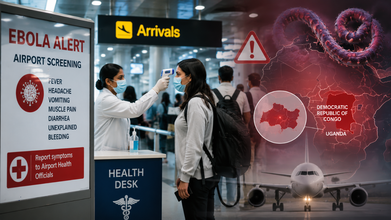
Amid rising cases of the Ebola virus in the Democratic Republic of Congo and Uganda, India and the US have stepped up airport screening.
The latest outbreak, caused by the Bundibugyo Ebola virus, has so far affected nearly 600 people and has caused 139 suspected deaths, as per the latest update by the World Health Organization (WHO). The global health agency has also determined that the deadly outbreak is a “Public Health Emergency of International Concern (PHEIC)”.
India Issues Health Advisory
India today issued a health advisory for passengers arriving from or transiting through Ebola-affected nations. Passengers with symptoms or exposure history should immediately report to the airport health authorities before immigration clearance.
The advisory, issued by the Directorate General of Health Services (DGHS), specifically mentions travelers coming from the Democratic Republic of Congo, Uganda, and South Sudan, all of which have been categorized as "high-risk countries" by the WHO.
The advisory is displayed at the Delhi airport by the Airport Health Organization (APHO). It advises passengers to watch out for symptoms such as:
- fever,
- weakness,
- headache,
- muscle pain,
- vomiting,
- diarrhea,
- sore throat,
- unexplained bleeding.
It also asks travelers who had direct contact with blood or body fluids of a suspected or confirmed Ebola patient to immediately report to the airport health officer or the health desk.
According to the APHO, any traveler developing symptoms within 21 days of arrival should seek immediate medical care and inform authorities about their travel history.
India Reviews Preparedness Measures
On Wednesday, India’s Health Secretary Punya Salila Srivastava chaired a high-level review meeting with health secretaries of all states and Union territories to assess preparedness and response measures for Ebola.
Officials clarified that “no case of Ebola has been detected in India so far”.
However, after the WHO declared Ebola a Public Health Emergency, the Indian government has proactively strengthened surveillance and preparedness measures across the country as an abundant precaution, official sources had said. During the meeting, states and Union territories were advised to ensure readiness at all levels.
The 2026 India-Africa Forum Summit, scheduled for May 28 to 31, was also postponed due to the "evolving health situation in parts of Africa", India's Ministry of External Affairs announced today.
The decision was made in recognition of “the importance of ensuring the full participation and engagement of African leaders and stakeholders, and mindful of the emerging public health situation on the continent", said a joint statement issued by the Indian Ministry of External Affairs and the African Union.
US Tightens Monitoring
Meanwhile, the Centers for Disease Control and Prevention (CDC) has also been enhancing public health screening and traveler monitoring amid a growing Ebola outbreak, and non-US passport holders face entry restrictions if they have been to Uganda, the Democratic Republic of Congo, or South Sudan in the previous 21 days.
“To the American public, the risk to the United States remains low,” said Satish Pillai. “Travelers to the region should avoid contact with sick people, report symptoms immediately, and follow our travel guidance.”
A US missionary doctor infected with the Ebola virus while treating patients in DR Congo has been admitted to Charité hospital in Berlin. The patient was flown to Berlin on a special medical aircraft and then transported to the hospital in a specially designed vehicle escorted by police. The aircraft also carried six other people who had contact with the infected man.
WHO Says Vaccine Could Take Months
Tedros Adhanom Ghebreyesus said he was “deeply concerned about the scale and speed of the epidemic”. He noted that the numbers are expected to rise given the time taken to detect the virus.
The WHO says it could take up to nine months before a vaccine against this particular species of Ebola is ready.
Two possible "candidate vaccines" against the Bundibugyo species are being developed, but neither has gone through clinical trials yet, WHO advisor Dr. Vasee Moorthy said, according to the BBC.
Speaking to journalists in Geneva, Tedros said 51 cases have been confirmed in the Democratic Republic of Congo — where the first case was reported — and two in neighboring Uganda.
24-Year-Old Student Becomes Delhi’s First Heatstroke Case This Summer: How Heatstroke Can Turn Fatal
Credit: iStock
A 24-year-old student from West Bengal has reportedly become the first confirmed heatstroke case of the season in India’s national capital.
According to doctors at Dr Ram Manohar Lohia (RML) Hospital, the young man was admitted in critical condition after developing hyperpyrexia — an extremely high body temperature, and altered mental status while travelling by train to the national capital.
"We received our first heatstroke patient at the RML Hospital on the intervening night of May 20-21. The 24-year-old youth from West Bengal was travelling on a train when his health deteriorated,” said Dr Ajay Chauhan, Director Professor of Medicine, at RML, PTI reported.
“He was brought to the hospital in an unconscious state. We took immediate action and tried to cool down his body,” he said, adding that the boy "is admitted to the medicine ward and is still critical".
As per the doctors, the student had no known pre-existing medical condition, and other possible causes of his symptoms were ruled out before heatstroke was diagnosed.
What Is Heatstroke?
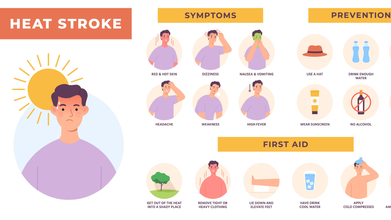
Heatstroke is the most severe form of heat-related illness and is considered a medical emergency. It occurs when the body loses its ability to regulate temperature due to prolonged exposure to extreme heat or dehydration. In most cases, body temperature rises above 104°F (40°C), which can damage the brain, heart, kidneys, and muscles.
“The general features of a patient with heat stroke are: first, his or her body temperature will be very high. It will not be around normal levels like 104, 105, or 106—it will be significantly elevated. Second, the person may be delirious, confused, or even in a state of unconsciousness or coma. The breathing will also be labored,” Dr. Naval Vikram, Professor, Department of Medicine, at the AII India Institute of Medical Sciences (AIIMS), told HealthandMe.
During a heatwave, most patients improve quickly with rest, oral fluids, cooling measures, and moving to a shaded or air-conditioned environment.
"However, if heat exposure continues and the body’s cooling mechanisms begin to fail, the condition can progress to heat stroke, which is a medical emergency. In heat stroke, body temperature often rises above 104°F," Dr. Vaibhav Mishra, Senior Director & Head, CTVS, Max Super Speciality Hospital, told HealthandMe.
What may initially appear as confusion, disorientation, or irrelevant talking can rapidly worsen into:
- altered consciousness,
- seizures,
- coma,
- death.
Heat Stroke: How Can One Prevent?
Also read: Bundibugyo Ebola Cases Rise To 600 As Scientists Investigate Spillover Event
While it may be impossible to avoid rising temperatures, the focus should be on how much you can protect yourself. Experts suggest the following measures:
- Avoiding exposure to extreme heat as much as possible.
- In case of being exposed, make sure to cover yourself—cover your head and upper body, use an umbrella, stay hydrated, and take breaks in between.
- If you have to work in a hot environment for a couple of hours, take a break in a cooler or temperature-controlled environment for at least half an hour before resuming, rather than continuously working in the heat. These steps can help prevent heat-related problems.
- If symptoms do occur, and it is heat exhaustion, take rest and avoid further activity for some time.
- In more severe cases—if someone shows symptoms like loss of consciousness or very high body temperature—they should be taken to a hospital immediately. Do not try to manage such cases at home.
What Does the IMD Say?
The India Meteorological Department (IMD) has warned of severe temperatures across several states.
"Heat wave to severe heat wave conditions likely to continue to prevail over northwest & central India during the week and over East India during the next 5 days," the IMD said, in its latest update on May 20.
It added that severe heat conditions will persist for at least the next 72 hours across Delhi-NCR, Rajasthan, Uttar Pradesh, Punjab, and Haryana. Temperatures in several cities are expected to touch 47°C to 48°C, with Banda currently emerging as the hottest place in the country.
- Follow Us :


© 2024 Bennett, Coleman & Company Limited