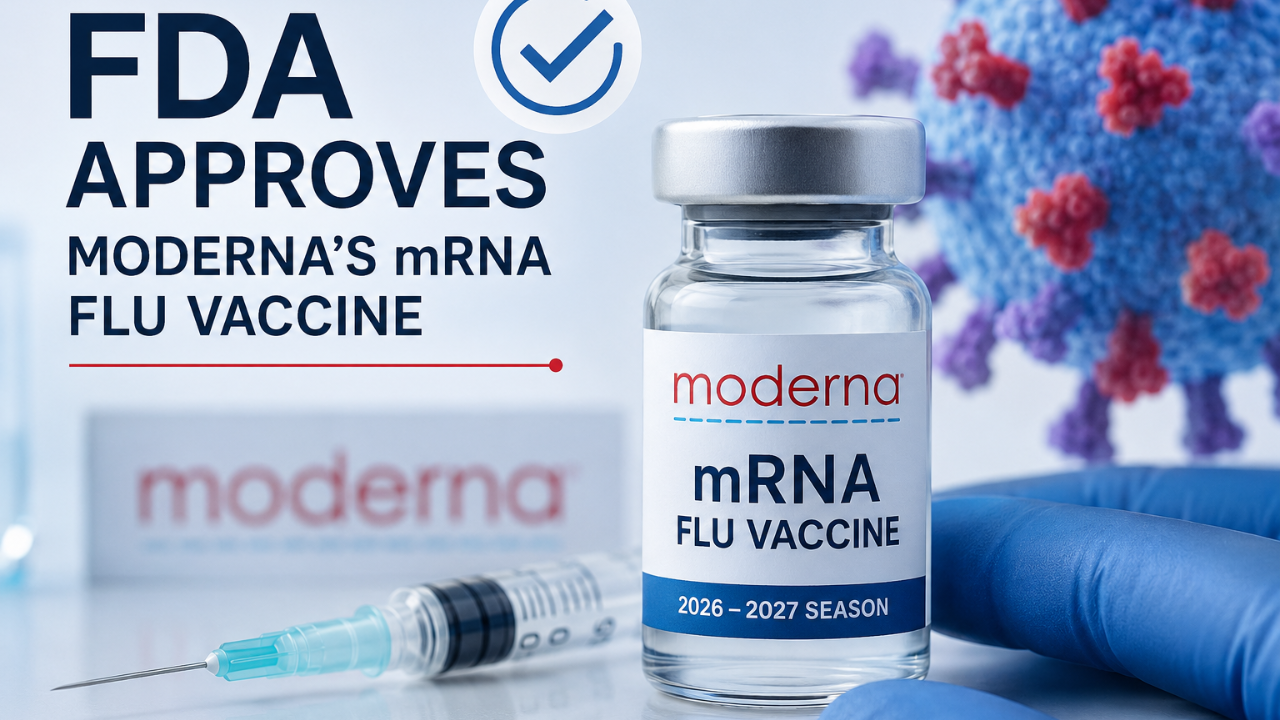
In a landmark decision, the US Food and Drug Administration (FDA) has approved Moderna's first mRNA-based seasonal influenza vaccine. This makes it the first flu shot developed on messenger RNA (mRNA) technology to receive clearance in the United States. The vaccine, branded mFlusiva, has been approved for adults over the age of 50 and older, paving the way for a new generation of influenza vaccines beyond the traditional egg-based approach.Who Is Eligible To Receive The Vaccine?The approval has given Moderna commercial drug built on the mRNA platform that powered its COVID-19 vaccine. The development is expected to strengthen the company's efforts to grow its respiratory vaccine portfolio. According to the FDA, the following groups of people are eligible to receive mFlusiva:Traditional approval for adults aged 50 to 64 years.Accelerated approval for adults aged 65 years and older, requiring Moderna to conduct additional studies to confirm the vaccine's benefit in this age group. Also read: Ebola Outbreak: Moderna Begins First Human Trial Of Bundibugyo Vaccine As Cases Rise to 3,748What Did The Trial Show?The approval was based on a late-stage clinical trial involving more than 40,000 adults aged 50 years and above. According to trial results, mFlusiva was:26.6% more effective than a licensed standard-dose flu vaccine in preventing influenza.It also produced stronger immune responses than Sanofi's high-dose flu vaccine in adults aged 65 years and older, although Moderna will now need to verify whether this translates into better real-world protection for seniors.Commenting on the approval, Moderna said, "Flu remains a significant public health challenge, and mFlusiva provides an important new option for America's seniors." Earlier this year, Moderna CEO Stéphane Bancel had expressed confidence that the vaccine could become available ahead of the 2026-27 flu season if approved by regulators. Also read: Protective Antibodies Fade After COVID-19 Vaccination- Should You Get A Booster Shot?Why mRNA Could Revolutionise Flu Vaccination?Unlike traditional flu vaccines, which are developed using viruses grown in chicken eggs, mRNA vaccines work by transmitting genetic instructions that alert the body's cells to produce harmless influenza proteins for an immune response.Traditional flu vaccines must be designed and manufactured months before the flu season begins, requiring scientists to predict which influenza strains will circulate. If the circulating viruses keep evolving differently, the effectiveness of the vaccine can decline. mRNA technology has a major advantage because it can potentially be updated and manufactured much faster, allowing vaccines to better match the strains that are spreading during a particular season.In February 2026, the FDA initially declined to review Moderna's application, citing concerns that the company had compared its vaccine against a standard-dose flu shot rather than the high-dose vaccine commonly recommended for older adults. After discussions with regulators, Moderna revised its submission, and the FDA agreed to proceed with the review under a condition that included additional studies for older patients. Experts say the FDA's decision represents more than the approval of a single vaccine. It marks the first regulatory endorsement of mRNA technology for seasonal influenza, a milestone that could accelerate the development of next-generation vaccines against various infectious diseases.