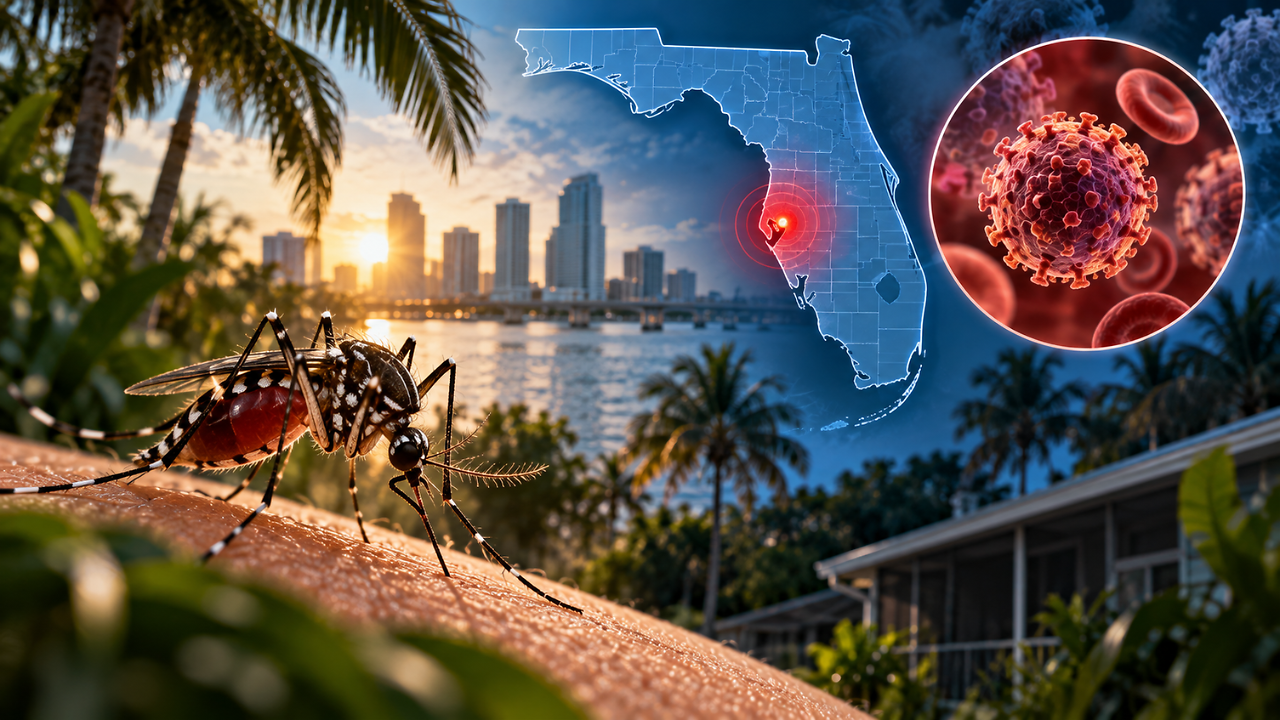
Amid an expanding outbreak, Florida has confirmed its first dengue-related death in the Tampa Bay region. It is the first death due to dengue in Tampa Bay in almost a century, while Florida health officials have confirmed this as the state’s first dengue-related death of 2026.The latest reports show the newest figures that indicate 152 locally acquired dengue cases as of September 12, with 134 in Hillsborough County. First Dengue-Related Death In FloridaFlorida’s dengue outbreak has turned deadly as with health officials have confirmed the state’s first dengue-related death of 2026.The Florida Department of Health confirmed the death on September 18. The victim was an 80-year-old Hillsborough County woman who died on September 4. Her death marks the first known dengue-related fatality in the Tampa Bay region in nearly a century.The latest state data, covering cases through September 12, show 152 locally acquired dengue infections across Florida this year, including 134 in Hillsborough County. That means nearly 90% of the state's locally acquired cases have been concentrated in the county, which has emerged as the epicentre of the outbreak.“This is wildly unusual for us,” Chris Wilkerson, a spokesperson for Hillsborough County, said.Also read: QDENGA: India’s First Approved Dengue Vaccine May Hit Shelves In 2027; How Effective Is It?Dengue Outbreak In FloridaDengue is a viral infection transmitted mainly by infected Aedes aegypti and Aedes albopictus mosquitoes. These mosquitoes are established in Florida and can spread the virus after biting an infected person.Majority of the dengue infections reported in the continental US were linked with international travel. But Florida has increasingly recorded locally acquired infections, meaning people contracted the virus without travelling to a dengue-endemic country.The state reported its largest number of locally acquired dengue infections in 2023, at nearly 200. With 152 cases already recorded this year, 2026 has become the state's second-highest year for locally acquired infections.Also read: Delhi Dengue Cases Rise In September: Is Weather Fueling The Surge?How Can Dengue Become Life-Threatening?Most people infected with dengue either have no symptoms or develop a relatively short-lived illness with fever, headache, muscle and joint pain, nausea and rash. But a small number of people can develop severe dengue, particularly around the time the fever begins to subside.Warning signs include severe abdominal pain, persistent vomiting, bleeding or unusual bruising, difficulty breathing, extreme weakness and restlessness. Severe dengue may also cause plasma leakage, shock, severe bleeding and organ damage, which can become fatal without prompt medical care.In the Florida woman's case, her death certificate listed dengue infection, septic shock and multi-organ failure as causes, according to the Tampa Bay Times. Florida Outbreak Is Raising ConcernHillsborough County normally sees only a handful of dengue cases, making the current cluster seems to be highly unusual. Mosquito-control teams have increased aerial and ground surveillance and spraying, inspecting properties for stagnant water where mosquitoes can breed.Recent mosquito sampling has not detected dengue virus in some of the latest collections, which officials say could indicate that transmission is beginning to decline. But experts caution that the mosquitoes capable of spreading dengue may still remain in Florida.Michael von Fricken, an associate professor of environmental and global health at the University of Florida, said the state's recurring mosquito population means dengue may become “somewhat the new normal.”Florida health officials are urging residents to use mosquito repellent, wearing long sleeves and trousers, and removing stagnant water from around homes.