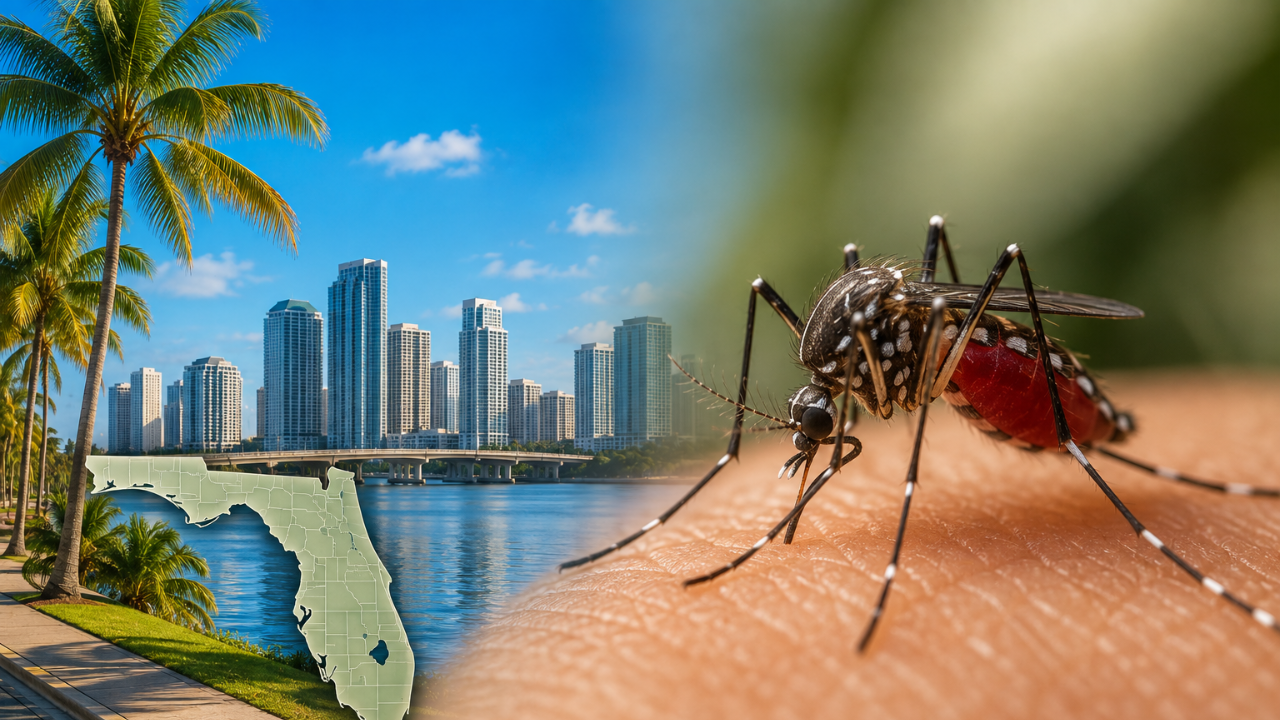
Florida recently recorded one more locally acquired dengue case, taking the toll to 23 in 2026. Infections were reported across four counties, which raised fresh concerns about the spread of a disease more commonly associated with tropical and subtropical regions. The recent rise has been concentrated in Hillsborough County, which has reported 15 cases, followed by Miami-Dade with four, Pinellas with three and Palm Beach with one. The Florida Department of Health has issued mosquito-borne illness alerts in affected areas. In Hillsborough, officials issued an alert after the eighth locally acquired case was identified, while Pinellas issued its own alert after two local cases were confirmed. Dengue Is Not Just A Tropical Disease Dengue is caused by the dengue virus and is mainly spread through bites from infected Aedes aegypti and Aedes albopictus mosquitoes. Florida is not considered an endemic dengue region, but local transmission has occurred there before. The state reported 62 locally acquired cases in 2025, while 2024 saw a much larger total of 90. What makes the current situation striking is that infections are occurring in people who did not acquire the virus while travelling abroad. Why Does Dengue Surface In The US? Dengue can occur the US when an infected traveller returns from a country where the virus is circulating. If that person is carrying dengue virus in their bloodstream and is bitten by a local Aedes mosquito, the mosquito can subsequently transmit the virus to another person. This can create a chain of local transmission. Warm weather also creates favourable breeding conditions for Aedes mosquitoes. Florida's warm weather, combined with stagnant water, provides opportunities for breeding and transmission.Also read: Why Self-Medicating During Dengue Can Be Dangerous? Reason Behind Spike In Florida Cases Florida has a large number of international travellers and close links with regions where dengue is common. At the same time, warm temperatures and mosquito-friendly environments can fuel further transmission. Recent surveillance has also shown mosquito-borne disease activity across several Florida counties. The state’s health department routinely monitors mosquito populations and human cases to identify transmission early and nab an outbreak.Also read: World Mosquito Day: How Dengue Can Damage Your Kidneys Complications Due To 'Breakbone Fever' Many dengue infections cause no symptoms or result in a mild illness. When symptoms occur, they commonly include high fever, severe headache, pain behind the eyes, muscle and joint pain, nausea and rash. The disease is sometimes called “breakbone fever” as it can trigger intense muscle and joint pain. Most people recover, but some develop severe dengue, which can cause bleeding, organ damage and death, in extreme cases. How To Protect Yourself From A Dengue Infection? There is no specific antiviral treatment for dengue. The treatment generally focuses on rest, fluids, monitoring and appropriate management of symptoms. Florida health officials have urged residents to reduce mosquito exposure by: Using an EPA-registered insect repellent Wearing long sleeves and long trousers when possible Keeping doors and windows screened Removing standing water from containers around homes Taking extra precautions during periods of increased mosquito activity