
- Health Conditions A-Z
- Health & Wellness
- Nutrition
- Fitness
- Health News
- Ayurveda
- Videos
- Medicine A-Z
- Parenting
Flu Cases Are Rising. Here’s Where the Risk Is Highest

Credits: iStock
Flu cases are rising in the US, with the virus exploding across the country. Like many experts have earlier pointed that that this would be the 'worst season' and that 'it is not over yet'. The Centers for Disease Control and Prevention or CDC data too tells us that records are reaching all time highs in some cases.
What Does CDC Data Say About Increased Flu Activity In US?
For the first time since 1997, when flu data was first tracked, 8% of visits to doctors related to flu or flu-like illness and symptoms the week ending with December 27 has increased. Hospitalization too increased by 48% week over week, which has now amounted to 120,000 hospitalization and 5,000 deaths so far in this season.
The CDC data shows that just under 33% or 23,350 of the 70,757 fly tests were reported positive to the National Respiratory and Enteric Virus Surveillance System. This was also up by 9% during the first week of December.
Regions like Colorado, Montana, North Dakota, South Dakota, Utah and Wyoming reported numbers as high as over 45%. CDC also noted "very high" activity in the Northeast, the week ending with December 27, including in New York, Massachusetts, and North Carolina.
Wastewater data by WasterWaterSCAN, a Stanford University-led tool also tracked the spread of the disease and said that the flu activity was "high". It noted that the activity increased by 146%.
Why Is This Season's Flu The Worst One Yet?
This year's flu came after the flu vaccination was made, which means the current vaccination does not align with the mutation, however, experts have pointed out that it still continues to offer protection against the illness. This season's flu is a mutation of H3N2 or influenza A, called the subclade K, or what people are calling 'super flu'.
This is the culprit in rising flu cases, globally. The World Health Organization (WHO) on its website said that K variant marks "a notable evolution in influenza A (H3N2) viruses". Some are also questioning the effectiveness of this season's influenza vaccine against the strain.
Read: Unique Symptoms Of Flu In 2026 And How Long Infection Now Last
The flu virus is highly contagious and spreads easily in crowded places, especially during the colder months.
In some cases, the infection can progress to the lungs, which could lead to complications like bronchitis or pneumonia. Yale Medicine too notes that this virus could attack the respiratory system, including throat, nose, and lungs.
What Are The Common Symptoms This Season For The Flu?
K variant causes more intense flu symptoms, they include:
- Fever
- Chills
- Headache
- Fatigue
- Cough
- Sore throat
- Runny nose
Are The Old Vaccines Effective Against This New Variant?
"The vaccine remains the most effective means to prevent disease. We still want to encourage people to get the vaccine," said Professor Antonia Ho, Professor and Honorary Consultant in Infectious Diseases at the University of Glasgow. Experts have stressed enough on the immunity that one can receive from the vaccine that that these flu jab remain the best defense against the flu, even though the current strain circulated may have drifted away from the strain included in this year's jab.
Data from the UK Health Security Agency (UKHSA) also show that vaccines is performing as expect, despite the emergence of subclade K.
Superbug Alert: Drug-Resistant Typhoid Fever Returns as a Growing Global Threat
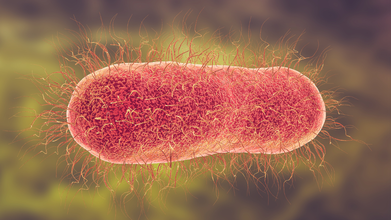
Credits: iStock
Typhoid fever, to many sound like it now belongs to history books, but a new strain that can resist strongest of antibiotics have emerged in South Asia. This has raised the concerns over the potential spread of drug-resistant infections.
A gene, which is capable of breaking down carbapenems, which is a powerful antibiotics was seen as a drug of last resort, is discovered among 32 samples collected from hospitals, across western and southern India. This gene is known as blaNDM-5, which can move between different types of bacteria, raising fears that resistance could in fact grow quickly.
Recent outbreaks of extensively drug-resistant (XDR) typhoid across South Asia have raised serious concerns, as these strains no longer respond to most commonly used antibiotics. Since 2016, Pakistan alone has reported over 15,000 XDR typhoid cases, while resistance to azithromycin has been detected in Bangladesh, India, Nepal and other neighboring regions.
Speaking to the Telegraph, Dr Malick Gibani, Clinical Lecturer in Infectious Diseases at Imperial College London, said, “We all hear that antimicrobial resistance is a problem, but typhoid really exemplifies it – how resistance seems to emerge relentlessly, moving from one class of antibiotics to the next."
“It’s not yet untreatable, but the treatments we do have are much more limited and significantly more challenging to deliver.”
What Is Typhoid?
Typhoid is caused by the bacteria Salmonella Typhi. It usually spreads through contaminated food or water and can lead to high fever, stomach pain and serious complications if not treated on time.
Antibiotics are the first line of treatment. These range from commonly used medicines such as amoxicillin and co-trimoxazole to stronger, hospital-only drugs for resistant infections, including carbapenems. Without timely treatment, typhoid can turn life-threatening and, in some cases, prove fatal. What has alarmed researchers is the emergence of typhoid strains that can resist even carbapenems.
“Although the number of cases described is still relatively small, this feels very much like a warning sign,” said Dr Gibani. “This was always expected and reflects the steady evolution of antimicrobial resistance in typhoid. These infections are not untreatable yet, but they are becoming increasingly difficult to manage.”
Experts point out that typhoid is often difficult to diagnose. This uncertainty can lead to the widespread and sometimes unnecessary use of antibiotics, which further fuels resistance. There are also concerns that extensively drug-resistant typhoid may be more widespread than current data suggests, especially in low-income countries where surveillance and reporting are limited.
“The risk is highest in places with poor water quality, uncontrolled antibiotic use and weak healthcare systems,” said Prof Calman A. MacLennan from the University of Oxford. He noted that while current typhoid mortality is under one percent, the disease was far deadlier before antibiotics were available. “In the pre-antibiotic era, death rates were as high as 10 to 20 percent, and during some wars, more people died of typhoid than from combat.”
Best Line Of Defense Against Typhoid
Vaccination, experts say, could be key to preventing a resurgence. The Typhoid Conjugate Vaccine, or TCV, has shown strong effectiveness by triggering the body’s immune response rather than targeting the bacteria directly with antibiotics. “That makes it much harder for the pathogen to escape,” Prof MacLennan explained.
The vaccine has already been introduced into national immunization programmes in 11 countries. However, reaching the poorest regions, where typhoid is most common, remains a challenge. Rolling out a new vaccine requires significant planning and resources, even with international support.
Dr Gibani warned that although South Asia has been hit hardest so far, drug-resistant typhoid can spread globally through travel. Imported cases have already been reported in Europe, North America and Australia. Experts stress that surveillance, vaccination and better sanitation are critical to stopping these dangerous strains from taking hold elsewhere.
Children Getting Fewer Vaccine May Be A 'Better Thing', Says RFK Jr, As US Struggles With Rise In Flu Activity

Credits: Wikimedia Commons
"May be it is a better thing that fewer children are receiving the flu vaccine," said Robert F Kennedy Jr, the Health and Human Services Secretary of the United States as the country fights with a surge in flu cases. RFK Jr said this in a response to a CBS News journalists' concern over rising flu cases and the drop in the number of flu vaccines.
This week, the Centers for Disease Control and Prevention (CDC) announced vaccines to fight respiratory syncytial virus or RSV, meningococcal disease, flu, and COVID are the only recommended jabs for children at high risk of serious illness or must be administered after being consulted with doctors and parents. This is part of the CDC and Trump administration's effort to scale back the childhood vaccine scheme.
In an interview with the CBS News, RFK Jr. said, "We are not taking vaccines away from anybody. If you want to get the vaccine, you can get it. It is going to be fully covered by insurance, just like it was before." However, now, there is an added step. Vaccines that were compulsory before now requires a consultation with the physician first. "You have to, yeah, you need to do shared decision making with your physician, which is how it ought to be," he said.
Fewer Flu Vaccine Could Be A Better Thing: TFK Jr, Is There Evidence?
The CBS News reporter asked if there is any evidence that fewer kids getting the vaccine is actually a "better thing" The reporter also pointed out that many kids died of flu last year and that no evidence shows that the kids who died were vaccinated. In fact, a roughly 90% of kids who died from the flu in 2024 were not vaccinated, showed the CDC data.
To this, Kennedy quoted a Cochrane Collaboration study. It is a UK-based health care research nonprofit, which he called, "one of the ultimate arbiters of vaccine safety and clinical data". As per him, the study is an extensive meta review of the flu vaccine. Kennedy said that the study found "there is no evidence that the flu vaccine prevents serious disease or that it prevents hospitalizations or death in children.
However, the medical community does not respect this. In fact, the CDC itself has cited from various studies, including a 2020 and 2017 study from Pediatrics journal, and a 2022 and 2014 study from the journal of Clinical Infectious Diseases, which is an official publication of Infectious Diseases Society of America, and found that vaccines in fact prevented severe and life-threatening complications in children from the flu.
The CDC notes: "ACIP recommends any licensed, age-appropriate flu vaccine for children without preference for any one flu vaccine over another. In several studies, flu vaccine effectiveness was higher among children who received two doses of flu vaccine the first season that they were vaccinated (as recommended) compared to "partially vaccinated" children who only received a single dose of flu vaccine."
However, Kennedy is fixed at his opinion that "here is no scientific evidence that the flu vaccine prevents serious illness, hospitalizations, or death in children."
Becky Quick Speaks About Her Daughter’s Genetic Disorder —What The Diagnosis Is About

Credits: AP
Becky Quick recently spoke about her 9-year-old daughter Kaylie’s private struggle with a rare genetic disorder. In an interview with People, published Thursday, January 8, the 53-year-old co-anchor of CNBC’s Squawk Box revealed that Kaylie has SYNGAP1. According to the Child Neurology Foundation, SYNGAP1 is a genetic condition that can cause seizures and developmental challenges. Quick recalled that she first noticed something was off “probably around 8 months,” when Kaylie wasn’t reaching her developmental milestones.
“Sometimes her eyes would cross. You just know as a mom that something isn’t right,” Quick told People, adding that after observing her daughter and reviewing developmental studies, it became clear that Kaylie wasn’t meeting expected benchmarks. “We immediately began working with therapists. They supported Kaylie in rolling over, achieving fluid movements, eventually walking, and so many other skills. But we also noticed additional concerns developing.”
Becky Quick Daughter Battles SYNGAP1
For nearly a decade, Quick has kept her daughter Kaylie’s SYNGAP1 diagnosis private. The condition, as defined by the Children’s Hospital of Philadelphia, is a rare genetic disorder that can lead to a variety of neurodevelopmental challenges. It currently has no cure and often requires round-the-clock care.
The journalist took Kaylie to her pediatrician, who recommended a study with a developmental specialist. The results confirmed Quick’s fears: her daughter was not reaching key milestones.
“We started working with therapists immediately,” Quick said. “[They] helped Kaylie develop rolling, fluid movement, eventually walking, and many other skills. But we also observed additional issues.”
A neurologist then performed an EEG study, which revealed that Kaylie was experiencing subclinical seizures — subtle seizures that aren’t visibly noticeable. A subsequent genetic test confirmed that Kaylie had SYNGAP1.
What Is SYNGAP1?
SYNGAP1 (SRD) refers both to a gene and the rare neurological disorder it causes. The condition is marked by intellectual disability, epilepsy, and autism spectrum traits, arising from a mutation that reduces the SynGAP protein, which is essential for proper synaptic function in the brain, according to MedlinePlus. Without adequate SYNGAP1 protein, synapses become overly excitable, impairing communication between neurons and leading to the neurological difficulties observed in SYNGAP1 patients, as per National Institute of Health.
Becky Quick Daughter: What Are The Symptoms Of SRD?
SYNGAP1 is considered a spectrum disorder, meaning patients experience symptoms differently and with varying severity. The exact factors influencing symptom expression or intensity remain unclear. The most commonly observed signs include, as per NIH:
- Intellectual Disability (mild to severe)
- Hypotonia (low muscle tone)
- Global Developmental Delay
- Epilepsy (including subtle eyelid flutters, brief jerks, staring spells, and drop seizures)
- Sensory Processing Disorder
- Delays in Gross and Fine Motor Skills
- Dyspraxia (coordination difficulties)
- Speech Delay/Apraxia (mild to severe)
- Autism Spectrum Disorder
- Sleep and Behavior Disorders
- Visual Abnormalities
- Not every patient will exhibit all of these symptoms.
Becky Quick Daughter: What Causes SRD?
SYNGAP1-related disorders arise from a variant on the SYNGAP1 gene (6p.21.32). Each human cell contains 23 pairs of chromosomes, totaling 46, with thousands of genes on each chromosome. Most genes come in pairs, one inherited from each parent, and their primary role is to produce proteins that regulate tissues and organs.
When a gene experiences a variant, sometimes called a mutation or alteration — it can stop functioning properly. Variants occur naturally, similar to a typo when DNA is copied from cell to cell, or they may result from environmental factors.
A de novo variant is a genetic change that appears for the first time in a family, occurring early in reproductive development. Most SYNGAP1 patients carry de novo variants. For families with a genetic report, understanding the variant can help clarify the diagnosis and guide next steps.
- Follow Us :


© 2024 Bennett, Coleman & Company Limited