
- Health Conditions A-Z
- Health & Wellness
- Nutrition
- Fitness
- Health News
- Ayurveda
- Videos
- Medicine A-Z
- Parenting
Flu Cases In US Reach 5 Million Mark, Reveals CDC Data

Credits: iStock
Flu cases in the US has touched almost the 5 million mark, as per the latest data from the Centers for Disease Control and Prevention (CDC). New York City has seen the highest levels of flu-like activity, revealed the data. Among the other states are Alabama, Colorado, Connecticut, Hawaii, Louisiana, Maryland, Minnesota, New Hampshire, New Jersey, Ohio, Rhode Island, and Texas. All these states noted a "moderate" level of flu-like or respiratory illnesses, while rest of the states remain in "low" or "very low" levels of flu-like activities.
Also Read: Simple Blood Tests Detecting Multiple Cancer; Do They Really Work?
What Does The CDC Data Reveal In Flu Cases?
As per the CDC data, there have been at least 4.6 million illnesses, with 49,000 hospitalization, and 1,900 deaths so far by flu in this season. These cases of flu are linked with the new variant known as the subclade K. CDC notes that among the samples sent to it, of the over 900 of them, 0-% were A(H3N2), of those that had further testing, nearly 90% of them were subclade K.
The CDC also notes that this mutant is a mismatch from the season's flu vaccine composition, however, according to experts the vaccine is still useful as the first line of defense against flu, including to avoid any severe illness, hospitalization, and or death.
John Brownstein, an epidemiologist told the ABC News, "Even with this new variant and some mismatch with the vaccine, getting a flu shot is still absolutely worth it. The vaccine continues to provide strong protection against severe outcomes like hospitalization and death, and that’s especially important as flu activity ramps up."
Flu Deaths In Children
Two pediatric flu deaths were reported this week, which brought the total number three to this season. Last season, there were 288, the same as the number in 2009 during the H1N1 pandemic, It is the highest levels since 2004. It was in that year when flu child deaths became mandatory for states to report to CDC.
The CDC found that about 90% of children who died from flu last season were not vaccination. The CDC study found that flu vaccination among kids have dropped 10% points lower than the pre-pandemic levels, with about only 40% of children getting the flu shot this season.
As of now, around 140 million doses of flu have been distributed, whereas last year, it was 128 million. The CDC also notes that anyone over the age of 6 months must get their annual flu shot. It is never too late to get the vaccine, note the experts.
Brownstein also notes: "This is the time of year when flu typically starts to take off, and we expect activity to continue increasing in the weeks ahead. As people gather indoors and travel more around the holidays, those conditions can accelerate spread."
H3N2 Symptoms
- High fever (often above 101°F)
- Severe body aches and muscle pain
- Extreme tiredness that lasts longer
- Dry cough that can be persistent
- Headache
- Sore throat
- Runny or stuffy nose
- Loss of appetite
- Nausea (especially in children)
The recovery time of any influenza could last up to 5 to 14 days, the key is to monitor breathing patterns and avoid over medication.
Mizoram Officials Call Rising HIV Cases 'Collective Disgrace', Launch Love Brigade 2.0

Credit: NE Now
Mizoram Health Minister Lalrinpuii has expressed serious concern about rising HIV cases, as data shows that cases in the state are 13 times higher than the national average.
Calling it a "collective disgrace", Lalrinpuii said: “About 70 per cent of HIV transmissions in Mizoram occur through sexual contact. While the national prevalence rate stands at a mere 0.2 per cent, Mizoram’s rate has climbed to 2.74 per cent. This is a matter of shame for Mizo society.”
Speaking at an event organised for International Condom Day in Aizawl on February 13, she noted that a majority of that sexual contact remains the primary route of HIV infections in the state, accounting for 70 per cent of all cases.
The minister noted that the spread is largely driven by infidelity and a lack of preventive measures, which she argued contradicted the moral and religious values of the Mizo society.
She urged the people of the state to remain faithful to their partners. “To protect the future of Mizoram, our youth must remain vigilant,” Lalrinpuii added.
The global challenge of HIV/AIDS remains one of the most pressing public health issues today. According to the latest data from UNAIDS, around 38.4 million people worldwide are living with HIV/AIDS.
As of 2024–2025, India has approximately 2.5 million to 2.56 million people living with HIV (PLHIV), marking the third-largest HIV epidemic globally, underlining the need for not only medical intervention but also comprehensive awareness, education, and social change.
How Does Mizoram Plan To Reduce HIV Cases?
During the event, Laltinpuii said condoms are recognised globally as one of the most effective and accessible tools for preventing HIV as well as other sexually transmitted infections, urging the public to discard misconceptions surrounding use.
While suggesting abstinence before marriage, the minister also advised sexually active individuals not to hesitate to use condoms, as they play a vital role in preventing the spread of the virus, if used correctly.
“While we advocate abstinence before marriage, those who cannot abstain must not hesitate to use condoms. It is a simple, life-saving tool that we must stop stigmatising,” she said.
During the event, Laltinpuii launched the “Love Brigade 2.0” campaign aimed at normalising condom access across the state. Under the initiative, two-wheeler taxi riders have been equipped with “Love Brigade Condom Jackets”, allowing passengers and members of the public to access free condoms discreetly and conveniently.
What Is HIV?
HIV is the virus responsible for attacking the body’s immune system, specifically targeting CD4 cells, which are crucial for the body’s defense against infections. As HIV progresses, it destroys these cells, weakening the immune system over time. If left untreated, this continuous damage can lead to AIDS.
HIV is highly contagious and can be transmitted through the exchange of bodily fluids such as blood, semen, vaginal fluids, and breast milk. It is primarily spread through unprotected sexual contact, sharing needles, from mother to child during childbirth or breastfeeding.
Without treatment, HIV progresses through three stages:
- Acute HIV Infection: This stage occurs shortly after transmission and may include symptoms like fever, fatigue, and swollen lymph nodes.
- Chronic HIV Infection: Often asymptomatic or mildly symptomatic, the virus continues to damage the immune system but at a slower rate.
- AIDS: This is the final stage, marked by severe immune damage and the presence of infections that take advantage of the compromised immune defenses.
The disease is diagnosed through blood tests or oral swabs that detect the presence of the virus or antibodies produced by the immune system in response to the virus. Early detection of HIV is crucial, as it allows for timely intervention and treatment, which can prevent the virus from progressing to AIDS.
For HIV, the primary treatment goal is to suppress the virus to undetectable levels, thus maintaining a strong immune system and preventing further transmission of the virus. People living with HIV can often live long, healthy lives if they adhere to antiretroviral therapy (ART).
Legionnaires’ Outbreak: Norwegian Cruise Line Probes Two Cases Linked to December Encore Sailing

Representational Image (Canva)
Norwegian Cruise Line has notified passengers about two confirmed cases of Legionnaires’ disease linked to a December 2025 sailing aboard its ship, the Norwegian Encore.
In a letter dated February 12 and addressed to recent guests, the cruise operator said it is working with the Centers for Disease Control and Prevention (CDC) to investigate the illnesses. The two passengers were diagnosed after traveling on the vessel late last year.
What Is Legionnaires’ Disease?
Legionnaires’ disease is a serious type of pneumonia caused by Legionella bacteria. According to the cruise line’s letter, people become ill when they inhale tiny water droplets that contain the bacteria.
Unlike many respiratory infections, Legionnaires’ disease does not spread from person to person. Instead, the bacteria can grow in water systems and occasionally spread through mist or vapor from fixtures such as hot tubs, showers, whirlpool bathtubs, decorative fountains and misters.
The CDC notes that symptoms usually appear between two and 14 days after exposure, though in some cases they may take longer. The illness often resembles pneumonia and can include cough, fever, headache, muscle aches and shortness of breath. Some patients may also experience confusion, diarrhea or nausea.
While most people exposed to Legionella bacteria do not become sick, certain groups face a higher risk. Adults over 50, current or former smokers and individuals with underlying health conditions are considered more vulnerable to severe infection.
Investigation Underway, Tests So Far Negative
In its communication to passengers, Norwegian Cruise Line said it has launched onboard testing for Legionella bacteria. The testing includes water systems and fixtures such as hot tubs, showers and faucets.
“So far, all test results have been negative,” the company stated. It added that it remains unclear whether the two passengers were exposed through the ship’s water system or from another source unrelated to the cruise.
The cruise line urged anyone currently sailing or who recently disembarked from the Norwegian Encore to monitor their health. Guests who develop symptoms within 14 days of the end of their cruise have been advised to contact the ship’s medical staff and seek immediate medical attention.
CDC Monitoring the Situation
In a statement issued February 13, a spokesperson for the CDC confirmed to PEOPLE that the agency is aware of the cases associated with the Norwegian Cruise Line vessel and is supporting the investigation.
The development follows a separate CDC report released in October 2024 that examined 12 cases of Legionnaires’ disease identified among travelers on two cruise ships between November 2022 and June 2024. In that earlier investigation, private balcony hot tubs were identified as the likely source of exposure in two outbreaks.
The CDC noted that private hot tubs are often subject to less stringent operating requirements than public ones. The agency also warned that certain features — including outdoor placement, water retention between uses and systems involving recirculation, filtration or heating — can increase the risk of Legionella growth and transmission.
For now, health officials and the cruise line continue to investigate the source of the recent cases, as passengers are reminded to remain alert to symptoms and seek prompt care if they feel unwell.
Frida Baby Thermometer Under Scrutiny After Brand Sexualizes Its Packaging
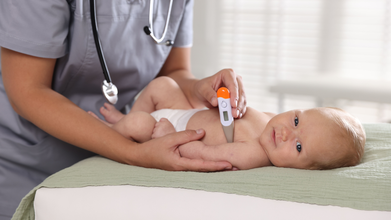
Credits: Canva (Representational)
Frida Baby thermometer is facing severe backlash after parents criticized the company's marketing language on its packaging. The parents claimed that the company cracked sexual jokes on using baby thermometers and that it crossed a line for a product that was designed for infants.
The controversy gained more traction this week after a social media user posted about it on X with photos stating that the marketing relies on sexual jokes.
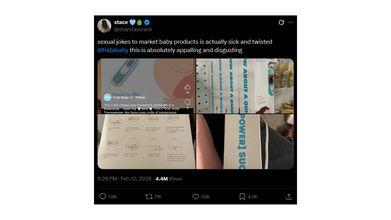
An X user @staystaystace wrote: "sexual jokes to market baby products is actually sick and twisted @fridababy this is absolutely appalling and disgusting".
Frida Baby Thermometer: What Was The Problem With Marketing
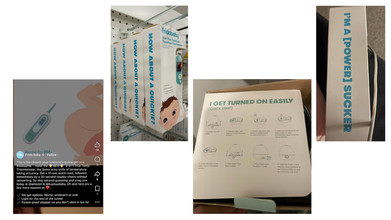
The photos include a screenshot of the thermometer packaging on which the graphics are pointed out to be problematic and inappropriate by the parents. Furthermore, the caption on the official account of Frida Baby social media reads: 'This is the closest your husband's gonna get to a threesome...'
In another photo of Frida Baby 3-in-1 Eat, Forehead and Touchless Thermometer, the marketing phrase reads: 'How About A Quickie?'
Another photo on steps for using the humidifier, the caption on the packaging reads: 'I Get Turned On Easily'. While a fourth photo reads: 'I'm A [Powerful] Sucker'.
Parents claim that the brand has used sexual market phrases found similarly on self care toys and massagers for products which are made for infants.
Read: Six-year-old Child Dies Of Medical Negligence During MRI At Greater Noida Imaging Centre
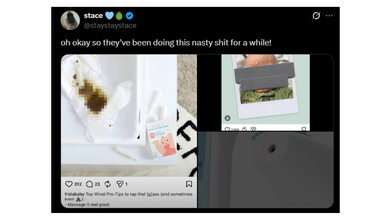
Amid this, older content from 2020, including deleted social media posts resurfaced featuring a baby with visible nose discharge and the caption read: 'What Happens When You Pull Out Too Early #nosefrida #dontmove'.
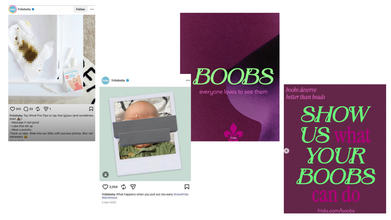
More recently, Frida Baby again drew attention for an Instagram post that centered on breastfeeding. The carousel post includes slides with statements like: 'Boobs, everyone loves to see them', followed by commentary on how breasts are widely accepted in pop culture, but criticized in the context of feeding a child. The final slide reads: 'Show Us What Your Boobs Can Do', which directs readers to company's website. A user on the Instagram post commented: "Hey so why do you sexualize your products??"
Another photo that resurfaced from 2021 reads: 'Top Windi Pro-Tips to tap that [g]ass (and sometimes even [poop emoji]):
- - Massage it real good
- - Lube that ish up
- - Wear a poncho
However, there were some parents who also defended the brand's tone and argued that humor is clearly aimed at adults who are navigated through the realities of parenting.
Frida Baby Thermometer: How Did The Brand React?
In an emailed statement, as reported by Complex, the spokesperson for the brand said:
From the very beginning, Frida has used humor to talk about the real, raw, and messy parts of parenting that too often go unspoken. We do this because parenting can be isolating and overwhelming, and sometimes a moment of levity is what makes a hard experience feel human, shared, and survivable.
Our products are designed for babies, but our voice has always been written for the adults caring for them. Our intention has consistently been to make awkward and difficult experiences feel lighter, more honest, and less isolating for parents.
That said, humor is personal. What’s funny to one parent can feel like too much to another. We’re never trying to offend, push boundaries for shock value, or make anyone uncomfortable. Importantly, our tone is never separate from our product. The humor we use is always grounded in a specific feature, benefit, or innovation — a reflection of the real problem we are solving for families.
Frida was built to support families through some of the most vulnerable and transformative chapters of their lives. We stand firmly behind that mission. We will continue to show up with honesty, empathy, and courage.
With each decision we make, we will continue to evaluate how we express our voice so that our commitment to families is unmistakable and our tone always meets the moment.
- Follow Us :


© 2024 Bennett, Coleman & Company Limited