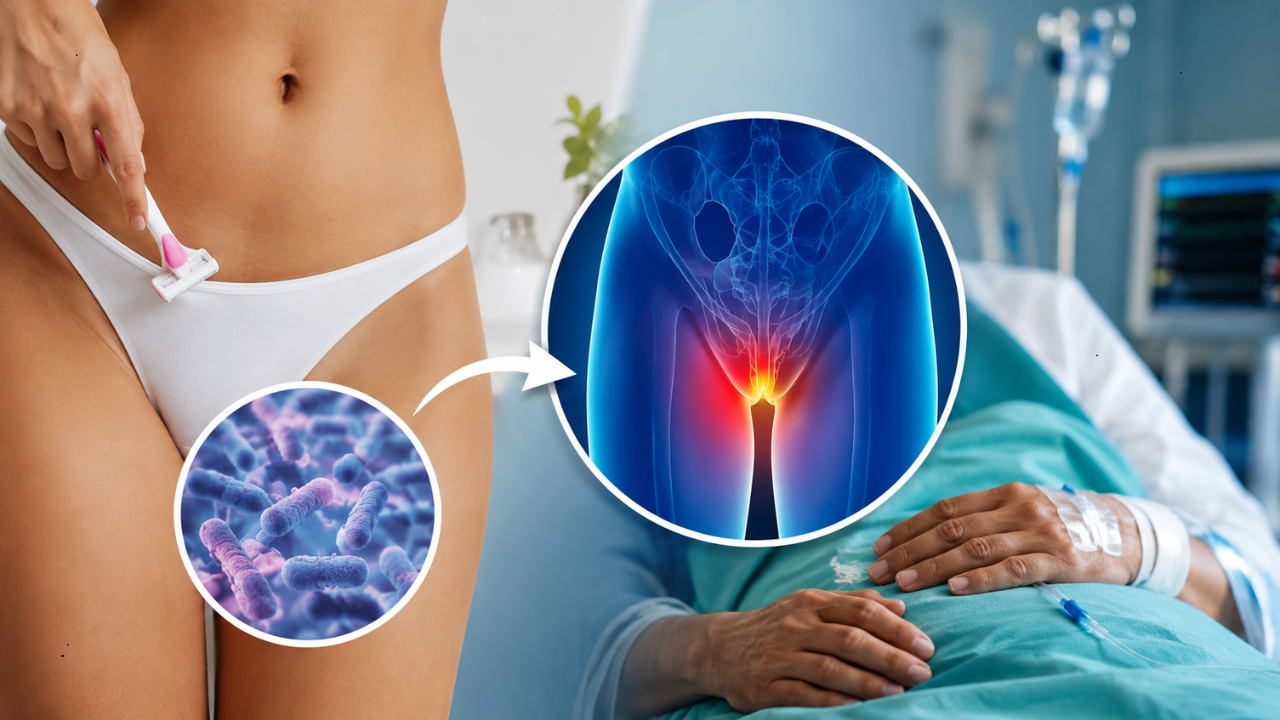
A 40-year-old woman developed a rare and potentially life-threatening “flesh-eating” infection of the genital and perineal region about a week after shaving her bikini line and an application of herbal preparation.The woman, a mother of four with a BMI of 39 kg/m², was diagnosed with Fournier gangrene, a severe form of necrotizing fasciitis that can rapidly destroy soft tissue around the genitals and perineum.She spent 77 days in hospital undergoing treatment, wound care and reconstruction. Complete wound healing was documented by Day 121, reported doctors from King Saud University in Riyadh, Saudi Arabia, in the American Journal of Case Reports.Severe Pain and SwellingThe woman presented with worsening pain and swelling of the left labia that had spread toward the area above the pubic bone. She also experienced vomiting and lower abdominal pain.About a week before admission, she had undergone perineal shaving and had a herbal preparation applied to her vulva by an alternative practitioner. She had not used antibiotics or other topical treatments before seeking medical care.On admission, her heart rate was elevated at 140 beats per minute, although she had no fever and her blood pressure remained normal. Examination showed marked tenderness and swelling, while laboratory tests indicated a significant inflammatory response.Samples taken from the infected wound grew several different types of bacteria (E. coli, Klebsiella pneumoniae, and Enterobacter cloacae). However, no bacteria were detected in her bloodstream.Multiple Surgeries After doctors diagnosed her with Fournier gangrene, they performed urgent surgical debridement to remove the affected tissue.She subsequently underwent multiple surgical re-explorations and negative-pressure wound therapy. She was initially given broad-spectrum antibiotics, and later amoxicillin-clavulanate.What Is Fournier Gangrene?Fournier gangrene is a rare, rapidly progressive form of necrotizing fasciitis affecting the perineum and external genitalia. It is often described as a “flesh-eating” infection because bacteria can cause rapid destruction of skin and underlying soft tissue.The condition is much more common in men, but women can also develop it. Reported male-to-female ratios range from 10:1 to 40:1.Risk factors include diabetes, obesity, immunosuppression, malnutrition, peripheral vascular disease, kidney disease, malignancy and other serious underlying conditions. However, Fournier gangrene can also occur in people without the classic risk factors.Local trauma, disruption of the skin barrier and invasive or cosmetic procedures can potentially provide an entry point for infection.Why Fournier Gangrene Can Be Missed in WomenThe researchers noted that Fournier gangrene may be underrecognized in women, partly because its symptoms can initially resemble a gynecological condition.Early symptoms may include severe pain, swelling, redness and tenderness around the genital or perineal area. As the infection progresses, tissue destruction, skin discoloration, blisters or systemic signs of severe infection may develop."While men are more frequently affected, women should not be assumed to be at low risk. Severe or rapidly worsening pain and swelling around the genital or perineal region, particularly when accompanied by systemic symptoms, warrants urgent medical evaluation," the team said.Treatment generally requires emergency surgical removal of dead and infected tissue along with broad-spectrum antibiotics and intensive supportive care. Survivors may require multiple operations, prolonged hospitalisation and complex wound management.How Serious Is Fournier Gangrene?Fournier gangrene is a medical emergency. Although rare, it can progress rapidly and become fatal if treatment is delayed.The condition has historically been associated with high mortality, with risk increasing when diagnosis and surgical treatment are delayed.