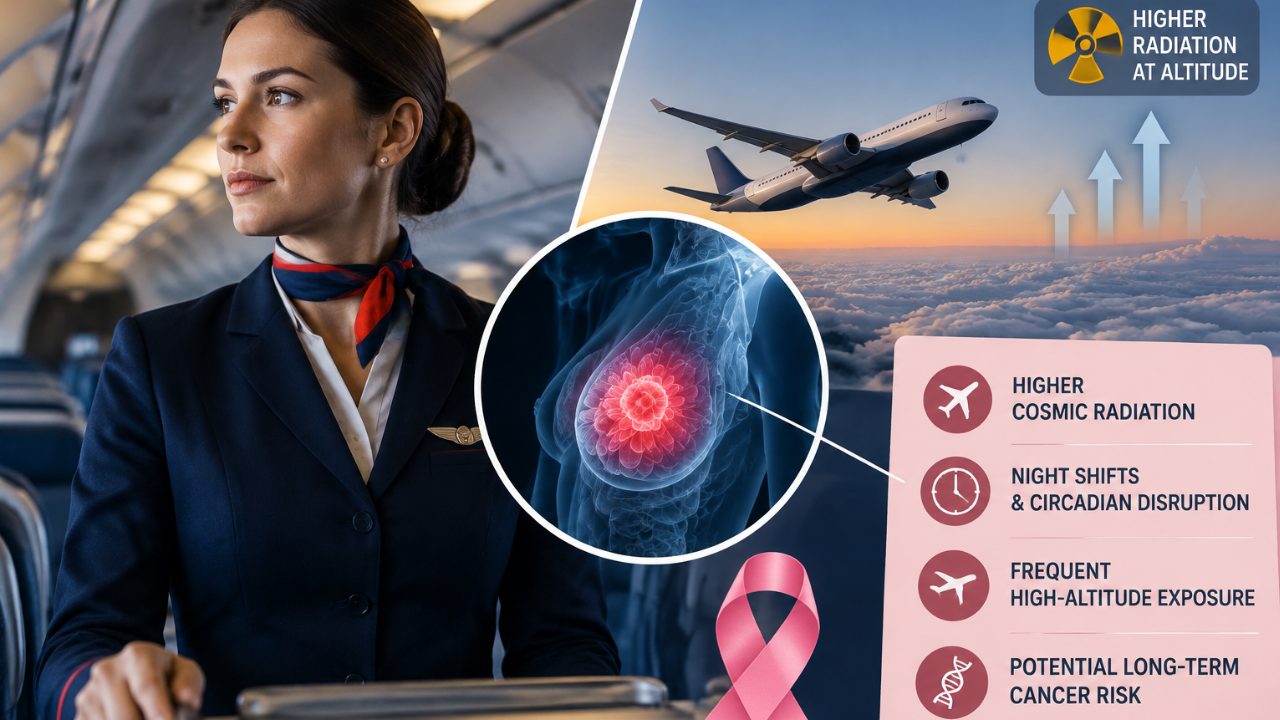
Long hours, jet lag and rapidly changing time-zone are few of the perils of aviation jobs. Just days after a study revealed that pilots and flight attendants are at a higher cancer risk than the general population, a French court ruled in favour of a former flight attendant, recognising her breast cancer as an occupational disease. The ruling has exposed the serious risks of exposure to ionising radiation at high altitudes. About The Lawsuit A court in Bayonne has recognised former Air France flight attendant Sophie Lainault's breast cancer as an occupational disease, marking the first such ruling for France’s aviation industry. The court considered her long-term exposure to cosmic radiation, night shifts, and passive smoking during her career that spanned almost three decades. Lainault, now 59, worked for Air France from 1989 to 2019, first as cabin crew and later as a purser on long-haul flights. She logged more than 12,600 flight hours, including over 6,500 at night. She told AFP, "It is truly my dearest wish that this opens the way for other women who might not have dared until now."Also read: Why Flight Attendants, Pilots Face Higher Risk Of Radiation-Linked Cancer Deaths Than Other Occupations? What Does Flying Have To Do With Radiation Exposure? The higher you travel, the thinner the atmosphere becomes. At commercial cruising altitudes, there is therefore less atmospheric protection against cosmic radiation. Aircrew can accumulate substantially more occupational radiation exposure than people working at ground level because they spend hundreds or thousands of hours at high altitude during their careers. The French court specifically cited ionising radiation as one of the occupational factors in Lainault's case. It also considered night shifts and second-hand smoke, which was particularly relevant because smoking was permitted on Air France flights until 2000. The ruling does not mean that radiation alone was the reason behind her breast cancer. The court considered several workplace exposures which may have contributed to her diagnosis.Also read: Daraxonrasib: US FDA Approves Once-Daily Pill for Metastatic Pancreatic Cancer New Study Added To The Concern The ruling comes just days after a study published in JAMA Internal Medicine examined cancer risk among pilots, flight attendants, and other airline staff who spend several hours at high altitudes. Researchers analysed more than 12.7 million deaths from 2020 to 2024 across 503 occupations. Flight attendants had the highest proportion of deaths from radiation-related cancers, while pilots ranked second. Radiation-related cancers accounted for approximately 6.9% of deaths among flight attendants and 6.7% among pilots, compared with about 5% in the general working population. The cancers examined in the study included breast cancer, melanoma, prostate cancer, leukaemia and cancers involving the central nervous system, among others. The researchers, however, have cautioned against interpreting the findings as proof that cosmic radiation caused these deaths. Aircrew also experiences night work, disrupted circadian rhythms and other occupational exposures, which can contribute.Also read: ‘Sunscreen Is A Health Essential’: UK Skin Cancer Survivor Urges Govt To Scrap Tax What Does This Mean For Frequent Flyers? The recent study speaks about the occupational hazards faced by pilots and flight attendants, who may spend thousands of hours in the air over decades of their careers. That is very different from someone taking a few commercial flights each year. Airline staff who fly regularly are at higher risk due to the cumulative effect of radiation. Air France said it was not a party to Lainault's case and had not been informed of the court's reasoning but said the “health and safety of employees at work is an absolute priority.”