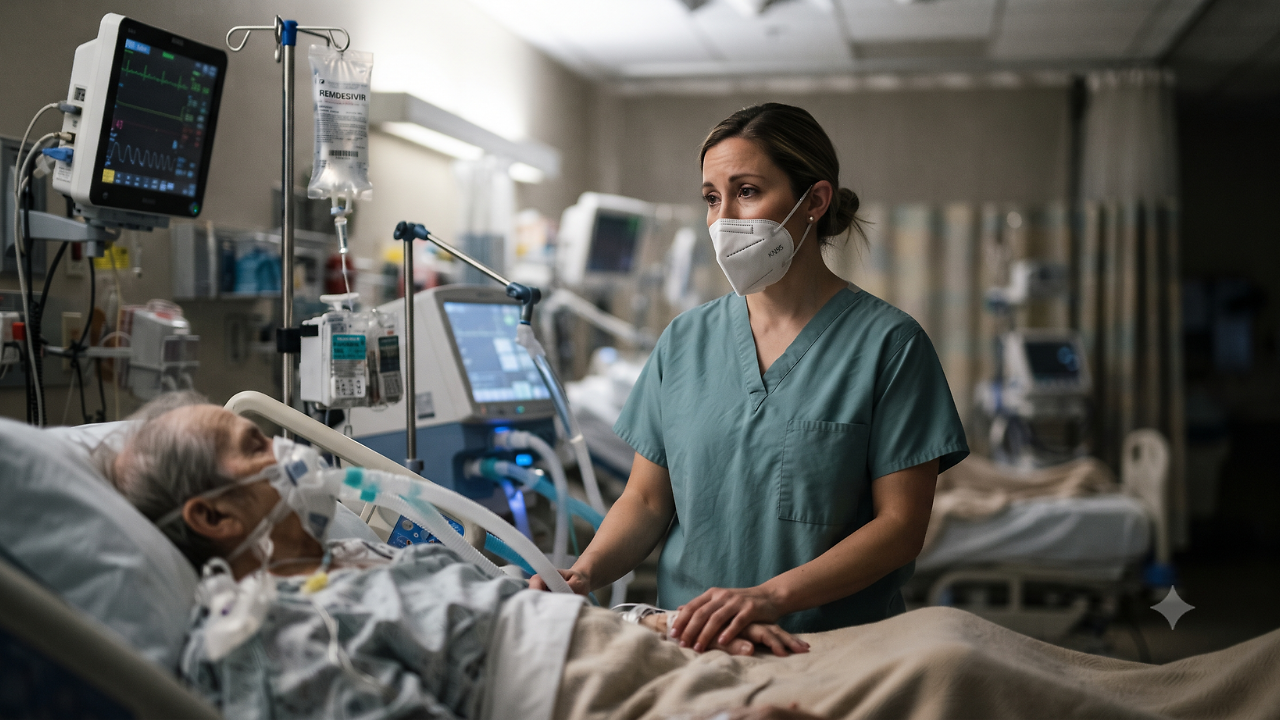
The COVID-19 pandemic may have ended, but memories of overwhelmed hospitals, medicine shortages, overworked healthcare workers and deaths remain fresh for many who lost loved ones.US-registered nurse and whistleblower Kimberly Overton has claimed that some COVID-19 patients died because of hospital treatment protocols, including the use of remdesivir and ventilators.“Patients did not die of COVID. They were killed by hospital protocols — remdesivir, ventilators, and the denial of life-saving treatments,” Overton claimed on several podcasts.Nurses Claims Patients Died From Hospital ProtocolsOverton has also described what she says she witnessed while working in an ICU during the pandemic.“Ventilators are the new gas chambers." "I worked ICU during the pandemic... I could not watch one more of my patients needlessly die due to deadly hospital protocols."“No bodies piling up at homes or on streets — they were dying inside hospitals from medical mismanagement and a corrupt system. This wasn't a virus. It was protocol murder”.Overton founded the Nurse Freedom Network, a US-based organization that advocates for nurses, patients and informed consent and has amplified criticism of COVID-era hospital protocols.Also read: Natural Origin or Lab Leak? Gabbard Reignites COVID Origins Debate, Claims Fauci Funded Wuhan Lab ResearchOverton is not the first nurse to make such claims.In 2023, Gail McCrae, who worked at a hospital in California's Bay Area, also criticized COVID-era hospital protocols and the use of remdesivir.McCrae said remdesivir was the main medication nurses at her hospital were allowed to administer to hospitalized COVID-19 patients. She also questioned the timing of treatment, claiming patients were receiving the drug 10 to 12 days after symptoms began.During one double shift, McCrae said she noticed an increase in “code blue” calls, referring to emergencies requiring resuscitation or immediate medical intervention.“And nine out of 10 times those code blues were to the lower level, down to the clinic, where they were injecting people. [Two of] my colleagues did in fact go into anaphylaxis, after receiving their shots.”What Was The Remdesivir Controversy?Remdesivir became one of the first widely used antiviral treatments for hospitalized COVID-19 patients in the US.Read More: COVID Hearing: US Senate Panel Votes to Hold Fauci in Contempt; Phone Records Under Review The NIH-backed ACTT-1 trial found that remdesivir shortened recovery time, with patients recovering in a median of 10 days compared with 15 days in the placebo group. However, the WHO-led Solidarity trial found little or no effect on mortality, need for ventilation or hospital stay.In November 2020, WHO issued a conditional recommendation against using remdesivir in hospitalized COVID-19 patients, citing insufficient evidence that it improved survival or other important outcomes.The US FDA, meanwhile, granted full approval to remdesivir in October 2020 for certain hospitalized COVID-19 patients.Trump Also Received RemdesivirRead More: COVID Hearing: US Senate Panel Votes to Hold Fauci in Contempt; Phone Records Under ReviewThen-US President Donald Trump was hospitalized at Walter Reed National Military Medical Center after testing positive for COVID-19 in October 2020. His treatment included remdesivir.Dr Anthony Fauci, who led the US response to the pandemic, had earlier described remdesivir as a potential “standard of care” after early trial results showed that it reduced recovery time. COVID Origins and DeathsAccording to the WHO, more than 7.1 million COVID-19 deaths have been officially reported worldwide since the pandemic began.However, WHO cautions that the reported figure does not necessarily reflect the actual number of deaths because countries differ in testing, definitions and reporting practices, and many have reduced or stopped reporting COVID-19 deaths.According to the US Centers for Disease Control and Prevention (CDC), more than 1.2 million COVID-19 deaths have been recorded in the United States since the pandemic began.WHO's latest data also show that COVID-19 deaths continue to be reported globally, although surveillance and reporting have declined significantly. The origins of SARS-CoV-2 also remain under investigation. The major hypotheses include zoonotic spillover and a possible laboratory-related incident, with scientific assessments continuing to evolve.