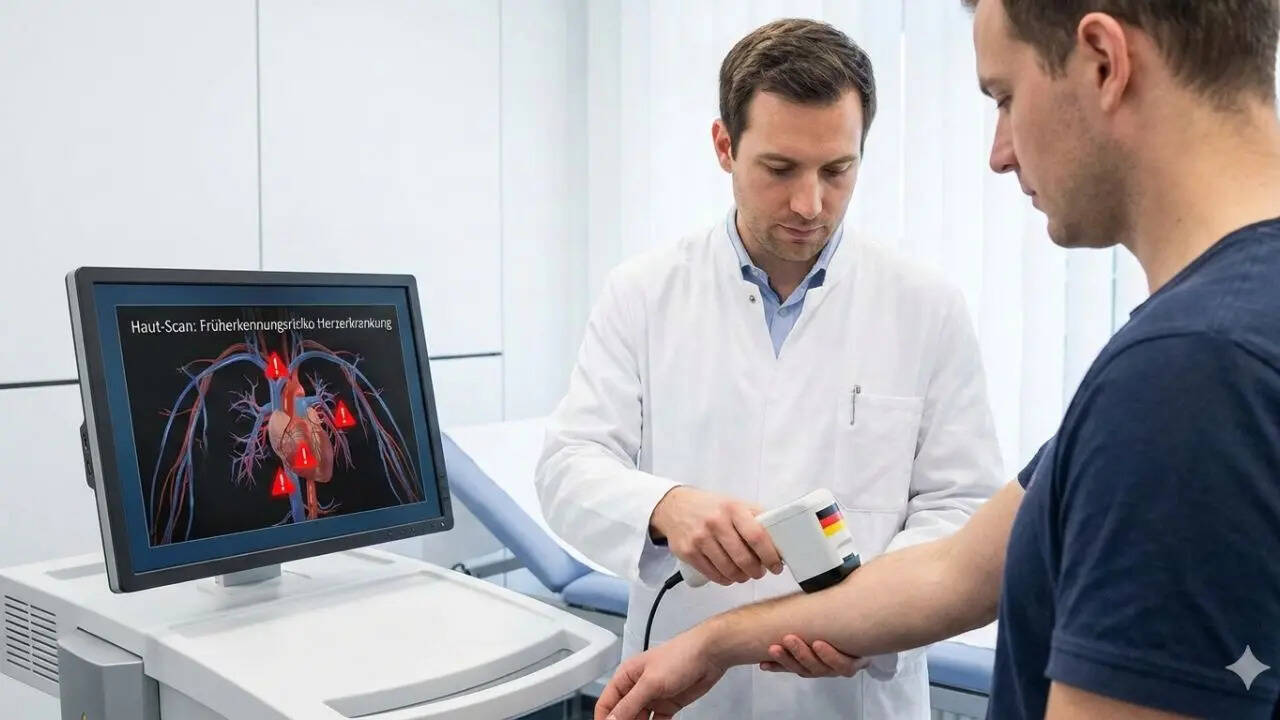
A group of German scientists has introduced a new skin imaging technique that can spot early warning signs of heart disease without breaking the skin. Known as the Fast-RSOM skin scan, the technology can pick up minute changes in blood vessels, oxygen supply, and tissue structure that standard imaging tools cannot detect. It produces clear images of the tiniest blood vessels through the skin and can identify subtle problems in how these vessels widen and narrow, a condition called microvascular endothelial dysfunction (MiVED). Until now, clinicians did not have a precise, noninvasive way to observe or measure these early changes in people.Researchers from the Helmholtz Association of German Research Centres say that by identifying early cardiovascular risk, the technology could allow doctors to step in sooner, tailor treatment plans more effectively, and support better heart health over time.German Scientists Create Skin Imaging Scan That Can Detect Heart DiseaseScientists at Helmholtz Munich, working alongside the Technical University of Munich (TUM), have developed Fast-RSOM, an advanced imaging method that captures highly detailed views of the body’s smallest blood vessels directly through the skin, without the need for invasive tests. By uncovering early indicators of cardiovascular risk, the scan could help doctors act earlier, personalise treatment approaches, and improve long-term outcomes for patients with heart disease.What Is ‘Fast-RSOM’?RSOM, short for Raster Scan Optoacoustic Mesoscopy, is a noninvasive imaging approach that uses brief pulses of light to create ultrasound signals. These signals are then used to generate high-resolution, three-dimensional images of structures beneath the skin.Fast-RSOM skin scanning can visualise tiny blood vessels in exceptional detail and detect subtle shifts in blood flow, oxygenation, and tissue composition that are usually missed by conventional imaging techniques. Crucially, it can identify early microvascular endothelial dysfunction (MiVED), a condition closely linked to the earliest stages of cardiovascular disease, according to Medical Xpress.How Can Fast-RSOM Detect Progression Before Symptoms Appear?Fast-RSOM delivers high-resolution, dynamic biomarkers of MiVED, capturing small but meaningful impairments in blood vessel function that often exist well before symptoms appear or larger disease signs can be measured. These early changes are frequently associated with risk factors such as smoking, high blood pressure, and obesity. Unlike traditional risk assessments that rely on general health indicators, Fast-RSOM directly measures the actual impact these factors have had on the microvascular system, long before serious complications emerge.By identifying these early signals, Fast-RSOM creates new opportunities for earlier diagnosis, prevention strategies, and more accurate tracking of heart health. The technology may help pinpoint people at greater risk of cardiovascular events with improved precision and allow doctors to monitor how lifestyle changes or treatments are working.The research team plans to test Fast-RSOM across larger and more varied patient populations and to incorporate its biomarkers into routine clinical practice. Because the device is portable, quick to use, and noninvasive, it could eventually be introduced in outpatient settings as part of regular cardiovascular risk screening, according to Medical Xpress.