
- Health Conditions A-Z
- Health & Wellness
- Nutrition
- Fitness
- Health News
- Ayurveda
- Videos
- Medicine A-Z
- Parenting
Health Emergency Looms As Delhi Forms Expert Panel To Fight Air Pollution
Credits: iStock
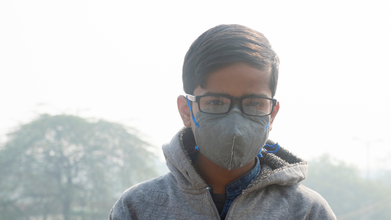
Coughs. Sneezing. Wheezing. All of this can be heard everywhere, with many people taking sick leaves, and coming back to office still with health complains. This is what is happening in Delhi as the national capital remains in the 'very poor' category for its Monday morning Air Quality Index (AQI). The average AQI of the city stood at 318 on 7am, as per the Central Pollution Control Board (CPCB). The thick layer of smog has engulfed the city and there has been no improvement to get rid of the toxic air. Visibility too has been reduced in several areas, including Anand Vihar, India Gate, Dwarka, and ITO.
Amid the continuously worsening air condition in Delhi, the government has now formed an 'expert group' to combat air pollution as health crisis rise.
The panel will study how pollution builds up from human activity as well as natural causes and will recommend technology upgrades, policy reforms, and sector specific interventions that can be put into action.
Who Will Lead the Expert Panel
The group will be chaired by retired IAS officer and former Union Environment Secretary Leena Nandan. Other members include former CPCB member secretary Dr JS Kamyotra, IIT Delhi professor emeritus Mukesh Khare, IIT Kanpur professor emeritus Mukesh Sharma, and Dr Suneel Pandey, director of Circular Economy and Waste Management at TERI. Representatives from CAQM, the IMD, APAG, PHDCCI and senior officials from the Delhi government are also part of the group. The Secretary of Environment and Forest is a member, and the DPCC chairman will serve as member secretary.
What the Group Will Do
This expert panel will act as a high level advisory body, offering clear, actionable guidance that can shape both emergency responses and long term reforms. It will track the progress of current pollution control programs, study global best practices, and flag where corrections are needed. The group will meet every month, either in person or virtually, and will receive administrative support from the Delhi Pollution Control Committee. The initial tenure is six months, with the option to extend if required.
Government Planning and Oversight
Chief Minister Rekha Gupta has approved the expert group, along with a separate High Level Implementation Committee chaired by the Chief Secretary. While the expert group will guide policy and strategy, the implementation committee is responsible for enforcing directives, coordinating across departments, and ensuring timely action. Delhi BJP leader Manjinder Singh Sirsa has welcomed the move and said that combined efforts from the government and citizens can make a meaningful difference.
Delhi’s Pollution Levels Are Rising Fast
A new analysis by the Centre for Research on Energy and Clean Air (CREA) highlights the scale of the crisis. Delhi’s air pollution almost doubled in November, with average PM2.5 levels touching 215 micrograms per cubic meter. The city recorded 23 days of very poor air, six severe days, and only one poor day. Although stubble burning played a smaller role this year, contributing an average of 7 percent, the pollution remained dangerously high.
Across India, pollution trends were equally worrying. Nine of the ten most polluted cities saw higher pollution levels than last year. Ghaziabad was the worst affected, with PM2.5 levels at 224 micrograms per cubic meter.
According to CREA analyst Manoj Kumar, declining stubble burning shows some progress, but major year round sources such as transport, industry, power plants, and other combustion activities continue to drive the crisis. Without strong emission cuts in these sectors, pollution levels will keep breaching national standards.
Doctors Warn of a Deepening Health Emergency
In an interview with ANI, doctors from AIIMS described Delhi’s air quality as a medical emergency. Prof Dr Anant Mohan and Dr Saurabh Mittal from the Department of Pulmonary, Critical Care, and Sleep Medicine said the current situation is now putting vulnerable groups at serious risk, including pregnant women, unborn babies, newborns, and adults with heart or neurological conditions.
Dr Mohan warned that the impacts may be felt for generations. Since the particles are extremely small, they can pass from a pregnant woman to the fetus and interfere with growth. Babies exposed to such conditions in the womb are more likely to be underweight and may have weaker lungs as they grow. Some complications might show up only later in life.
Dr Mittal added that the effects of toxic air go far beyond respiratory illness. Prolonged exposure is increasing cases of breathlessness, lung inflammation, asthma attacks, and chronic conditions like COPD. Fine particulate matter is also entering the bloodstream, raising the risk of heart attacks and strokes.
The growing health concerns underline the need for immediate and coordinated action, making the work of the newly formed expert group even more urgent.
How To Read Delhi's AQI?
0-50: 'good'
51-100: 'satisfactory'
101-200: 'moderate'
201-300: 'poor'
301-400: 'very poor'
401-500: 'severe'
K Strain Flu: Mutated H3N2 Virus Is Circulating; Health Officials Say It Is Never Too Late To Get Vaccinated
Credits: Canva
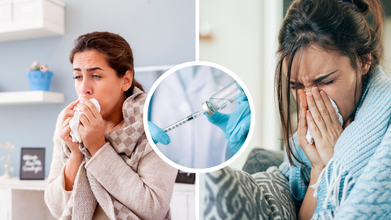
From time and again experts have highlighted that flu has come early this year. In fact, they have predicted that this could be a 'nasty season', all thanks to the mutated version of H3N2 virus.
What Is The K Strain Flu?
Known as the superfly, this is H3N2 'subclade K'. It is a type of seasonal influenza A virus and people have not encountered much of it in the recent years. This is why there is less immunity against it. However, the National Health Service (NHS), UK, has already sent out a 'flu jab SOS' to vulnerable people.
NHS has confirmed that the super flu is circulating in England this year, and due to less immunity, it is making it easier to spread across people. The UK Health Security Agency (UKHSA) has urged people to get a flu jab. As per the early data, this year's vaccine has offered good protection despite the new strain.
Daniel Elkeles, chief executive of NHS Providers, said that the major concern is that H3N2 is associated with a more severe illness and superflu could be "a very nasty strain of flu". He said that UK could be experiencing a "tidal wave" of illness.
Read More: Unique Symptoms Of H3N2 Flu Strain In UK And How Long Infection Now Last
Who Needs The Flu Jab?
NHS offers free flu jabs to people who need it the most, which includes:
- anyone aged 65 or above
- those with long-term health conditions
- pregnant women
- care home residents
- carers for older or disabled people, or those who receive a carer's allowance
- people who live with someone who has a weakened immune system
NHS also includes frontline health and social care workers to get the jab.
The flu jab is also available in a nasal spray version, which could be administered to children aged 2 to 3 years as well as school-aged children, up to year 11.
Everyone else who is not in this list have to buy the jab.
Should You Buy The Flu Shot? How Long Does It Take For The Jab To Work?
Even if you are healthy, you should get the shot, say doctors. Vaccines are still working against the drifted influenza A (H3N2) subclade, also known as the super flu. The vaccines in high street chemists are sold for £20.
Anyone can be vaccinated, except for those who have a serious allergy to any of its ingredients or to the vaccine it self. The best way to know is to speak to the pharmacist and your GP.
For the vaccine to work, it usually takes up to 14 days. However, what is more important to not is that during the 14-day-long period, you are still vulnerable to catching the virus.
What Are Some Of The Misconceptions Around Flu Vaccine?
Some people think that it is the flu vaccine itself that has given them the flu, however, the truth is that while vaccine does not give you a flu, it gives your body the instruction it needs to fight off an infection, in case you catch it. While you may still catch the flu after being vaccinated, the affects will be milder and would not last as long.
The best part, the vaccine is frequently updated to match the strain or the version of flu that experts expect will be circulating.
Also Read: This ONE Key Symptom Will Help You Differentiate Flu From COVID, According To Doctor
What More Can Be Done To Protect Yourself Against The Super Flu?
Elkeles says that anyone experiencing flu or cold symptoms should wear a mask in public places. This is important for the "tidal wave" of illness in the UK. Speaking to Times Radio, he said, "When you were talking about anything like Covid, I think we need to get back into the habit that if you are coughing and sneezing, but you’re not unwell enough to not go to work, then you must wear a mask when you’re in public spaces, including on public transport, to stop the chances of you giving your virus to somebody else. And we were all very good about infection control during Covid. And we really, really need to get back to that now.”
Justin Timberlake Is Now Prioritizing His Health After Lyme Disease Diagnosis

Credits: Canva and Instagram
Justin Timberlake had publicly revealed in his Instagram post about his diagnoses of Lyme disease, a tick borne illness that can cause lingering and unpredictable symptoms. The 44-year-old pop icon shared how this condition caused him "massive nerve pain", fatigue, and other symptoms as he went on his World Tour.
However, he did note that if diagnosed at an early stage, the condition is also treatable. It is spread by infected blacklegged ticks.
Justin Timberlake On Prioritizing His Health More After Being Diagnosed With Lyme Disease
In an Instagram post, he revealed that he had been battling with some health issues. In a report by PEOPLE, a source close to Jessica Biel said that the singer is prioritizing his health after the "grueling tour and Lyme disease diagnosis".
Justin Timberlake's Lyme Disease Diagnosis
Timberlake disclosed that during his Forget Tomorrow World Tour, which promoted his sixth solo album Everything I Thought It Was, he had been quietly “battling some health issues.”
“When I first got the diagnosis, I was shocked for sure,” Timberlake wrote. “But at least I could understand why I would be onstage and in a massive amount of nerve pain, or just feeling crazy fatigue or sickness.”
He admitted that the symptoms forced him to reconsider continuing the tour, saying, “I was faced with a personal decision. Stop touring? I decided the joy that performing brings me far outweighs the fleeting stress my body was feeling.”
Despite the physical toll, Timberlake pushed through his JT LIVE 25 tour leg, which included festival performances like Lollapalooza Brazil, before finally wrapping things up on July 31.
What Is Lyme Disease?
Lyme disease is caused by bacteria transmitted to humans through the bite of an infected black-legged tick. It's most common in certain parts of North America and Europe, especially during the warmer months.
The most common early sign of Lyme is a red rash that often resembles a bull’s-eye, typically appearing within 3 to 30 days after the bite.
The Center for Disease Control and Prevention (CDC), US, notes that the early symptoms can also mimic the flu, fever, chills, headache, fatigue, and muscle aches. If caught early and treated with antibiotics, most people recover completely within a few weeks.
However, for some, like Timberlake, symptoms can persist or worsen even after treatment. This condition, sometimes called Post-Treatment Lyme Disease Syndrome (PTLDS), includes ongoing fatigue, nerve pain, cognitive issues, and more.
“Lyme can be incredibly tricky because its symptoms overlap with many other conditions,” explained Dr. Christopher Bazzoli, an emergency medicine expert at the Cleveland Clinic, as reported by the New York Times. “When it’s not caught early, it can lead to a wide range of complications, from joint pain to neurological issues.”
In some untreated or severe cases, complications can include:
- Chronic fatigue
- Arthritis
- Heart palpitations
- Dizziness or shortness of breath
- Nerve pain
- Memory or concentration problems
- And in rare instances, meningitis
Doctors are still researching why some people recover quickly while others experience long-term effects. For now, treatment usually includes rest, medications for symptom relief, and in some cases, extended antibiotic therapy.
Timberlake has now joined a growing list of celebrities, including Avril Lavigne and Shania Twain, who’ve opened up about their experiences with Lyme disease in hopes of raising awareness.
Takeaway For You: If you’ve spent time in wooded or grassy areas and experience unusual fatigue, joint pain, or rashes, it’s worth getting checked for Lyme. Early diagnosis can make all the difference.
Scromting: Is It A New Medical Slang Of 2025? Here's What Experts Are Saying
Credits: Canva
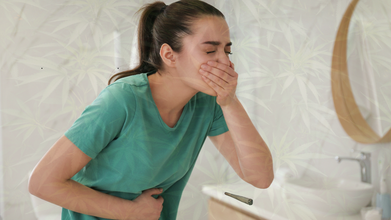
Scromting: the blend of two nightmares - screaming and vomiting. It sounds surreal, but it is as real as it could get. In an interview with the New York Post, Sydni Collins, 23, shared that she was "puking all morning." "I would let out yells or cries because nothing would come out. I was just dry heaving," she shares. This is how she ended up in the hospital with a feeding tube. What she was experiencing is called cannabis hyperemesis syndrome (CHS), a debilitating condition that triggers episodes of relentless nausea, abdominal pain, and severe vomiting in chronic weed users. She has been smoking weed daily as a teenager, since she was 16.
In the US, there are more than 2.5 million teens and 1 in 10 of them are casual cannabis users, with an additional of 600,000 teens considered to be addicted to it. Emergency rooms in the country have seen a steady rise in CHS cases over the last decade. In fact, the World Health Organization (WHO) and the Centers for Disease Control and Prevention (CDC) have also added CHS in its official diagnostic codes.
In Collins story, she became the trendsetter, because during her first hospital visit, she did not receive the diagnosis. However, her inability to eat a full meal afterward is what led to 7 ER visits in just one month. When she was finally admitted, she was only 87 pounds. She shared she would be in fetal position on the beds for hours, because that was the only way her stomach did not hurt. This is when she was finally diagnosed with 'superior mesenteric artery syndrome', which is a rare digestive disorder.
Misdiagnosis is common because there had been an absence of a diagnostic code for CHS.
What Are Experts Saying?
Dr David Streem, medical director of the Cleveland Clinic's Alcohol and Drug Recovery Center told USA TODAY that he has treated a range of patients with CHS over the years. He said that the condition is so severe that even the strongest anti-nausea medication that are given to chemotherapy patients, like Ondansetron, did not stop it.
However, there is a debate on CHS patients, and marijuana advocates like Paul Armentano, who is the deputy director of cannabis reform organization NORML, tells USA TODAY that CHS is actually "very rare" and that a lack of research on the syndrome has led to its misunderstanding. Armentano says, "The very fact that we're rebranding what was known for two decades as cannabinoid hyperemesis syndrome as scromiting. Scromiting is clearly sensational." It is made up, non-scientific, and sensational, says the cannabis advocate.
What is CHS or Cannabionoid Hyperemesis Syndrome, also known as the slang Scromting?
It is a side effect of prolonged use of marijuana. This results in nausea, vomiting, and abdominal pain.
As per Rome Foundation, a patients must meet the following criteria:
- Cyclical vomiting
- Presentation after prolonged marijuana use
- Relief of vomiting after the cessation of marijuana use
CHS was first reported in Australian medical literature in 2004. This is when a small study, published in BMJ analyzed 19 patients with cyclical vomiting after prolonged marijuana use.
While the research on what actually suddenly causes this syndrome is very limited, Armentano asks questions on if synthetic cannabis products, or a specific type of it leads to such a medical condition.
Stream said for treatment, IV drip of substance such as droperidol and haloperidol are often used in emergency rooms for CHS. Stream also said that Capsaicin, commonly referred to as hot pepper cream could also be rubbed on the abdomen for some temporary relief, along with hot showers or baths.
- Follow Us :


© 2024 Bennett, Coleman & Company Limited