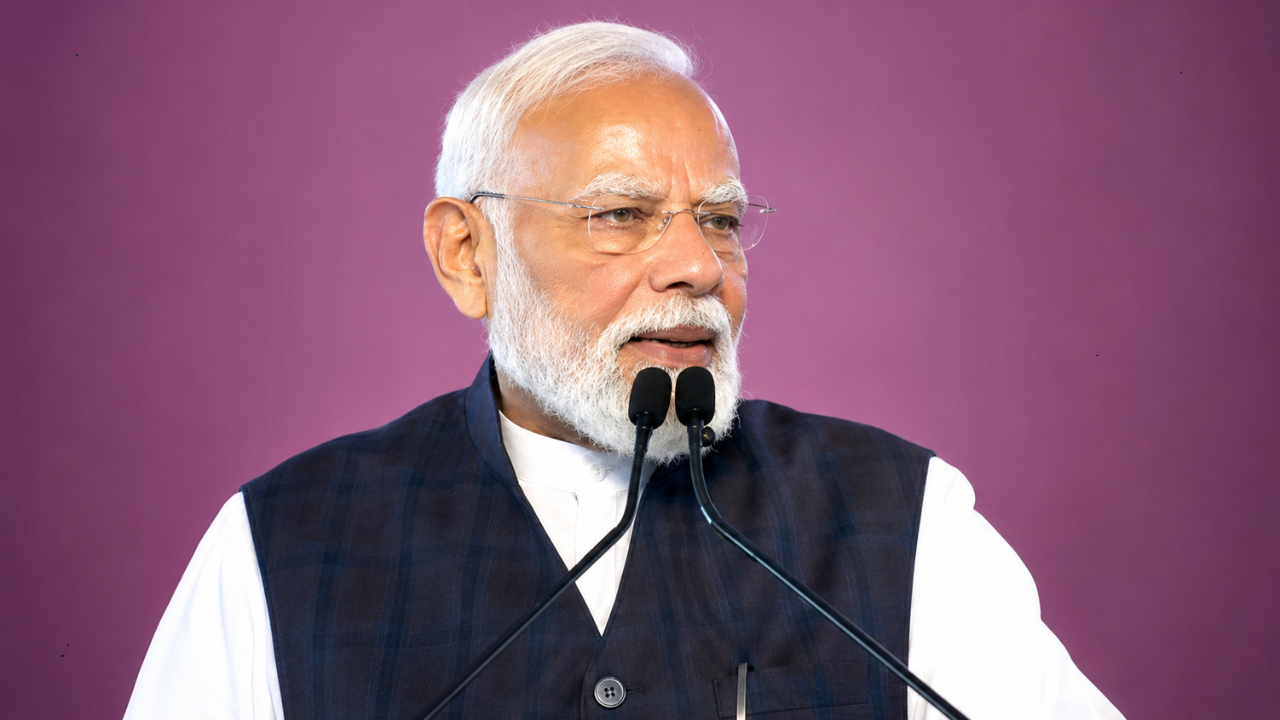
Healthcare in India is no longer a privilege but is steadily becoming a right, said Prime Minister Narendra Modi today while highlighting the government's efforts to expand affordable medical care, strengthen health infrastructure and improve access to treatment across the country.Speaking at the foundation stone laying ceremony and launching development projects worth over ₹4,700 crore in Chandigarh, spanning healthcare, education and road infrastructure, PM Modi stated that India's healthcare journey has undergone a transformational change over the past 12 years.The Prime Minister said lower and middle-income families have benefited the most from the country's healthcare transformation."Health services in India are no longer a privilege; they are becoming an absolute right," PM Modi said.PGIMER Expansion To Boost Healthcare AccessAlso read: Fourth COVID Death Reported in Andhra Pradesh: Experts Recommend Boosters For High-Risk GroupsIn Chandigarh, the Prime Minister announced the expansion of healthcare facilities at the Postgraduate Institute of Medical Education and Research (PGIMER), including a new Neuroscience Centre, a Mother and Child Centre, and a Critical Care Hospital Block, saying the projects will provide better treatment facilities to millions of people.He also announced the approval of a new MBBS college at PGIMER, saying the expansion of medical colleges and postgraduate seats will help address the shortage of doctors while creating more opportunities for aspiring medical students.Healthcare Infrastructure Expanded Over The Past DecadeHighlighting the government's investments in healthcare, Modi said India has approved 15 new AIIMS since 2014, established hundreds of new medical colleges and expanded specialty hospitals across the country."Since 2014, fifteen new AIIMS have been approved, hundreds of new medical colleges have been established across the country, and specialized hospitals for the treatment of serious diseases such as cancer have been strengthened."He added that strengthening primary healthcare remains a key priority under the Ayushman Bharat Health Infrastructure Mission.The Prime Minister said that under the mission, critical care blocks, integrated public health laboratories and public health units have been established across the country. He added that over 1.75 lakh Ayushman Arogya Mandirs are now operational across rural, urban and tribal areas, providing comprehensive primary healthcare services, including twelve healthcare service packages.He noted that crores of citizens have been screened for hypertension, diabetes and other non-communicable diseases through these centers.Digital Health and Maternal Care ImprovementsRead More: Novo Nordisk's GLP-1 Drug Wegovy Approved for Fatty Liver Disease in IndiaThe Prime Minister highlighted the growing role of digital healthcare, noting that the e-Sanjeevani telemedicine platform has facilitated more than 48 crore consultations, enabling patients in remote areas to access specialist care without travelling long distances.PM Modi said the healthcare improvements have contributed to better maternal and child health outcomes, with more than 90% of deliveries now taking place in healthcare institutions. He added that maternal mortality has declined by 86%, while infant mortality has also fallen significantly.The Prime Minister also underlined the government's emphasis on preventive healthcare through initiatives such as the Poshan Abhiyan, Mission Indradhanush, yoga promotion, HPV vaccination and the U-WIN platform.Focus On Tuberculosis ControlPM Modi reaffirmed the Government's commitment to eliminating tuberculosis, stating that the TB Mukt Bharat Abhiyan has strengthened awareness, screening and treatment.He noted that TB treatment coverage in the country has now crossed 90% and, citing a recent World Health Organization (WHO) report, said India has recorded a 21% decline in tuberculosis cases over the past decade.India Emerging As A Global Healthcare DestinationRecalling India's response during the COVID-19 pandemic, Modi said the country has evolved from a nation once perceived as dependent on external assistance to a global destination for advanced medical treatment.He attributed the transformation to sustained investments in healthcare infrastructure and policies aimed at making quality treatment affordable and accessible.Modi said "India must continue investing in modern healthcare infrastructure and emerging technologies as part of its vision of becoming a developed nation".