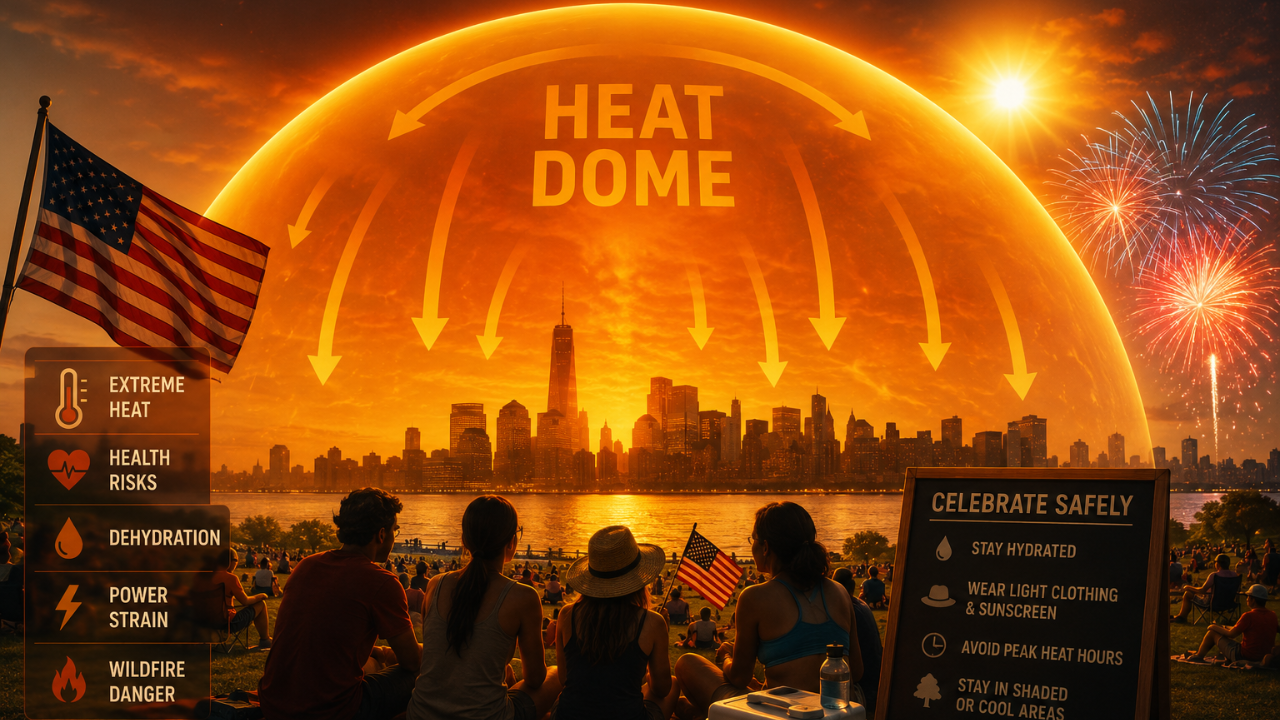
Barbecues, parades, and extravagant fireworks displays mark the Fourth of July weekend in the US each year. However, weather experts have issued a warning that a heat dome could result in increased temperatures across several parts of the country. Rise in mercury teamed with the nature of festivities is expected to pave the way for several health risks. What Is A Heat Dome? Heat domes, a severe weather pattern, refer to the phenomenon when a strong high-pressure traps hot air over a particular region, acting like a huge lid. It causes temperatures to soar for a specific period of time. This can lead to extremely high daytime temperatures, hotter nights, droughts, higher risks of forest fires, and heat-related illnesses. Heat Dome Looms Over Fourth Of July According to meteorologists, several parts of the United States could experience extreme heat conditions during the Fourth of July holiday. On Sunday, the National Weather Service said that the record-shattering heat would grip the eastern part of the country. The heat dome is expected to send the temperatures soaring into triple digits. Parts of Iowa, Missouri, and Kansas are among the most affected. States like Ohio, parts of North Carolina, and Washington, D.C will also see hotter days ahead. Biggest Heat-Related Risks During Fourth of July Prolonged exposure to high temperatures, especially during outdoor celebrations, can increase health risks like dehydration, heat exhaustion, and even heatstroke. Fireworks and Heat An extravagant display of fireworks is one of the important traditions of the holiday. However, extreme heat significantly increases the risk of accidental fires and other dangers of fireworks. Heat Exhaustion And Heatstroke Several traditional Fourth of July activities entail spending long hours outdoors, often during the daytime. This could pose risks of heat exhaustion and heat stroke. Symptoms typically include excessive sweating, dizziness, headache, nausea, muscle cramps, and weakness. Dehydration Hot weather combined with strenuous outdoor activities can cause the body to lose significant amounts of fluids through sweat. This could increase the risk of dehydration. Additionally, Fourth of July celebrations may include consuming alcoholic beverages, which can further contribute to dehydration. Sunburn Sunburn is also one of the significant health risks. Spending hours outdoors can also increase the risk of sunburn and skin damage. Unprotected exposure to ultraviolet (UV) radiation can lead to painful burns and increase long-term health risks like skin cancer. How To Celebrate SafelyHealth experts recommend a few simple precautions to enjoy the Fourth of July holiday safely: Staying hydrated: Drink plenty of water throughout the day to avoid dehydration. Limit alcohol and caffeinated beverages, which can contribute to fluid loss. Do not skip sunscreen: Ensure to apply a broad-spectrum sunscreen with an SPF of at least 30 and reapply every two hours, especially after swimming or sweating and on days with continued sun exposure. Plan activities according to the weather: Schedule outdoor activities during the morning or evening when temperatures are lower. Take breaks to cool down: Take frequent breaks indoors or in shaded areas. If possible, spend time in air-conditioned spaces. Dress appropriately: Wear lightweight, loose-fitting, and light-colored clothing that could keep you comfortable and cool throughout the day