
- Health Conditions A-Z
- Health & Wellness
- Nutrition
- Fitness
- Health News
- Ayurveda
- Videos
- Medicine A-Z
- Parenting
HPV: 3 Lakh Girls Vaccinated in India in Just Two Weeks
Credit: iStock
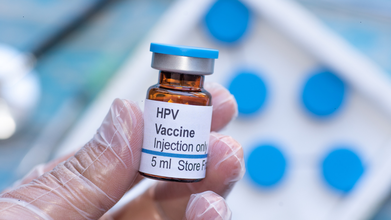
India’s Human Papillomavirus (HPV) vaccination drive that began a fortnight ago has already vaccinated nearly 3 lakh girls aged 14 years, according to the Union Health Ministry.
The nationwide free HPV vaccination campaign for girls aged 14 years was launched by Prime Minister Narendra Modi from Rajasthan's Ajmer on February 28.
“Within just a fortnight of its launch, nearly 3 lakh girls aged 14 years have already been vaccinated—marking an encouraging start to this critical public health initiative,” the health ministry said.
"The enthusiastic participation seen so far reflects growing awareness among parents, schools, and communities about the importance of early protection," it added.
Further, the Ministry noted that several states, including Madhya Pradesh, Andhra Pradesh, Tamil Nadu, Gujarat, Odisha, and Mizoram, have seen a significant uptake in the nationwide HPV vaccination campaign.
The initiative marked a decisive step towards eliminating cervical cancer through timely HPV vaccination.
Cervical cancer remains the second most common cancer among women in India. Nearly 80,000 new cases and over 42,000 deaths are reported annually in the country.
The Ministry said that despite examinations currently underway in many regions, the response to the campaign has remained strong, and the momentum is expected to accelerate significantly in the coming days.
“We are leaving no stone unturned to ensure that the daughters of the country are healthy and prosperous. The objective of this initiative is the prevention of cervical cancer," the Prime Minister, earlier wrote in a post on social media platform X.
The government has urged parents and guardians to support and encourage eligible girls to get vaccinated at the earliest.
HPV Vaccine in India
HPV vaccination is voluntary, and parental consent is mandatory before administration of the vaccine.
The single-dose Gardasil-4 vaccine is administered free of cost at government health facilities across all areas, including rural and underserved areas, and will be available even after the campaign ends.
The vaccine used is non-live and does not cause HPV infection. It is supported by more than 500 million doses administered globally since its introduction in 2006.
The vaccine is most effective when it is administered before exposure to HPV and before becoming sexually active. Young women aged 9 to 14 years show vaccine effectiveness of 74 to 93 per cent and this decreases with age.
- Girls aged 9 to 14 should get two doses of the vaccine 6 to 12 months apart
- Women aged 15 to 26 years can get three doses in 0, 2, and 6 months apart
- Adults aged 27 to 45 must get it after consultation with their healthcare provider
To avail the free HPV vaccine, visit any government health facilities including
- Ayushman Arogya Mandirs- Primary Health Centres (PHCs
India Plans To Roll Out Universal Health Insurance By 2033, Says FM Nirmala Sitharaman
Credit: Sansad TV/X
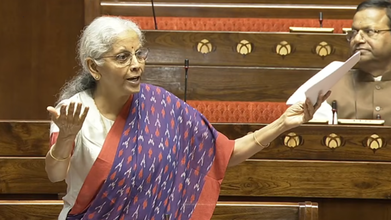
Finance Minister Nirmala Sitharaman has announced in the Parliament that India is planning to launch universal health coverage for all by 2033.
Addressing the Rajya Sabha, the Finance Minister stated that health insurance has become a priority area for the government, and informed that the sector has made significant progress, covering 58 crore lives in 2024–25, news agency PTI reported.
“Health insurance is a priority for this government. In fact, we are hoping that by 2033 we will have insurance cover for all,” Sitharaman said.
Growing Insurance Market
The FM added that the total health premium collections in the country reached Rs 1,17,505 crore in 2024–25. The health premiums under
- Public sector insurers accounted -- INR 42,420 crore
- Private insurers contributed INR 37,752 crore
- Standalone health insurers INR 37,331 crore
“Health insurance is now a clear priority with GST exemption on individual premiums, expansion of coverage, and strong regulatory push driving the momentum,” she said.
Health Insurance Under AB-PMJAY
Ayushman Bharat Pradhan Mantri Jan Arogya Yojana (AB-PMJAY), the world’s largest publicly funded health insurance scheme, launched in 2018, provides health cover of Rs 5 lakh per family per year. It provides secondary and tertiary care hospitalization to about 12 crore families, representing the bottom 40 per cent of the population.
The scheme was further expanded to cover 6 crore senior citizens of age 70 years and above, belonging to 4.5 crore families, irrespective of their socio-economic status.
Union Minister of State for Health and Family Welfare, Prataprao Jadhav, stated in a written reply in the Rajya Sabha that
till February 28:
- 43.52 crore Ayushman cards created
- 1.14 crore Ayushman Vay Vandana cards created for senior citizens
- 36,229 hospitals empaneled under AB-PMJAY -- 19,483 are public, and 16,746 are private hospitals
Further, the latest national master of Health Benefit Package provides cashless healthcare services for 1,961 procedures across 27 medical specialties.
“A total of 11.69 crore hospital admissions amounting to Rs. 1.73 lakh crore have been authorized under the scheme,” Jadhav said.
He added that more than 86 crore Ayushman Bharat Health Accounts (ABHA) have been created, and more than 90 Crore health records have been linked to patients’ ABHA.
In addition, Ayushman Bharat Digital Mission (ABDM) was launched in India in September 2021 to support the development of an integrated and citizen-centric national digital health ecosystem.
Till March 11, the progress made under ABDM includes:
- 86,64,46,563 - ABHA created for citizens
- 90,70,14,529 - Health records linked to the patient’s ABHA
- 2,56,542 - Facilities using ABDM-enabled software.
Argentina Exits The World Health Organization
Credit: Reuters/iStock
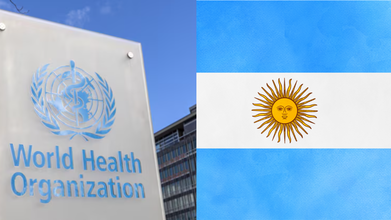
Argentina has formally withdrawn from the World Health Organization (WHO), its foreign minister has announced.
The country follows the footsteps of the United States, which in January made its exit from the global health body, after President Donald Trump condemned the WHO for not properly handling the deadly COVID-19 pandemic.
Argentina, a key ally of Trump, also criticized the WHO on its role during COVID and made the formal notification of withdrawal last year. Based on the provisions of the Vienna Convention on the Law of Treaties, the withdrawal takes effect one year after a notification is made.
Taking to the social media platform X, the country's Foreign Ministry reported that Argentina has now completed the withdrawal process within the timeframe stipulated by international treaties.
"Today, Argentina's withdrawal from the World Health Organization (WHO) takes effect, marking one year since the formal notification made by our country," Foreign Minister Pablo Quirno said on X.
"Our country will continue to promote international cooperation in health through bilateral agreements and regional forums, fully safeguarding its sovereignty and its decision-making capacity in health policy matters," he added.
In 2025, Argentina declared that "the WHO's recommendations are ineffective because they are not based on science, but on political interests", the AFP reported.
Presidential spokesperson Manuel Adorni told a press conference at the time that the decision "gives the country greater flexibility to implement policies adapted to the context and interests that Argentina requires, as well as greater availability of resources, and reaffirms our path towards a country with sovereignty also in matters of health", Xinhua news agency reported.
US' Withdrawal From The WHO
While WHO's membership is nearly universal, and withdrawals are extremely uncommon, the United States, earlier in January this year, became the first country to formally withdraw from the UN health body.
It comes a year after Trump signed an executive order to exit the multinational grouping on his return to the White House.
In its statements, the United States cited as one of the reasons for its decision, “WHO failures during the COVID-19 pandemic”, including “obstructing the timely and accurate sharing of critical information” and that the WHO “concealed those failures”.
The World Health Organization (WHO) was founded on April 7, 1948, when its constitution officially came into force, making it a specialized agency of the United Nations.
The global health body has been instrumental in eradicating smallpox and tackling public health threats like polio, HIV, Ebola, and tuberculosis.
Global Health Funding Takes A Hit
In January, WHO chief Tedros Adhanom Ghebreyesus said he deeply regretted the move, saying it would make the United States and the rest of the world unsafe.
The withdrawal of the US -- accounting for nearly a fifth of the WHO’s budget -- also affected its budget. Ghebreyesus also warned of falling donor support and severe budget cuts.
The agency is facing “the greatest disruption to global health financing in memory” as contributions fall sharply across the board, the WHO chief said.
The WHO has revised its financial plans, scaling back its current spending and proposing a 21 percent cut for the 2026-2027 budget cycle.
In November 2025, the global health body announced that its workforce will shrink by nearly a quarter or over 2,000 jobs by mid 2026.
4.9 Million Children Died Before Age Five Worldwide In 2024: UN Report
Credit: UNICEF
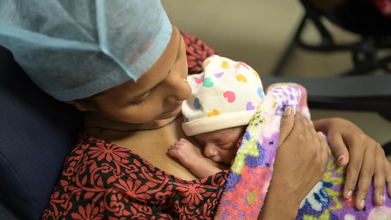
In 2024, an estimated 4.9 million children died before their fifth birthday, including 2.3 million newborns, according to an alarming new report by the United Nations today.
A majority of the deaths could have been prevented with proven, low-cost interventions and access to better health care, revealed the Levels & Trends in Child Mortality report.
While child mortality under-five globally has fallen by more than half since 2000, the pace of reduction slowed down by more than 60 percent after 2015.
“The world has made remarkable progress in saving children’s lives, but many still die from preventable causes,” said Dr. Tedros Adhanom Ghebreyesus, WHO Director-General.
“Children living amid conflict and crisis are nearly three times more likely to die before their fifth birthday. We must protect essential health and nutrition services and reach the most vulnerable families so every child has the chance not only to survive, but to thrive,” he added.
Key Findings
- Children under five years:
Severe acute malnutrition (SAM) claimed more than 100,000 children aged 1-59 months in 2024, mainly in Pakistan, Somalia, and Sudan.
Notably, malnutrition weakens children’s immunity and increases their risk of dying from common childhood diseases.
- Newborn deaths -- nearly half of all under-five deaths occurred in newborns. Leading causes include:
Complications during labor and delivery (21 percent)
Infections, including neonatal sepsis and congenital anomalies
- In infants and toddlers, major killers were infectious diseases such as
diarrhea,
pneumonia
- Children and youth aged 5–24 -- an estimated 2.1 milliondied in 2024.
In adolescents, self-harm was the leading cause of death among girls aged 15–19, and road traffic injuries among boys.
- Countries With Most Deaths
- conflict,
- climate shocks,
- invasive mosquitoes,
- drug resistance,
- Low access to prevention and treatment.
Europe and Northern America -- 9 per cent
Australia and New Zealand -- 6 per cent.
Southern Asia -- 25 per cent of all under-five deaths
Children and youth between 5 and 24 years old
How To Prevent
The report called for increasing investments in child health with low-cost interventions, such as
- vaccines
- treatment for severe acute malnutrition
- boost primary health care systems and community health workers
- transparent data collection, tracking, and reporting
- focus on mothers and children at highest risk
- make quality healthcare more affordable
“History has shown what is possible when the world commits to protecting its children. With sustained investment and political will, we can continue to build on those achievements for future generations,” Russell added.
- Follow Us :


© 2024 Bennett, Coleman & Company Limited