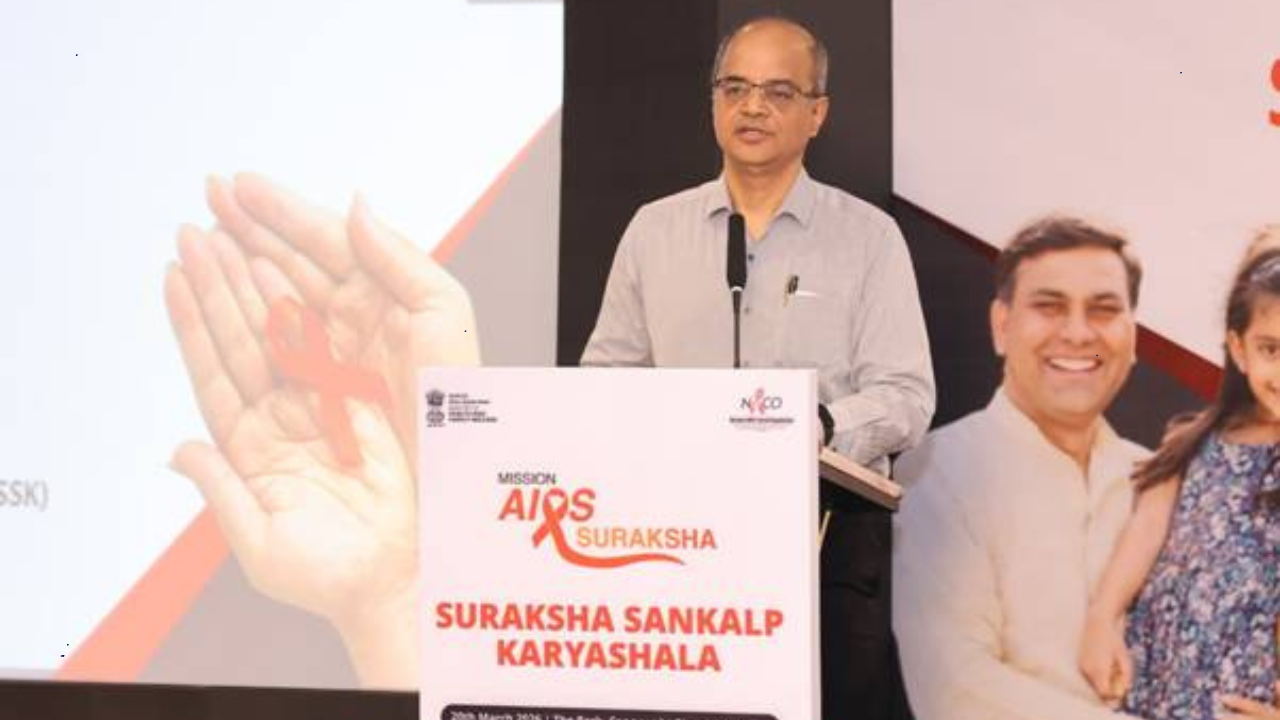
The Indian Ministry of Health & Family Welfare has identified 219 districts across the country as priority for intensified interventions for HIV/AIDS, as part of its strategy to control the epidemic by 2027. The country aims to achieve HIV control by December 1, 2027. As part of its Mission AIDS Suraksha, the Ministry convened the regional workshops titled ‘Suraksha Sankalp Karyashala' in Delhi today. The workshop laid a special focus on the states of Haryana and Delhi, to chart a targeted approach for program implementation and close monitoring of high-burden districts -- 11 in Haryana and 7 in Delhi.In Delhi, the identified districts include North, New Delhi, Shahdara, Central, South East, South, and North West. In Haryana, the prioritized districts comprise Panipat, Rohtak, Sirsa, Jhajjar, Gurugram, Faridabad, Bhiwani, Hisar, Sonipat, Kaithal, and Fatehabad.District program teams from these priority areas presented their progress, shared operational challenges, and collaboratively developed targeted, outcome-oriented action plans to further strengthen the HIV response at the grassroots level.HIV Status In Delhi And HaryanaAs per data from the Ministry, an estimated 59,079 people live with HIV in Delhi, with an adult HIV prevalence of 0.33 percent. On the other hand, Haryana has an adult HIV prevalence of 0.24 percent, with an estimated 59,642 people living with HIV. "Delhi continues to face critical gaps, with only around 70 percent of identified individuals currently linked to or receiving treatment, highlighting the urgent need to accelerate treatment coverage and retention,” said Dr. Rakesh Gupta, Additional Secretary & Director General, NACO. "In contrast, Haryana has achieved a cascade of approximately 81:83:95, reflecting encouraging progress, while also signaling the need for intensified efforts to improve diagnosis and treatment linkage,” he added. Focus Areas HIV/AIDS A Public Health ChallengeBy 2025, HIV targets were to ensure 95 percent people know their HIV status, 95 percent of them are on lifesaving antiretroviral therapy, and 95 percent of those on treatment are virally suppressed. As per the National AIDS Control Organization’s report (Sankalak 2024), 81 percent of 25.44 lakh people living with HIV knew their status, 88 percent of them were receiving lifesaving antiretroviral therapy, and 97 percent of those on the treatment were virally suppressed till March 2024. "HIV/AIDS continues to pose a significant public health challenge, necessitating sustained vigilance, innovation, and coordinated action across all tiers of governance,” said Dr. Gupta, in his keynote address.Also read: Years After PrEP Rollout, The HIV Prevention Drug Still Remains A Privilege In IndiaEliminating Vertical Transmission Of HIV Dr. Gupta also emphazised the critical importance of eliminating mother-to-child transmission of HIV, which can occur during pregnancy, childbirth, and breastfeeding. "Such transmission is entirely preventable through timely testing, counselling, and treatment, and called for strengthened antenatal screening and universal access to prevention services to ensure that no child is born with HIV," he added. Also read: Reducing Mother-To-Child HIV Transmission To Zero Key To End AIDS In India: ExpertsStressing the need for a whole-of-system approach, Dr. Gupta called upon stakeholders across national, state, and district levels to work in close synergy, particularly at the field level, to bridge existing gaps in awareness, testing, treatment, and adherence. The Suraksha Sankalp Karyashala serves as a vital platform for collaborative planning between national, State, and district stakeholders, reinforcing India’s coordinated, evidence-based, and data-driven approach to HIV prevention and testing services. It aims to improve linkage and retention on treatment, enhance viral load suppression among people living with HIV, and expand targeted outreach among vulnerable and key populations.