
- Health Conditions A-Z
- Health & Wellness
- Nutrition
- Fitness
- Health News
- Ayurveda
- Videos
- Medicine A-Z
- Parenting
India Identifies 219 Districts As Priority For Intensified HIV/AIDS Interventions
Credit: PIB
The Indian Ministry of Health & Family Welfare has identified 219 districts across the country as priority for intensified interventions for HIV/AIDS, as part of its strategy to control the epidemic by 2027.
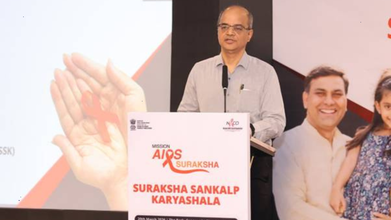
The country aims to achieve HIV control by December 1, 2027. As part of its Mission AIDS Suraksha, the Ministry convened the regional workshops titled ‘Suraksha Sankalp Karyashala' in Delhi today.
The workshop laid a special focus on the states of Haryana and Delhi, to chart a targeted approach for program implementation and close monitoring of high-burden districts -- 11 in Haryana and 7 in Delhi.
In Delhi, the identified districts include North, New Delhi, Shahdara, Central, South East, South, and North West. In Haryana, the prioritized districts comprise Panipat, Rohtak, Sirsa, Jhajjar, Gurugram, Faridabad, Bhiwani, Hisar, Sonipat, Kaithal, and Fatehabad.
District program teams from these priority areas presented their progress, shared operational challenges, and collaboratively developed targeted, outcome-oriented action plans to further strengthen the HIV response at the grassroots level.
HIV Status In Delhi And Haryana
As per data from the Ministry, an estimated 59,079 people live with HIV in Delhi, with an adult HIV prevalence of 0.33 percent.
On the other hand, Haryana has an adult HIV prevalence of 0.24 percent, with an estimated 59,642 people living with HIV.
"Delhi continues to face critical gaps, with only around 70 percent of identified individuals currently linked to or receiving treatment, highlighting the urgent need to accelerate treatment coverage and retention,” said Dr. Rakesh Gupta, Additional Secretary & Director General, NACO.
"In contrast, Haryana has achieved a cascade of approximately 81:83:95, reflecting encouraging progress, while also signaling the need for intensified efforts to improve diagnosis and treatment linkage,” he added.
Focus Areas
HIV/AIDS A Public Health Challenge
By 2025, HIV targets were to ensure 95 percent people know their HIV status, 95 percent of them are on lifesaving antiretroviral therapy, and 95 percent of those on treatment are virally suppressed.
As per the National AIDS Control Organization’s report (Sankalak 2024), 81 percent of 25.44 lakh people living with HIV knew their status, 88 percent of them were receiving lifesaving antiretroviral therapy, and 97 percent of those on the treatment were virally suppressed till March 2024.
"HIV/AIDS continues to pose a significant public health challenge, necessitating sustained vigilance, innovation, and coordinated action across all tiers of governance,” said Dr. Gupta, in his keynote address.
Also read: Years After PrEP Rollout, The HIV Prevention Drug Still Remains A Privilege In India
Eliminating Vertical Transmission Of HIV
Dr. Gupta also emphazised the critical importance of eliminating mother-to-child transmission of HIV, which can occur during pregnancy, childbirth, and breastfeeding.
"Such transmission is entirely preventable through timely testing, counselling, and treatment, and called for strengthened antenatal screening and universal access to prevention services to ensure that no child is born with HIV," he added.
Also read: Reducing Mother-To-Child HIV Transmission To Zero Key To End AIDS In India: Experts
Stressing the need for a whole-of-system approach, Dr. Gupta called upon stakeholders across national, state, and district levels to work in close synergy, particularly at the field level, to bridge existing gaps in awareness, testing, treatment, and adherence.
The Suraksha Sankalp Karyashala serves as a vital platform for collaborative planning between national, State, and district stakeholders, reinforcing India’s coordinated, evidence-based, and data-driven approach to HIV prevention and testing services.
It aims to improve linkage and retention on treatment, enhance viral load suppression among people living with HIV, and expand targeted outreach among vulnerable and key populations.
New AIIMS Study To Probe How PM2.5 Is Surging Lung Cancer Risk In India
Credit: iStock
Once affecting people who smoked tobacco, lung cancer in India is today more common among people who never smoked. The major reason: exposure to poor air, almost year-round.
Although air pollution has emerged as an important risk for lung cancer, the evidence on this issue from India is limited. To explore more on this, the All India Institute of Medical Sciences, Delhi, today announced undertaking a major study.
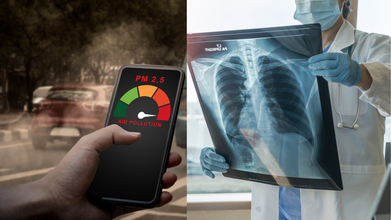
The study, dubbed ‘AIRCARE (Air Pollution and Cancer Research Ecosystem): Center for Advanced Research on Environmental Health and Lung Cancer Risk’, will examine the connection between the fine particulate matter 2.5 (PM 2.5) and the risk of lung cancer in the country.
PM2.5 particles, with a diameter of 2.5 micrometers or less, are approximately 30 times smaller than a human hair. It is a significant yet often unseen threat to air quality.
“India is home to some of the most polluted cities in the world, and there is an urgent need to scientifically look at the effects of pollution on people’s health. Lung cancer is one of the most common cancers among males in India, and there is a high number of non-smoking lung cancers among females and young adults,” said Dr. Abhishek Shankar, Assistant Professor, Radiation Oncology at AIIMS, who will lead the study, while addressing the media.
“It is deeply concerning that lung cancer, once assumed to be a disease mostly associated with people who smoke tobacco, is now seeing a rapid increase in incidence amongst people who do not smoke,” he added.
The expert urged the "need to implement policy and management strategies to tackle this disease and mitigate further loss of life”.
The AIRCARE Study
It will be the first-of-its-kind scientific study in India to evaluate the effects of exposure to air pollution.
About 1,615 lung cancer cases with 1,615 controls from their family members will be added to the study.
The study will employ both a cohort and case-control design to track the effects of chronic PM 2.5 exposure on lung cancer incidence across various demographics and socio-economic groups.
It will also attempt to isolate an Indian population-specific genetic imprint.
Based on the findings, the researchers aim to develop a risk- based screening model that will include both clinical and molecular components specific to the Indian population and exposure levels.
It will also identify the susceptible population among the cohort who are more at risk of developing lung cancer.
Lung Cancer And Air Pollution Risks In India
Data from the National Cancer Registry shows that lung cancer affects about 72,000 people and claims 66,000 lives every year in India -- making it one of the leading causes of cancer mortality in the country.
From a smoker’s illness, lung cancer has now emerged as a major concern due to poor air quality. Several doctors across Delhi and Maharashtra have n noted a significant increase in pulmonary cancer due to air pollution.
A 2025 study at a government hospital in North India found that 52 percent of lung cancer cases were among non-smokers.
New National Dental Commission To Transform Dental Education In India
Credit: iStock
The Indian government today constituted the National Dental Commission (NDC), in a major reform to improve the quality of dental education in the country and align it with global standards, said the Ministry of Health and Family Welfare, on the occasion of World Oral Health Day.
The government also announced three autonomous boards under the NDC and repealed the erstwhile Dental Council of India (DCI). The developments were notified on March 19, making the new framework operational from the same date, the Ministry said in a statement.
The NDC aims to introduce essential and long-overdue regulatory reforms in dental education and enhance access to affordable oral healthcare across the country.
The three autonomous bodies aim to support the functioning of the Commission. These are:
- Undergraduate and Postgraduate Dental Education Board -- to oversee dental education
- Dental Assessment and Rating Board -- to regulate accreditation and institutional assessment
- Ethics and Dental Registration Board -- to govern professional conduct and registration of dentists
The key functions of the National Dental Commission includes:
- Framing regulations to implement the provisions of the Act
- Conducting rating and assessment of dental institutions
- Evaluating human resources and promoting dental research
- Framing guidelines for fee regulation in private dental colleges
- Establishing standards for community dental care, education, research, and professional ethics
World Oral Health Day
Every year on March 20, World Oral Health Day is observed to empower people with the knowledge, tools and confidence to secure good oral health.
The 2026 theme is “A Happy Mouth is a Happy Life” raises awareness about the importance of caring for your mouth at every stage of life - from birth through later years.
"Healthy Mouth, Healthy Nation. This World Oral Health Day, let’s raise awareness and take action, practice proper brushing, reduce sugar intake, and prioritize regular dental check-ups. Your smile deserves daily care," the Ministry of Health shared in a post on social media platform X.
Also read: World Oral Health Day: Your Mouth May Signal Disease Before You Even Know, According To Doctor
"A healthy mouth is essential for a healthy body. This World Oral Health Day, let’s focus on building better habits for ourselves and our families," said Union Health Minister JP Nadda.
He called for building up "simple steps like proper brushing, limiting sugary foods, and regular dental check-ups" to maintain good oral health.
"Good oral care not only keeps our smile bright but also supports overall well-being. Let’s use this occasion to raise awareness and commit to maintaining good oral hygiene every day," he added.
Harish Rana Taken Off Ventilator, Shifted To Normal Bed At AIIMS Delhi
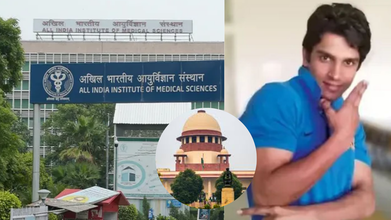
Harish Rana, the 32-year-old resident from Ghaziabad who had been in vegetative condition for the last 13 years has now been removed from ventilators and other life support systems. He has been shifted to a normal bed. As per news reports, his water tube too was removed and a cap was placed on his feeding tube.
As per the hospital sources, Harish Rana's condition is now stable. Following the Supreme Court's order, the medical board will monitor his condition. While his feeding tube has been removed, doctors are still administering brain-soothing medicines.
Harish Rana's parents are also staying with him in AIIMS Delhi. His parents and brothers have been receiving daily counselling.
AIIMS Delhi Is Prepared For India's First Passive Euthanasia
Harish Rana's case marks India's first passive euthanasia. To conduct the passive euthanasia, AIIMS Delhi has set up a specialized team headed by professor and head of the department of anesthesia and palliative medicine, Dr Seema Mishra, has been constituted to implement the process. The team comprises doctors from departments of neurosurgery, onco-anesthesia, and palliative medicine, and psychiatry.
Read: AIIMS Delhi Sets Up Team To Process India's First Ever Passive Euthanasia For Harish Rana
“The process generally involves withholding or withdrawing the nutritional support gradually while ensuring adequate pain relief. The patient is given palliative sedation so that he or she is not in distress. Life support measures such as artificial nutrition, oxygen and medications are slowly withdrawn. The aim is not to prolong nor hasten death,” Dr Sushma Bhatnagar, former head of the department of onco-anaesthesia, pain and palliative care, AIIMS-Delhi.
What Happened To Harish Rana?
It was in 2013 when he suffered severe head injuries after he fell from the fourth floor from his PG accommodation while he was studying at Panjab University. He had been bedridden ever since, and survived on feeding tube. His father filed a petition seeking passive euthanasia under the guidelines Supreme Court had laid down in 2018 under Common Cause judgment. This is the second time the parents have approached the apex court.
In 2024, the court also suggested that Rana could receive home-based care with support from the Uttar Pradesh government. The home-based care includes periodic visits by doctors and physiotherapists. The court suggested that in case home care was not feasible, he could be moved to Noida's district hospital. However, his parents have noted that his condition continued to worsen. Family advocate Rashmi Nandakumar also informed the bench that "nothing seems to be working out".
"He is falling ill quite often and is repeatedly admitted to hospital," she said. The advocate further added that the family only sought passive euthanasia, which is withdrawal of treatment, and not any active intervention.
Justice Pardiwala also read medical reports and observed, "Just look at the condition of the boy. It's pathetic."
Recent court ruling on this case involves a bench comprising Justice JB Pardiwala and Justice KV Viswanathan that allowed the withdrawal of life support for Harish Rana, a resident of Ghaziabad, who has been in a coma and kept alive on tubes for breathing and nutrition after sustaining severe head injuries following a fall from a building in 2013 in Chandigarh.
- Follow Us :


© 2024 Bennett, Coleman & Company Limited