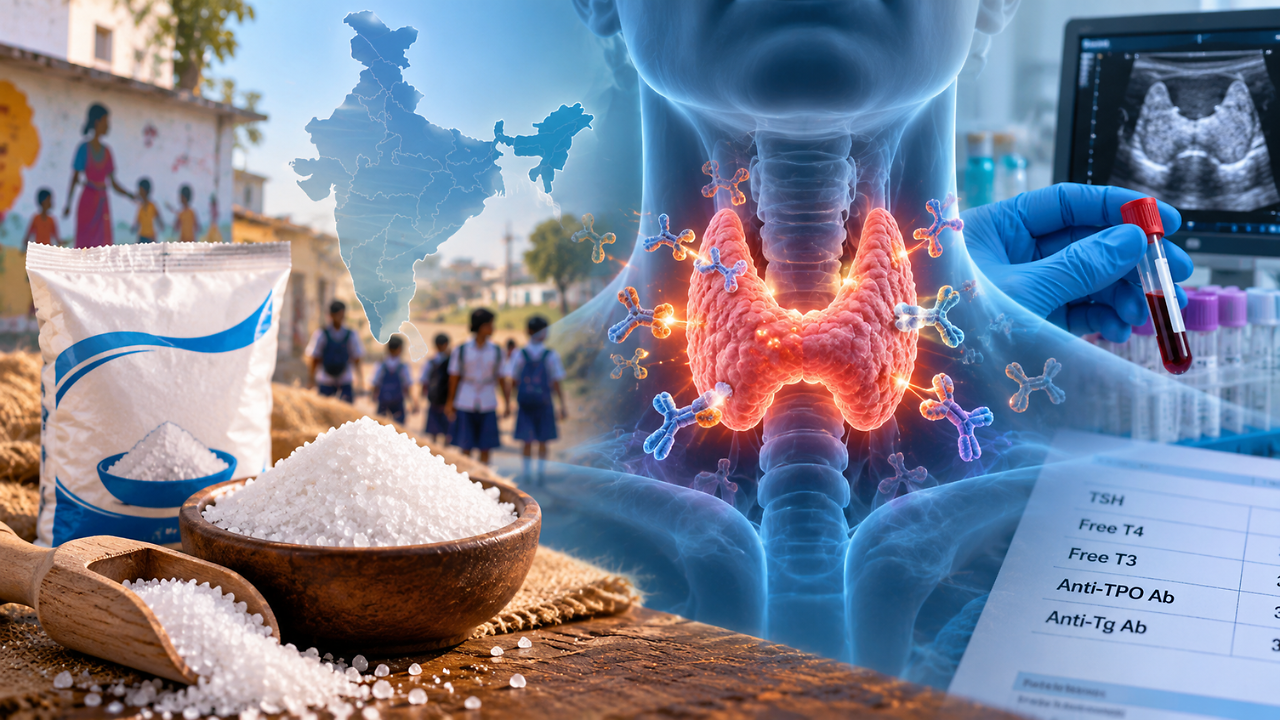
India’s campaign to eliminate iodine deficiency has made a substantial progress. A recent Lancet Regional Health – Southeast Asia study has found that cases of goitre among school-going children have reduced significantly. But the research has also highlighted that another thyroid concerns have surfaced among Indian children simultaneously. They include thyroid autoimmunity and thyroid dysfunction. The nationwide study, conducted across eight centres, examined 8,903 school children between the ages of 10 to 18 years. Researchers examined goitre, thyroid function, thyroid antibodies and iodine status as part of the ICMR-SALT-T 1 study. Goitre Cases Have Gone Down After Decades Of Iodised Salt India introduced universal salt iodisation in 1986 to tackle iodine deficiency, a major cause of goitre and other disorders that affect growth and brain development. The new study found that 10.3% of children had goitre, a substantial decline from 23.5% in 2003 and 17.6% in 2012. Nearly 99% of the detected goitre cases were classified as grade 1. The findings reflect the fact that India’s iodisation programme has helped extensively in eliminating iodine deficiency. More than 90% of surveyed households reported using iodised salt, while 89% of 1,615 tested salt samples contained more than 15 parts per million of iodine. The median urinary iodine concentration was 133.2 micrograms per litre, indicating adequate iodine nutrition at the population level. India’s National Iodine Deficiency Disorders Control Programme continues to target household use of adequately iodised salt and regular monitoring of iodine levels.Also read: Ashwagandha Gummies Linked To Liver Failure, Brain Damage In UK Woman: What Is The Risk With The Herb? But Thyroid Autoimmunity Is Rising Despite adequate iodine nutrition, 10.4% of the 5,726 children tested for thyroid antibodies were positive for anti-thyroid peroxidase, or anti-TPO, antibodies. These antibodies are produced when the immune system mistakenly targets the thyroid. Their presence can be a marker of thyroid autoimmunity and may be associated with conditions like Hashimoto’s thyroiditis. But antibody positivity alone does not mean a child has thyroid disease. Girls were about twice as likely as boys to test positive for anti-TPO antibodies. Children with goitre were also more likely to have the antibodies. The study also found hypothyroidism in 13% of the 5,512 children for whom thyroid-function data were available. In this condition, thyroid-stimulating hormone is elevated but thyroid hormone levels can remain within the normal range. Anti-TPO positivity was independently linked with a higher likelihood of hypothyroidism.Also read: The Growing Burden of Autoimmune Disorders: Can Ayurveda Offer a Holistic Solution? Does Iodised Salt Cause Autoimmunity? Researchers note that previous studies conducted after the introduction of universal salt iodisation had raised questions about iodine excess and thyroid autoimmunity. Excess iodine can affect thyroid function and has been proposed as one possible contributor to autoimmune thyroid disease. But it is important to note that thyroid autoimmunity has multiple possible influences, including genetic, environmental, nutritional and lifestyle factors. The new Indian study is cross-sectional, which means it captures thyroid and iodine status at one point in time. It therefore cannot determine whether iodine exposure caused the antibody findings. The findings do not undermine the public-health value of salt iodisation. Instead, they suggest that India’s priorities may now need to include continued monitoring of iodine intake alongside thyroid function and autoimmunity.