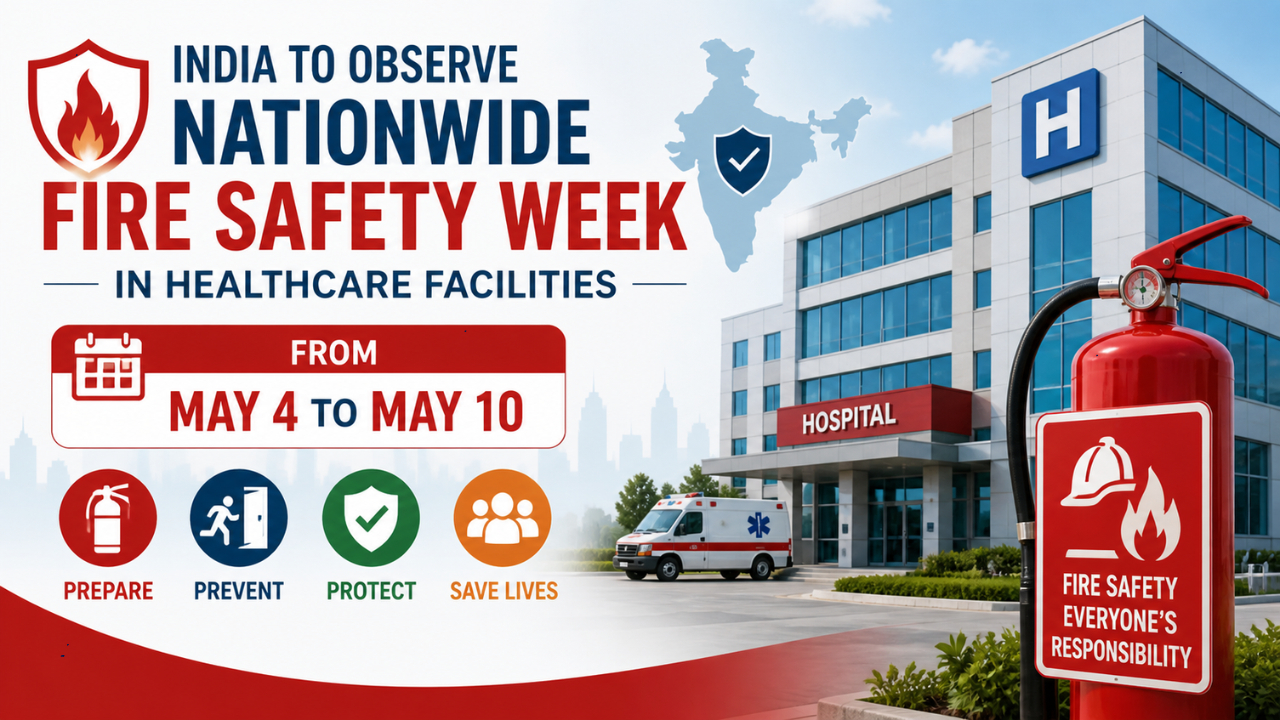
In a bid to ensure safe healthcare environments, India's Ministry of Health and Family Welfare (MoHFW) has launched a nationwide Fire Safety Week across healthcare facilities. The Fire Safety Week will be observed from May 4 to May 10 across the country. The theme of this year’s Fire Safety Week is “Safe Schools, Safe Hospitals, and a Fire-Safety Aware Society: Together for Fire Prevention”. Fire safety in healthcare facilities is a critical component of patient safety and health system resilience. Hospitals house vulnerable patients, high electrical loads, oxygen-rich environments, and complex medical equipment, making them particularly susceptible to fire hazards. "Fire Safety Week provides an important opportunity to reassess existing infrastructure, evaluate whether facilities have been adequately audited, and identify gaps and discrepancies that need to be addressed," said Union Health Secretary, Punya Salila Srivastava, while launching the initiative. Emphasizing capacity building, she stressed that healthcare professionals must be adequately trained and sensitized to effectively respond to fire emergencies.How Will Fire Safety Week Be Conducted?The nationwide campaign is designed to go beyond awareness and focus on actionable preparedness. States and healthcare institutions will: Conduct mock fire drills to test evacuation readiness Train staff in handling fire extinguishers and emergency protocols Review infrastructure such as alarms, sprinklers, and exits Promote compliance with fire safety norms Such drills have already shown impact in local initiatives. Additionally, capacity-building exercises will help administrators identify vulnerabilities and implement corrective measures. Recognizing the increasing need to strengthen preparedness and ensure continuity of healthcare services during emergencies, the Health Ministry has also developed the National Guidelines on Fire and Life Safety in Healthcare Facilities (2026). This is a revised version of the Fire and Life Safety Guideline (2020). What Do The Revised Guidelines Say The primary objective of the guidelines is to provide a standardized and practical framework to strengthen fire prevention and response mechanisms in healthcare facilities. Key features of the revised guidelines include: Strengthened governance framework: The 2026 guidelines introduce clearly defined institutional roles, responsibilities, and committee structures, strengthening accountability beyond the action-oriented approach of the 2020 guidelines.Introduction of structured risk assessment approach: The guidelines incorporate systematic fire hazard assessment and risk categorization, enabling prioritization of safety measures based on vulnerability. Improved patient-centric evacuation planning: It expands evacuation planning with specialized protocols for vulnerable patient groups such as ICU, NICU, PICU, and operation theatre patients. Expanded coverage of fire safety infrastructure systems: It provides more comprehensive guidance on fire detection, suppression, electrical safety, medical gas systems, HVAC integration, and smoke management. Training and capacity building framework: It formalizes structured training programs, mock drills, and role-based preparedness mechanisms for healthcare personnel. Inclusion of detailed operational annexures: It introduced expanded annexures covering unit-specific (ICU, NICU, etc.) safety practices, evacuation methods, and fire safety equipment requirements. Strengthened institutional preparedness mechanisms: The guidelines integrate preparedness across governance, infrastructure, and response systems to enhance readiness during emergencies. Promotion of a safety-oriented organizational culture: It emphasizes continuous monitoring, periodic audits, and awareness activities to institutionalize long-term fire safety practices. These guidelines are expected to: Strengthen fire safety preparedness across public and private healthcare facilities Reduce risk of fire-related incidents and associated loss of life Improve the safety of patients, healthcare workers, and visitors Enhance continuity of essential health services during emergencies Promote fire safety practices across states and union territories.