
- Health Conditions A-Z
- Health & Wellness
- Nutrition
- Fitness
- Health News
- Ayurveda
- Videos
- Medicine A-Z
- Parenting
India working on grand preventive and holistic health vision: PM Modi
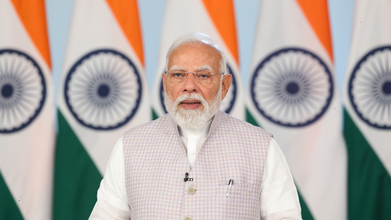
Credit: PIB
India is currently working on a vision of preventive and holistic health, said Prime Minister Narendra Modi today, while addressing a series of post-budget webinars.
The Prime Minister highlighted that sectors like health, education, skill, tourism, sports, and culture are the primary vehicles for meeting the goal of “Sabka Saath Sabka Vikas-Fulfilling Aspirations of People”.
Also Read: GLP-1 Weight Loss Drugs Could Now Treat Addiction, Says Study
“India is today working on a grand vision for preventive and holistic health. In the past few years, the country's health infrastructure has been strengthened. Hundreds of new medical colleges have opened in districts,” PM Modi said.
“Through the Ayushman Bharat scheme, access to health services has been extended to every village via wellness centers,” he added.
Emphasizing the vision of preventive and holistic health, the Prime Minister noted the rapid strengthening of health infrastructure and the global popularity of Yoga and Ayurveda.
Demand For Care Economy And Telemedicine
PM Modi specifically drew attention to the emerging 'Care Economy' and the rising demand for caregivers globally, urging experts to develop new training models to empower the youth.
"The population of senior citizens will increase in the country in the coming decade. In many countries of the world, there is a high demand for caregivers,” he said.
"Hence, skill-based employment opportunities for lakhs of youth in the health sector are present. I request that new training models be developed," PM Modi added.
The Prime Minister also spoke about the success of telemedicine in reaching remote areas. However, he stressed the need for further simplifying the user experience and building greater public awareness.
"I believe there is still a need to increase awareness and ease of use in telemedicine," PM Modi said.
Experts Push For Emergency Healthcare Services in India
In a separate session, health experts, policymakers, public health experts, and clinicians deliberated on the Budget Announcement under Para 88: “Strengthening of Emergency & Trauma Care Centers”.
In the Union Budget 2026–27, the Government had announced a major initiative to strengthen emergency healthcare services across the country.
The Government also proposed to strengthen and increase emergency and trauma care capacities by 50 per cent in District Hospitals by establishing emergency and trauma care centers.
The experts highlighted the country's significant burden of emergency medical conditions, including road traffic injuries, heart attacks, strokes, poisonings, burns, snake bites, etc.
While these require timely intervention within the “golden hour” to prevent deaths and long-term disability, emergency beds constitute only a small share of total hospital bed capacity in many district hospitals, highlighting the need for strengthening emergency care infrastructure and systems, the experts noted.
The discussion also highlighted the role of implementation research and data-driven approaches in identifying gaps and improving emergency care systems at the district level.
“Strengthening emergency and trauma care at the district level requires a systematic and outcome-oriented approach that goes beyond infrastructure to focus on performance and service delivery,” said Dr. V.K. Paul, member, NITI Aayog, who moderated the session.
Dr. Paul stressed the need for greater convergence across hospital systems, ambulance networks, and government programs, supported by digital technologies and real-time monitoring.
He also called for continued skilling and upskilling of emergency care personnel to build a strong and responsive emergency care system.
1 In 7 Indians Affected By Mental Health Disorders; Govt To Launch NIMHANS-2 To Boost Care
Credit: Canva
One in seven Indians, or over 14 percent of the population, suffers from some form of mental health disorder. Amid an increasing treatment gap -- up to 90 percent -- seen in several states, especially in North India, the government today reiterated the plan of launching a second National Institute of Mental Health and Neurosciences (NIMHANS) in the northern states.
NIMHANS-2 was first announced by Finance Minister Nirmala Sitharaman during the Union Budget 2026-27, to deliver specialized care for mental health and neurological disorders in north India.
Health experts and policymakers, as part of the government-led Post-Budget Webinar series, highlighted the growing burden of mental and neurological disorders in India and also stressed the urgent need to strengthen institutional capacity to meet emerging healthcare demands.
"One in seven Indians is affected by mental health disorders, while several states continue to face a treatment gap ranging from 70 to 90 percent," the experts said.
Noting that Non-Communicable Diseases (NCDs) account for over 60 percent of deaths in the country, they added that "neurological and mental health conditions are among the leading contributors to disability-adjusted life years (DALYs)," among the citizens.
Need For Tertiary Neuro-psychiatric Care
To address these, the experts called for ramping up tertiary mental health institutions and expanding specialized services.
The session, moderated by Vijay Nehra, Joint Secretary, Ministry of Health and Family Welfare, highlighted that North India currently lacks adequate tertiary neuro-psychiatric care facilities. These include areas such as:
- advanced neuroimaging,
- neurocritical care,
- specialized neurological services
Further, making a virtual address at the Post-Budget Webinar, Union Health Minister JP Nadda also highlighted the government’s focus on strengthening mental healthcare services in the country.
"NIMHANS-2 will be established in North India to expand advanced clinical care, training, and research," Nadda said.
"In addition, the Central Institute of Psychiatry, Ranchi, and the Lokopriya Gopinath Bordoloi Regional Institute of Mental Health, Tezpur, will be upgraded as regional apex institutions to strengthen mental healthcare services in the eastern and north-eastern regions," he added.
Meanwhile, the experts also stressed the need to improve services in underserved and geographically remote regions, including the northeastern states, through better infrastructure, capacity building, and targeted deployment of trained mental health professionals.
They also discussed strategies for expanding advanced neuro-psychiatric care and reinforcing India’s overall mental healthcare ecosystem. They proposed:
- Adopting a hub-and-spoke model supported by digital health platforms
This would allow tertiary institutions and centers of excellence to provide technical guidance, specialist consultations, and clinical support to district hospitals and community-level health facilities.
"Such a model would strengthen referral pathways and ensure that specialized mental health services are accessible to people even in remote and rural areas," the experts said.
- Integrating services under Tele-MANAS
Both existing and upcoming campuses of NIMHANS must be integrated , as this will enable a robust nationwide tele-mental health network that ensures
- timely counselling,
- psychological support,
- specialist consultations
- Digital follow-up systems
The experts called for the seamless integration of healthcare facilities, aligned with the vision of the Ayushman Bharat Digital Mission and the ABHA ID ecosystem. This, they said, will
- enable continuity of care,
- Improve monitoring of patients,
- Lead to better clinical outcomes
- A national Brain-Mind Cloud Network
The Network proposed under the National Health Mission would connect premier institutions such as All India Institute of Medical Sciences (AIIMS), state medical colleges, and primary healthcare centers through a digitally integrated platform.
It could also facilitate
- unified mental health records,
- AI-based screening tools,
- data-driven clinical decision support systems,
- tele-neuro-psychiatric hubs at regional centers.
Bruce Willis Health Update: His Death News Is A Hoax; 'He's Still Alive And Well'

Credits: Wikimedia Commons
Bruce Willis is alive. Last week, a death hoax of Bruce Willis have circulated, however, his representatives confirmed on March 7, Saturday that the news is fabricated. "He joins the long list of celebrities who have been victimized by this hoax. He's still alive and well, stop believing what you see on the Internet," his official representative stated. In fact, in the coming 19th of the month, The Die Hard star will turn 71. Bruce Willis is currently at his home with his family and is living with frontotemporal dementia. He is continuing into third year living with the condition.
Bruce Willis Health Update: Time Line Of Diagnosis
In March 2022, fans were shocked by a family statement revealing Willis had been diagnosed with aphasia. The announcement was brief but clear: the condition was affecting his cognitive abilities and making it impossible for him to continue his acting career. However, aphasia was just one piece of the puzzle.
By February 2023, a more specific diagnosis emerged. The Willis family confirmed Bruce was dealing with frontotemporal dementia, a degenerative condition that often begins with language difficulties and eventually affects decision-making, emotional regulation, and behavior.
Read: Bruce Willis Health Update: A Diagnostic Timeline From Aphasia To Dementia
"Challenges with communication are just one symptom of the disease Bruce faces," the family shared at the time, emphasizing that the condition affects far more than speech.
Unlike Alzheimer’s disease, FTD tends to strike earlier, often in one’s 50s or 60s—and can progress quickly. It affects the frontal and temporal lobes of the brain, areas associated with language, behavior, and executive function. Currently, there is no cure.
Read: Bruce Willis’ Wife Emma Says He Is Unaware of His Dementia Diagnosis
What Is Frontotemporal Dementia?
Frontotemporal dementia is a less prevalent type of dementia that mainly occurs in the frontal and temporal lobes of the brain. It tends to affect behavior, personality, language, and movement more than memory, particularly in its initial stages.
In contrast to Alzheimer's, which generally strikes older individuals, FTD can hit at an earlier age—sometimes as young as 40. The symptoms can range from changes in personality, emotional flatness, or the inability to show empathy to impulsiveness, so it is especially hard for spouses and children to cope.
Emma's case illustrates how abrupt and disrupting this diagnosis can be—not only for the patient but for caregivers as well.
Whereas Bruce Willis' diagnosis hit global headlines, the mental toll taken by Emma, his caregiver, was largely in the background—until she decided to come forward.
Caregiving is a respectable position, but it's also a challenging and thankless one. For those who are caring for loved ones with dementia or other chronic illnesses, the stress of "keeping it all together" can result in a condition called caregiver burnout.
"Caring for someone is the most intimate and demanding work of love," Emma explained, "but when you're not noticed or supported, it begins to undermine your health—mentally and physically."
Meghalaya On High Alert After Two Meningococcal Cases at Army Training Centre
Credit: Canva
Meghalaya health officials have asked locals to avoid crowded places after two Agniveer trainees have died of suspected meningococcal bacterial infection at a training centre in Shillong in February.
While the first trainee died at the Military Hospital in the Assam Regimental Centre (ARC), the other died on February 23. The remaining 28 trainees have been placed in quarantine.
Joram Beda, Health and Family Welfare Commissioner-Secretary, said the East Khasi Hills District Surveillance Unit has initiated an active epidemiological investigation, including contact tracing, isolation of close contacts, and fumigation, which has been carried out in and around the affected military facility.
“Case investigation, contact tracing, laboratory review, and surveillance strengthening measures are currently underway,” the official advisory read.
The Health and Family Welfare Department also said the State Surveillance Unit has been activated and a detailed epidemiological investigation is currently underway. Authorities further added that surveillance has been strengthened not just within the Army training establishment but also in surrounding areas as a precaution.
The state government has asked people to avoid crowded areas, wear masks in crowded places, practise good respiratory hygiene and wash their hands regularly with soap and sanitiser.
It also asked residents to report to the nearest medical facility in cases of sudden high fever, headache, vomiting, rapidly spreading purpuric (purple-coloured spots or patches) rashes, pale limbs at a later stage, and circulatory collapse, shock, and multi-organ failure.
What Is Meningococcal Disease?
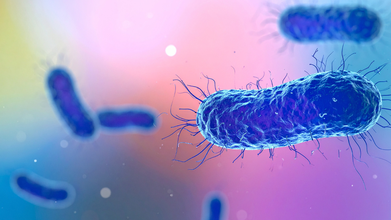
Meningococcal disease is a severe, life-threatening bacterial infection caused by Neisseria meningitidis, leading to meningitis (brain/spinal cord lining infection, also known as IMD) or septicemia (bloodstream infection)How Does Meningococcal Disease Spread?
Meningococcal bacteria are transmitted through respiratory droplets, by coughing, sneezing, kissing, or sharing food and drinks. The greatest risk occurs between people with extended, close contact, such as family members and sexual partners. Prolonged riding in enclosed vehicles, such as buses, planes, with the infected person, also greatly increases risk.
CDC states that infants below one year, adolescents 16–23 years old, immunocompromised patients, and residents of communal environments are at greatest risk.
Early Symptoms of Meningococcal Disease
The infection at first presents a nonspecific viral illness, but can worsen suddenly. Adults must be aware of the following signs:
- Fever, headache, stiff neck – classic symptoms of meningitis
- Red spots or rash – typically seen as pinpricks or larger bruise-like patches, a sign of blood vessel involvement
- Nausea, vomiting, photophobia (light sensitivity)
- Confusion, lethargy, rapid breathing, seizures – signs of severe progression
- Neck stiffness and changed mental status, usually with fever
In the most severe cases, sepsis, exhaustion, coldness of extremities, and coma may ensue, all necessitating immediate medical intervention. Shockingly, worsening can happen within 12 hours of the onset of symptoms.
Diagnosis and Treatment of Meningococcal Disease
The gold-standard diagnosis for invasive meningococcal disease involves a combination of blood cultures and cerebrospinal fluid (CSF) analysis obtained through lumbar puncture.
However, in cases where increased intracranial pressure is suspected, performing a lumbar puncture may need to be delayed to avoid complications. Additionally, polymerase chain reaction (PCR) testing plays a crucial role in rapidly identifying the infection, particularly when prior antibiotic treatment may interfere with traditional culture results.
IMD survivors develop severe complications: hearing loss, neurological injury, kidney failure, or limb amputation by necrosis. Unfortunately, natural infection does not offer absolute lifelong immunity; recurrence, although infrequent, can occur, warranting immune deficiency assessments.
Vaccination is the best protection. Vaccines protect against several serogroups (A, B, C, W, Y, X) and are universally advised, particularly among adolescents, travelers, and those at risk.
- Follow Us :


© 2024 Bennett, Coleman & Company Limited