
- Health Conditions A-Z
- Health & Wellness
- Nutrition
- Fitness
- Health News
- Ayurveda
- Videos
- Medicine A-Z
- Parenting
Is Elon Musk Struggling With His Mental Health?

"I legitimately believe Elon Musk may be going mad," writes Seth Abramson on an X (formerly Twitter) post. Abramson is Elon Musk's biographer, and has claimed that Musk's mental health and decision-making has been degrading. He warned that Musk's influence and actions, could be a threat for the United States.
The X post further read, "I'm a Musk biographer who has been tracking his online behavior for the last two years- and given that he's admitted to all of mental illness, heavy drug use, and crippling stress, it is now reasonable to fear he is deeply unwell." He also claimed that Musk's private struggles are not the cause of concern, but the impact it has on public, may have grave consequences. He wrote, "His holdings across many civilization essential industries and the fact that he's the incoming POTUS mean that his madness and increasing incitement of violence endanger us all."
In December 2022, after Musk faced angry boos at Dave Chappelle's San Francisco show, Abramson claimed that even then too Musk "suffered a mental breakdown".
Effects of Drug Use On Mental Health
As per the National Institute of Mental Health, a person who is unable to control their use of drugs, alcohol or medication, may suffer substance use disorder (SUD), however the good news is that it is a treatable mental disorder.
People with SUD may have other mental health disorders too, which include anxiety disorders, depression, attention-deficit hyperactivity disorder (ADHD), bipolar disorder, personality disorders, and schizophrenia, to name a few.
Some people may have both SUD and an existing mental disorder, however it does not mean that one cause the other. Studies show that people with pre-existing mental disorder order, may use drugs or alcohol as a form of self-medication. While some drugs may temporarily help with some symptoms, in the longer run, it gets worse. Substance use may trigger changes in brain structure and function that make a person more likely to develop a mental disorder.
Also Read: What Are The Most Abused Drugs In The US?
Furthermore, the UK-based Mental Health Foundation states that stimulant drugs can make you feel depressed, anxious, and even paranoid. The type of stimulant, which is more common is Cocaine, which can make pre-existing mental health problems recur and trigger psychosis and schizophrenia. Ecstasy users can experience memory problems, whereas hallucinogenic drugs like magic mushrooms can "make any mental health issues worse".
Case Studies of Famous People And Their Struggle With Drug
Earlier in August 2024, Matthey Perry, the Friend's Chandler Bing famed actor's demise news shocked the worked. He also had his own struggles in his personal life and of acute depression.
He allegedly died of Ketamine infusion therapy. Ketamine is an anaesthetic used to treat depression, anxiety and pain under supervised and controlled medical settings. However, there were reports that Perry overdosed on Ketamine, which is an anaesthetic used to treat depression, anxiety and pain under supervised and controlled medical settings.
A few months later in October 2024, Liam Payne's demise news also shook the world, with one of the leading causes as pink cocaine. As per the toxicology results, a cocktail of drugs, "pink cocaine", ketamine (also related to Matthew Perry's death), MDMA, and methamphetamine were also found in his system. Pink cocaine can anxiety, hallucination, nausea, vomiting, increased heart rate and blood pressure and elevated body temperature.
Harish Rana Case Highlights Why Planning For A Living Will Is Important

Credit: Canva
Recent legal developments have highlighted the importance of advance planning for end-of-life care.
A Living Will is something every adult should consider discussing and creating at some point.
Conversations within families about individual preferences in the event of a terminal illness are an important first step, and these discussions should take place while everyone is still in good health.
Individuals may have very different views about how they wish to be treated if they develop a terminal illness or certain severe, irreversible conditions. For instance, some may not want ventilator support, while others may choose to avoid ICU care.
Some might accept ICU care but prefer not to undergo CPR. Others may prefer not to receive artificial feeding through tubes. Yet others may wish for every possible treatment to be attempted. A few may prefer to spend their final days at home.
Creating A Living Will
It should be noted that a Living Will does not impose any limitation on treatment for common medical conditions such as infections, surgery for curable illnesses, or routine hospital care.
These preferences apply only to situations such as terminal illness—for example, advanced cancer—or irreversible conditions such as a persistent vegetative state.
Creating a Living Will is now relatively straightforward. It must be signed in the presence of two witnesses and attested by a notary or a gazetted officer.
The earlier requirement of countersignature by a Judicial Magistrate has been removed to make the process easier. Templates are also available online that individuals can use as a basis for drafting their own. Before preparing one, it is helpful to discuss the pros and cons of their choices with the family doctor.
It is important to again emphasize that a Living Will is NOT about refusing all treatment, hospitalization, or ICU admission for routine medical care. Rather, it addresses only specific situations.
When such preferences are clearly documented in advance, important decisions about withholding or withdrawing treatment in select circumstances become less contentious.
Doctors and hospitals will no longer be hesitant to withhold unnecessary treatment measures in such situations, as it will already be documented in the patient’s own Living Will. Relatives also will not face the difficult decision of withholding or withdrawing futile medical treatment on behalf of their loved one.
Essentially, the Living Will protects the patient’s wishes when they are no longer able to speak for themselves.
What Happens Without A Living Will
In a terminally ill patient who is unable to communicate, the absence of a Living Will often leads to differences of opinion among family members about what the patient might have wanted.
This uncertainty frequently results in a collective decision to “do everything possible,” just to be on the safe side.
Doctors are reluctant to override the wishes of relatives, even when they believe that further treatment measures are unlikely to be beneficial.
As a result, the patient may receive prolonged medical interventions that neither improve the underlying condition nor enhance quality of life. Once started, these treatments may continue indefinitely until the patient dies naturally.
This may take months, years, or even decades, and also incur huge costs. In the absence of a Living Will, complex legal procedures are required to withdraw these treatments — even if all the relatives are convinced that they should be withdrawn.
CDSCO threatens action against pharma companies for promoting GLP-1 weight-loss drugs
Credit: Canva
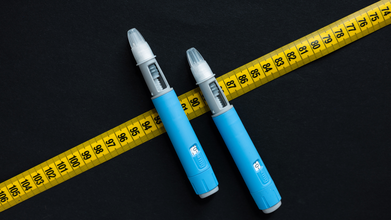
India's drug regulator, the Central Drugs Standard Control Organization (CDSCO), has threatened pharmaceutical firms with action for promoting GLP-1 weight-loss drugs among the general public.
Glucagon-Like Peptide-1 (GLP-1) receptor agonists are a class of medicines that help lower blood sugar, support weight loss, reduce the risk of heart and kidney complications, and can even lower the risk of early death in people with type 2 diabetes.
In an official circular, the CDSCO warned drug makers from indulging in "direct or indirect advertising" for obesity and metabolic disorders.
The regulatory body also cautioned pharma companies against campaigns using influencers, noting that any violation "could attract regulatory action".
Advertisements, which "function as a surrogate advertisement for prescription-only drugs, shall be viewed seriously and may be treated as irrational or misleading marketing practice", read the letter signed by the Drug Controller General of India (DCGI) Rajeev Raghuvanshi.
The order comes as the CDSCO noted that drugmakers have been engaging in surrogate promotional activities, under the garb of disease awareness campaigns, and digital media outreach.
What The CDSCO Mandated
- Weight-loss drugs, specifically GLP-1 medications, must only be sold with a prescription from a registered medical practitioner.
- There should be no ads, whether direct or indirect, in print, electronic, digital, social media, or any other public platform intended, directly or indirectly, to promote the product to the general public.
- No GLP-1 drugs must exaggerate for therapeutic efficacy; suggest for assured or guaranteed weight loss outcome; and induce demand for pharmacological therapy
- awareness campaigns
- influencer engagement
- corporate campaigns
Rush For Generic Weight Loss Drugs
The government's advisory comes patent for semaglutide -- an active ingredient in diabetes and anti-obesity drugs, specifically Wegovy and Ozempic -- expires on March 20.
This will allow Indian pharma companies to launch cheaper generic versions, significantly increasing affordability and access for millions battling Type 2 diabetes and obesity.
Major Indian drugmakers gearing up to launch their generic semglutide injection in the country in March include Sun Pharmaceutical Industries, Zydus Lifesciences, Alkem Laboratories, Dr. Reddy’s Laboratories, Torrent Pharmaceuticals, and MSN Laboratories.
Obesity A Chronic Metabolic Condition
The CDSCO stressed the importance of "lifestyle modification measures (diet, exercise, behavioural interventions)" in treating obesity.
"Obesity is a chronic metabolic condition requiring comprehensive management, including lifestyle interventions," the regulator said.
"Pharmaceutical therapy, where indicated, must not be projected in a manner that undermines public health initiatives promoting diet control, physical activity, and preventive healthcare," it added.
WHO Guidelines On GLP-1 drugs
Amid increasing prevalence of GLP-1 drugs, the World Health Organisation (WHO), late last year, acknowledged its role in treating obesity.
However, it warned that medications like GLP-1 alone will not solve the problem affecting more than one billion people worldwide.
The global health body also issued conditional recommendations for using these therapies as part of a comprehensive approach that includes healthy diets, regular physical activity, and support from health professionals.
‘Contaminated’ wet wipes linked to fatal bacterial infections, death in UK

Credit: Canva
The UK Health Security Agency (HSA) and the Medicines and Healthcare products Regulatory Agency (MHRA) have warned people against using non-sterile alcohol-free wipes in their homes and first aid kits, over their link to a fatal bacterial infection, which has also led to death in the country.
After testing almost 200 products, the officials identified Burkholderia stabilis -- a type of bacteria found naturally in the environment, including in soil and water -- in four brands of skin cleansing wipes intended for first aid.
These brands of non-sterile alcohol-free wipes have been contaminated and have caused serious infection with the B. stabilis. These include:
- ValueAid Alcohol Free Cleansing Wipes
- Microsafe Moist Wipe Alcohol Free
- Steroplast Sterowipe Alcohol Free Cleansing Wipes
- Reliwipe Alcohol Free Cleansing Wipes
While B. stabilis rarely causes infection in healthy individuals, it can be dangerous to people with a weakened immune system, cystic fibrosis, or malignancy, the authorities said. Further, patients using intravenous lines at home are also at higher risk of developing infection.
The MHRA had, in 2025, also issued a warning against the four products.
“There have been 59 confirmed cases of Burkholderia stabilis associated with some non-sterile alcohol-free wipe products -- identified in an outbreak in the United Kingdom from January 2018 to 3 February 2026,” the joint statement said.
“A small number of cases continue to be detected. These have included some serious infections which have required hospital treatment, and one death has been attributed to Burkholderia stabilis infection,” it added.
The health agencies also stressed that only wipes marked as “sterile” should be used on broken skin and only used to clean intravenous lines if instructed by a patient’s medical team.
“We are reminding the public not to use, and to dispose of, certain non-sterile alcohol-free wipes, which have been linked to an outbreak of Burkholderia stabilis,” said James Elston, consultant in epidemiology and public health at UKHSA.
“Those who still have any of the affected products should stop using them immediately and dispose of them in standard household waste,” the UKHSA added.
A recent report by Eurosurveillance, early this month, also confirmed 59 cases of B. stabilis associated with contaminated non-sterile alcohol-free wipe products in the UK as of February.
Also read: What Kind Of Wipes Should You Use To Clean Wounds? Here's What UKHSA Suggests
Key Symptoms To Watch For
Anyone who has used non-sterile, alcohol-free wipes does not need to seek medical care unless they develop symptoms of infection, such as:
Wound infection: redness, swelling, warmth, increased pain, or pus/drainage from the site
Infection involving an IV line: redness, swelling, or pain at the insertion site, along with fever or chills
Safety Advice by UKHSA And MHRA
The UKHSA offers the following guidance for safe wipe use:
- Use only sterile wipes on broken skin, wounds, or scratches to reduce the risk of germs entering the body.
- Check that your first aid kit contains only wipes labelled “sterile,” ensure the packaging is intact, and dispose of any out-of-date or damaged products.
- Only use wipes on IV lines if specifically instructed by your healthcare team.
Dr Alison Cave, MHRA Chief Safety Officer, emphasized that wipes intended for medical purposes are classed as medicines.
These products do not have the necessary medicines authorization, and steps are being taken to enforce compliance.
“If you have these wipes at home or in a first aid kit, check the label and only use wipes marked as ‘sterile’ on broken skin,” Dr. Cave advised.
“Healthcare professionals should follow instructions provided in the national patient safety alert.”
Anyone who has used alcohol-free wipes and is concerned about possible infection should speak to a healthcare professional.
- Follow Us :


© 2024 Bennett, Coleman & Company Limited