
- Health Conditions A-Z
- Health & Wellness
- Nutrition
- Fitness
- Health News
- Ayurveda
- Videos
- Medicine A-Z
- Parenting
James Van Der Beek: What Kind Of Cancer Has The Actor Been Diagnosed With?

Credits: Canva
More than a year after Dawson’s Creek star James Van Der Beek revealed that he had been diagnosed with stage 3 colorectal cancer, the actor has shared a new update on how the illness has changed his outlook on life in unexpected ways. Speaking to host Craig Melvin on the December 19 episode of Today, James reflected on the moment he first heard the diagnosis.
“As soon as I found out, I remember thinking, ‘This might end up being the best thing that ever happened to me,’” he said. “There was this quiet voice in my head telling me that this diagnosis would push me to make changes I would never have made otherwise.”
As James Van Der Beek opens up about his health journey, many are asking: what kind of cancer was he diagnosed with?
James Van Der Beek Cancer: What Kind Of Cancer Has He Been Diagnosed With?
James Van Der Beek was diagnosed with stage 3 colorectal cancer after he began noticing changes in his bowel habits in the summer of 2023. At first, he brushed off the symptoms, assuming they were linked to his coffee intake. However, when the changes did not go away, he decided to consult a doctor.
A colonoscopy later confirmed the cancer diagnosis. The news came as a shock, especially since Van Der Beek had no known family history of colorectal cancer and believed he was in excellent health due to his active lifestyle and balanced diet.
What Is Colorectal Cancer?
Colorectal cancer develops in the colon or rectum and often begins as small, non-cancerous growths known as polyps. Over time, some of these polyps can become cancerous, interfering with digestion and the body’s ability to process waste.
It is one of the more common forms of cancer and can be difficult to detect early because symptoms may not appear right away. When they do, they often include blood in the stool, persistent changes in bowel habits, abdominal discomfort, and unexplained weight loss. According to the Mayo Clinic, early screening plays a critical role in detecting the disease when it is most treatable, and lifestyle choices can significantly influence risk and outcomes.
James Van Der Beek Cancer: Regular Screenings and Colonoscopies
As colorectal cancer often shows no symptoms in its early stages, routine screening is essential. Colonoscopies allow doctors to spot and remove precancerous polyps and detect cancer before it spreads. Early intervention has been shown to lower both the number of cases and deaths associated with the disease.
Data from the CDC highlights the importance of early detection, with survival rates varying widely by stage. While stage I colorectal cancer has a five-year survival rate of about 91 percent, that number drops sharply to around 14 percent for stage IV cases, according to the American Cancer Society. Health experts recommend beginning regular screening at age 45, or earlier for people with higher risk factors. Colonoscopy remains the most effective screening tool, as it examines the entire colon and allows for immediate removal of suspicious growths.
James Van Der Beek Cancer: What Was The Prognosis?
James Van Der Beek’s outlook following his stage 3 colorectal cancer diagnosis has been described as cautiously hopeful. His cancer was identified while still localized, a category associated with a significantly higher survival rate. According to the American Cancer Society, localized colorectal cancer has a five-year survival rate of approximately 91 percent.
James Van Der Beek Cancer: What Treatments Did James Undergo?
James Van Der Beek has chosen not to share detailed information about the specific treatments he has received for his stage 3 colorectal cancer. In general, treatment for this stage of the disease typically involves surgery followed by chemotherapy, and in some cases, radiation therapy.
Nutritional support also plays an important role, particularly because colorectal cancer and its treatments can affect digestion. While Van Der Beek has kept the details private, he has emphasized that he is actively addressing his diagnosis and prioritizing his overall health as part of his recovery.
WHO Approves New India-Origin Oral Polio Vaccine for Outbreak Fight
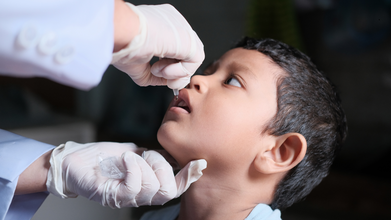
Credit: Canva
The World Health Organization (WHO) has prequalified an additional novel oral polio vaccine type 2 (nOPV2) to strengthen the global supply of the vaccine, stop poliovirus type 2 outbreaks more sustainably and accelerate progress towards polio eradication.
The newly approved vaccine was manufactured by Biological E. Limited (BioE), Hyderabad, India, using in-house bulk vaccine following a technology transfer from PT Bio Farma (Persero), Indonesia.
The prequalification status means that the vaccine meets international standards of quality, safety, and efficacy for global immunization programmes.
It also allows the vaccine to be purchased and supplied through United Nations procurement agencies, including UNICEF, across the world and helps governments prevent and control poliovirus transmission.
With the new WHO recommendation, BioE is expected to produce 600 million doses per year of the nOPV2, increasing India's global leadership in vaccine manufacturing and its contributions to expanding access to affordable life‑saving vaccines across the Global South.
WHO Director-General Dr Tedros Adhanom Ghebreyesus highlighted the impact of vaccination efforts on global polio eradication and said: “Vaccines are also bringing us closer to the eradication of polio, with 41 cases of wild polio reported last year from just 24 districts in Pakistan and Afghanistan, down from 99 cases in 49 districts in 2024."
What Is nOPV2?
Novel oral polio vaccine type 2 (nOPV2) is a genetically modified, more stable vaccine designed to stop circulating vaccine-derived poliovirus type 2 (cVDPV2) outbreaks. It provides comparable protection to the old type 2 vaccine (mOPV2) but is less likely to cause new vaccine-derived outbreaks.
Studies show nOPV2 is safe, well-tolerated and produces similar immunity to mOPV2, with over 500 million doses administered across 23 countries as of early 2024. The vaccine is typically used in targeted, large-scale vaccination campaigns, often for children under five years of age.
The oral vaccine is supplied in 20-dose and 50-dose vial presentations. It has a shelf-life of 24 months when stored at temperatures not exceeding –20 °C and can also be stored for up to six months at +2 °C to +8 °C, providing important flexibility for immunization programmes in diverse situations.
Mike McGovern, Chair of the International PolioPlus Committee, Rotary International and Chair of the Polio Oversight Board, GPEI, said of the new prequalification: "Expanding nOPV2 manufacturing is essential to ensuring countries can respond quickly to variant poliovirus outbreaks. Biological E’s prequalification status strengthens the global supply and brings us closer to ending these outbreaks for good."
Why Is The New Polio Vaccine Useful?
Once a global scourge paralysing hundreds of thousands of children globally, polio is now close to eradication as wild poliovirus cases have fallen by more than 99 percent since the 1980s.
However, given rising vaccine hesitancy and gaps in immunisation, cVDPV2 can re-emerge in under-immunised communities, triggering outbreaks as seen recently in parts of Africa and Southeast Asia. But nOPV2's genetic stability and increased protection help limit that risk and reduce the chances of a mass outbreak.
While India achieved its polio-free certification in 2014, the risk of importations or vaccine-derived outbreaks increases if coverage drops. With the nOPV2's WHO prequalification, officials can safeguard public health by ensuring access to the most advanced tools available.
As of August 2022, 18 out of 21 countries had successfully stopped cVDPV2 transmission following two rounds of mass vaccination activity and a further two countries did so after a third round.
Data has shown that nOPV2 effectiveness is on par with that of mOPV2, and while evidence of the vaccine’s immunogenicity has already been well established, additional studies continue to be conducted throughout the EUL period to confirm protection against type 2 poliovirus in vaccinated individuals.
Mizoram Officials Call Rising HIV Cases 'Collective Disgrace', Launch Love Brigade 2.0

Credit: NE Now
Mizoram Health Minister Lalrinpuii has expressed serious concern about rising HIV cases, as data shows that cases in the state are 13 times higher than the national average.
Calling it a "collective disgrace", Lalrinpuii said: “About 70 per cent of HIV transmissions in Mizoram occur through sexual contact. While the national prevalence rate stands at a mere 0.2 per cent, Mizoram’s rate has climbed to 2.74 per cent. This is a matter of shame for Mizo society.”
Speaking at an event organised for International Condom Day in Aizawl on February 13, she noted that a majority of that sexual contact remains the primary route of HIV infections in the state, accounting for 70 per cent of all cases.
The minister noted that the spread is largely driven by infidelity and a lack of preventive measures, which she argued contradicted the moral and religious values of the Mizo society.
She urged the people of the state to remain faithful to their partners. “To protect the future of Mizoram, our youth must remain vigilant,” Lalrinpuii added.
The global challenge of HIV/AIDS remains one of the most pressing public health issues today. According to the latest data from UNAIDS, around 38.4 million people worldwide are living with HIV/AIDS.
As of 2024–2025, India has approximately 2.5 million to 2.56 million people living with HIV (PLHIV), marking the third-largest HIV epidemic globally, underlining the need for not only medical intervention but also comprehensive awareness, education, and social change.
How Does Mizoram Plan To Reduce HIV Cases?
During the event, Laltinpuii said condoms are recognised globally as one of the most effective and accessible tools for preventing HIV as well as other sexually transmitted infections, urging the public to discard misconceptions surrounding use.
While suggesting abstinence before marriage, the minister also advised sexually active individuals not to hesitate to use condoms, as they play a vital role in preventing the spread of the virus, if used correctly.
“While we advocate abstinence before marriage, those who cannot abstain must not hesitate to use condoms. It is a simple, life-saving tool that we must stop stigmatising,” she said.
During the event, Laltinpuii launched the “Love Brigade 2.0” campaign aimed at normalising condom access across the state. Under the initiative, two-wheeler taxi riders have been equipped with “Love Brigade Condom Jackets”, allowing passengers and members of the public to access free condoms discreetly and conveniently.
What Is HIV?
HIV is the virus responsible for attacking the body’s immune system, specifically targeting CD4 cells, which are crucial for the body’s defense against infections. As HIV progresses, it destroys these cells, weakening the immune system over time. If left untreated, this continuous damage can lead to AIDS.
HIV is highly contagious and can be transmitted through the exchange of bodily fluids such as blood, semen, vaginal fluids, and breast milk. It is primarily spread through unprotected sexual contact, sharing needles, from mother to child during childbirth or breastfeeding.
Without treatment, HIV progresses through three stages:
- Acute HIV Infection: This stage occurs shortly after transmission and may include symptoms like fever, fatigue, and swollen lymph nodes.
- Chronic HIV Infection: Often asymptomatic or mildly symptomatic, the virus continues to damage the immune system but at a slower rate.
- AIDS: This is the final stage, marked by severe immune damage and the presence of infections that take advantage of the compromised immune defenses.
The disease is diagnosed through blood tests or oral swabs that detect the presence of the virus or antibodies produced by the immune system in response to the virus. Early detection of HIV is crucial, as it allows for timely intervention and treatment, which can prevent the virus from progressing to AIDS.
For HIV, the primary treatment goal is to suppress the virus to undetectable levels, thus maintaining a strong immune system and preventing further transmission of the virus. People living with HIV can often live long, healthy lives if they adhere to antiretroviral therapy (ART).
Legionnaires’ Outbreak: Norwegian Cruise Line Probes Two Cases Linked to December Encore Sailing

Representational Image (Canva)
Norwegian Cruise Line has notified passengers about two confirmed cases of Legionnaires’ disease linked to a December 2025 sailing aboard its ship, the Norwegian Encore.
In a letter dated February 12 and addressed to recent guests, the cruise operator said it is working with the Centers for Disease Control and Prevention (CDC) to investigate the illnesses. The two passengers were diagnosed after traveling on the vessel late last year.
What Is Legionnaires’ Disease?
Legionnaires’ disease is a serious type of pneumonia caused by Legionella bacteria. According to the cruise line’s letter, people become ill when they inhale tiny water droplets that contain the bacteria.
Unlike many respiratory infections, Legionnaires’ disease does not spread from person to person. Instead, the bacteria can grow in water systems and occasionally spread through mist or vapor from fixtures such as hot tubs, showers, whirlpool bathtubs, decorative fountains and misters.
The CDC notes that symptoms usually appear between two and 14 days after exposure, though in some cases they may take longer. The illness often resembles pneumonia and can include cough, fever, headache, muscle aches and shortness of breath. Some patients may also experience confusion, diarrhea or nausea.
While most people exposed to Legionella bacteria do not become sick, certain groups face a higher risk. Adults over 50, current or former smokers and individuals with underlying health conditions are considered more vulnerable to severe infection.
Investigation Underway, Tests So Far Negative
In its communication to passengers, Norwegian Cruise Line said it has launched onboard testing for Legionella bacteria. The testing includes water systems and fixtures such as hot tubs, showers and faucets.
“So far, all test results have been negative,” the company stated. It added that it remains unclear whether the two passengers were exposed through the ship’s water system or from another source unrelated to the cruise.
The cruise line urged anyone currently sailing or who recently disembarked from the Norwegian Encore to monitor their health. Guests who develop symptoms within 14 days of the end of their cruise have been advised to contact the ship’s medical staff and seek immediate medical attention.
CDC Monitoring the Situation
In a statement issued February 13, a spokesperson for the CDC confirmed to PEOPLE that the agency is aware of the cases associated with the Norwegian Cruise Line vessel and is supporting the investigation.
The development follows a separate CDC report released in October 2024 that examined 12 cases of Legionnaires’ disease identified among travelers on two cruise ships between November 2022 and June 2024. In that earlier investigation, private balcony hot tubs were identified as the likely source of exposure in two outbreaks.
The CDC noted that private hot tubs are often subject to less stringent operating requirements than public ones. The agency also warned that certain features — including outdoor placement, water retention between uses and systems involving recirculation, filtration or heating — can increase the risk of Legionella growth and transmission.
For now, health officials and the cruise line continue to investigate the source of the recent cases, as passengers are reminded to remain alert to symptoms and seek prompt care if they feel unwell.
- Follow Us :


© 2024 Bennett, Coleman & Company Limited