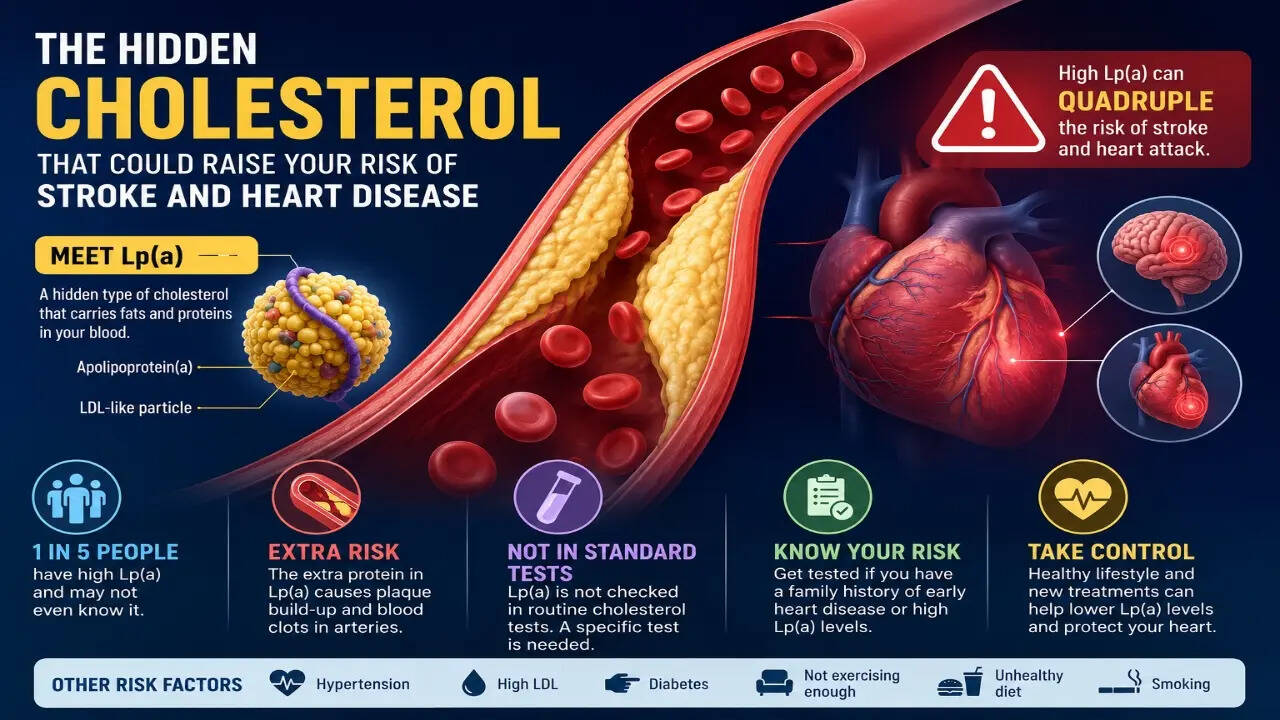
Cholesterol is not all that bad as long as it is in the right proportion. It is of two types — good and bad cholesterol, the former being HDL and the latter LDL. It is a fatty substance in the blood that is made of essential proteins. While several tests are conducted to ascertain cholesterol levels in the body, there are some types of cholesterol that are not usually detected during routine check-ups. It turns out that this hidden form of cholesterol can quadruple the risk of stroke and heart attack, even if everything else is done right. This form of cholesterol is known as lipoprotein(a), or Lp(a) — it carries fats and proteins in your blood.How does lipoprotein(a) affect heart patients?Experts note that roughly 20 per cent of people have high Lp(a). It is similar to LDL, which is often known as bad cholesterol. However, there is a protein known as apolipoprotein(a) that makes Lp(a) twice as harmful. The extra protein leads to plaque build-up that eventually clogs arteries, thereby raising the risk of blood clots.Both factors mean that someone is more likely to suffer from a stroke or heart disease. Recent research from the National Institutes of Health (NIH), which evaluated blood samples from 20,000 adults aged 40 and above, noted that those with the highest Lp(a) levels were about 30 per cent more prone to suffering a major heart event. These participants were also 50 per cent more likely to die from heart disease and 65 per cent more likely to suffer a stroke.What are the consequences of high Lp(a) levels?Researchers found that higher levels of Lp(a) were linked to a higher risk of a heart attack. However, these links were stronger in people who had already suffered from heart disease. Experts also found that one can quantify the specific levels of Lp(a) that can lead to a heightened risk of a major heart event, such as a stroke or heart failure. Researchers noted that, regardless of age, patients can opt for low-cost blood tests to determine their risk of genetic conditions. Lp(a) is not regularly checked in a standard cholesterol test. Instead, experts rely on a specific test to spot this condition.Should you get Lp(a) levels checked?According to the British Heart Foundation, it is important to get Lp(a) levels checked if someone in your family has high levels of it, or if there is a family history of coronary heart disease at an early age. The study’s findings also suggest that patients dealing with high Lp(a) levels need aggressive management of heart disease risk factors. If detected, you must work on a routine religiously to lower LDL and manage risk factors as much as possible. Lp(a) in the blood is determined by genes. However, according to researchers at the University of Queensland, other risk factors are:HypertensionHigh LDLDiabetesNot exercising enoughUnhealthy dietSmokingThe good news, however, is that Lp(a) levels can be reduced with the help of drugs available on the market. In early clinical trials, drugs developed by Eli Lilly and Novartis lowered Lp(a) levels by 80–90 per cent. Combining this with a healthy diet and lifestyle can go a long way in the process.