
- Health Conditions A-Z
- Health & Wellness
- Nutrition
- Fitness
- Health News
- Ayurveda
- Videos
- Medicine A-Z
- Parenting
Lori Coble, Woman Who Lost Her 3 Kids In A Car Accident Dies Of Brain Cancer
Credits: Lori Coble, Instagram
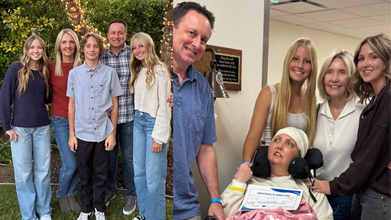
Lori Coble died of brain cancer at 48. Mom of teenage triplets, who had lost her first three children in a car accident died on Wednesday, January 21, confirmed a family friend to PEOPLE. She told PEOPLE "Lori passed away last night surrounded by her family."
In 2007, Lori lost her three children Kyle Christopher, 5, Emma Lynn 4, and Katie Gene, 2, in a car crash. While she and her husband Chris spent months coping up, they had triplets the year after the accident. Each carried an older sibling's middle name: Jake Christopher, Ahley Lyn, Ellie Gene.
Lori Coble's Brain Cancer Diagnosis
In June 2025, Chris noticed something was wrong with his wife, as she was "getting more clumsy". She would run into walls, stub her toe on chairs, or drop drinking glasses on the floor. By early July, stroke like symptoms too appeared. In a previous interview with PEOPLE, he said, "Her mouth started to droop a little bit. It became too much to ignore."
By July, Lori was diagnosed with a large and aggressive stage 4 glioblastoma or brain cancer. "I was hoping we were done with the life changing, life altering disasters when life as you knew it yesterday is gone," Chris said. He said he started mourning loss of his wife the day she got diagnosed.
"I didn’t have a lot of hope at the outset — and that weighed heavily on me. I was really upset, mad, angry. How could this be happening to us again?”
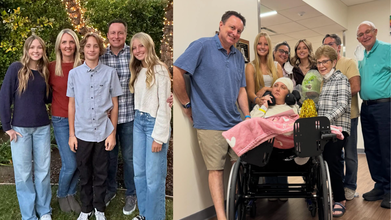
While Lori had two surgeries to remove the tumor in the period of next few months, the second surgery was invasive and caused her to lose control of her left side. Few days after, she had a stroke and was placed in a medically induced coma. She was in the hospital for 40 days. After she regained her strength, she returned home, and started radiation and chemotherapy. The treatment however made her more tired and impacted her speech. She was getting worse by every passing day.
Also Read: Law on Assisted Dying in Jersey Could Be Passed Soon After Draft Approval
It was in mid-November when Lori was again in the hospital, this time in the ER, and doctors discovered a brain infection and advised on surgery. "You feel like she's just being tortured. I'm not sure that the treatment for cancer in this situation is any better than the disease itself.”
She also suffered with a lung infection and pneumonia and was brought back in the hospital. She was finally brought home for hospice care.
What Is Glioblastoma?
As per MD Anderson Cancer Center, glioblastoma is the most common and most aggressive form of primary brain cancer. In US, every year, around 12,000 new cases are detected. All glioblastomas are classified as grade IV tumors, which means they contain the most abnormal looking cells that grow rapidly.
Glioblastoma develops from star-shaped brain cells known as astrocytes, which play a key role in nourishing the brain and shielding it from harmful substances in the bloodstream.
Astrocytes belong to a larger group called glial cells. These cells support the brain’s structure, supply nutrients, protect neurons, and help maintain a stable chemical balance in the brain.
The tumour most often forms near the front of the brain or close to its lower regions, though it can arise anywhere. The frontal lobe controls speech, movement, behaviour, and memory, while the temporal lobe is involved in memory formation, language, and processing sensory information such as sound and sight.
Lehengas, Diets & Now Mounjaro: The New Must-Have For Indian Brides?

Indian brides are turning to Mounjaro to find a quick fix for their pre-wedding weight loss regimen. (Photo credit: AI generated)
Indian weddings are a global sensation for all the taam-jhaam—the outfits, the music, the madness, and the unmatched vibe. In an ever-evolving culture, several new trends become a part of the wedding buzz in India. At a time when weight-loss drugs are the talk of the town, it is no surprise that they, too, have joined the list of new must-haves for Indian brides. For many soon-to-be brides and grooms, the pressure to look a class apart is always high. Amid the madness of wedding preparations, brides and grooms often miss the gym—weight-loss drugs come to their rescue.
India's Mounjaro brides
Clinics in metropolitan cities like Delhi and Mumbai are introducing weight-loss treatments into their traditional pre-bridal and bridal packages. Bridal packages initially focused on hair care, skincare, hair styling, and grooming—but they have now expanded to include shots of Mounjaro, a popular weight-loss drug. Some wellness centres in the city have advertised that they offer customised programmes combining workout routines, nutrition, and medication to help clients achieve desired results.
Doctors have noticed a clear rise in such inquiries. Several specialists report that a significant portion of their patients seeking obesity treatments are engaged couples working within a fixed timeline. While medical professionals acknowledge this demand, many emphasise that such treatments should only be prescribed when medically appropriate, rather than purely for cosmetic reasons.
Read more: India To Strictly Inspect GLP-1 Drugs To Curb Misuse: Govt Flags Risks Amid Weight-loss Hype
The pressures of looking good at a wedding
Weddings in India are deeply rooted in tradition, elaborate, and often burdened by societal expectations around appearance. As a result, many resort to glycolic treatments, injections of Mounjaro, and sometimes even facial procedures for a bridal glow. However, weight-loss drugs serve a different purpose—they can boost a bride's confidence by helping her feel more comfortable in her own skin.
Others share similar experiences. Some individuals admitted that concerns about body image, often influenced by family expectations or societal standards, played a major role in their decision. In certain cases, weight became a factor in arranged marriage discussions, pushing individuals to seek faster solutions. However, most discontinued the injections shortly after their weddings.
Why are weight-loss drugs becoming so popular?
According to experts, the growing popularity of weight-loss drugs is linked to their increased availability. Globally, pharmaceutical companies have introduced their own versions of obesity treatments in India, and demand has risen drastically. At the same time, more affordable alternatives are being introduced by manufacturers to make these drugs accessible to a wider audience.
A word of caution
Despite the surge, experts warrant caution. Weight-loss drugs are intended to help clinically obese or significantly overweight individuals, as well as patients with type 2 diabetes and hypertension. These drugs are not meant to act as quick fixes for short-term aesthetic goals. Experts, therefore, stress the importance of using these drugs under expert guidance and supervision.
Misuse of weight-loss drugs
Doctors are also concerned about the misuse of weight-loss drugs—health authorities have started monitoring the sale and promotion of such medication, especially the cheaper versions on the market. Experts say that relying solely on these drugs instead of making essential lifestyle changes may not lead to sustainable results. For many, the appeal lies in convenience—maximum benefits with minimal effort. While these drugs may fit into a hectic routine, doctors continue to emphasise the need for a balanced approach to weight loss.
UK NHS To Offer Weight-loss Jab Wegovy For People At Risk Of Heart Attacks, Stroke

Credit: iStock
The UK National Health Service (NHS) is soon expected to roll out free weight-loss Wegovy jab to over a million people in England at risk of heart attacks and strokes.
The move is based on the recommendation of the National Institute for Health and Care Excellence (NICE), which said that overweight people with heart problems, or serious circulation problems in their legs, should have the weekly jab "as an extra layer of protection".
Developed by Danish drugmaker Novo Nordisk, Wegovy is primarily an antidiabetic medication used to treat Type 2 diabetes. People receiving the weight-loss drug Wegovy sustained weight loss for up to four years.
"We know that people who have already had a heart attack or stroke are living with real fear that it could happen again. The evidence from the clinical trial is compelling. It showed that people taking semaglutide alongside their existing heart medicines were significantly less likely to have another heart attack or stroke,” said Helen Knight, from NICE.
"Today's decision gives thousands of people in that situation an extra layer of protection, on top of the medicines they are already taking," she added.
Also read: Foundayo: US FDA Approves Eli Lilly’s GLP-1 Weight Loss Pill
Wegovy and Heart Risk
A November 2023 study, published in the New England Journal of Medicine, elicited a randomized clinical trial of tens of thousands of people, in which Wegovy - alongside existing heart medicines - was linked to a 20% reduced risk of heart attacks and strokes.
Importantly, benefits were seen early in the clinical trial, before significant weight loss occurred, suggesting the drug works directly on the heart and blood vessels, not just through weight loss, as per the NICE
The BBC reported that the UK faces a significant heart disease burden, and every year:
100,000 people get hospitalized due to heart attacks,
100,000 people experience a stroke
350,000 people live with peripheral arterial disease.
Sharon Hodgson, the health minister, said weight-loss drugs were a “gamechanger” and giving them to people at risk of heart attacks and strokes would be a “lifesaver”.
Also read: India To Strictly Inspect GLP-1 Drugs To Curb Misuse: Govt Flags Risks Amid Weight-loss Hype
Wegovy Is Top Weight-Loss Choice for US Teens
Only Wegovy has been approved by the US FDA for children aged 12 and older who are living with obesity. Since the approval in late 2022, the prescriptions have surged.
According to health data company Truveta, which reviewed medical records from 30 US health systems, prescriptions for Wegovy among teens jumped by 50 percent in 2024—rising from 9.9 per 100,000 adolescents in 2023 to 14.8 per 100,000 in 2024.
The first quarter of 2025 showed another increase, with the rate reaching 17.3 per 100,000.
Measles Again On The Rise Globally: Is India At Risk?
Credit: Canva
From Europe to Africa to North America to Australia, measles cases are rising across continents. The main driver: declining vaccination rates and immunity gaps.
As of March 26, 1,575 confirmed measles cases were reported in the United States in 2026, according to the latest data published by the US Centers for Disease Control and Prevention.
There have been 16 new outbreaks reported in 2026, and 94% of confirmed cases (1,483 of 1,575) are outbreak-associated (359 from outbreaks starting in 2026 and 1,124 from outbreaks that started in 2025). In 92 percent of cases, measles occurred among those with no vaccination.
Mexico's Ministry of Health recently reported a significant increase in measles cases in 2026, with more than 7,400 confirmed infections recorded since the beginning of the year.
A PAHO report in February shared a 43-fold increase in measles cases across seven countries — Bolivia, Canada, Chile, the United States, Guatemala, Mexico, and Uruguay — with no deaths reported.
Active outbreaks have been reported in London and Birmingham in the UK. In Europe, recurring outbreaks have been reported in Italy, Spain, France and Romania.
A measles alert has also been issued for the Gold Coast area after two cases were confirmed to have been contracted by people overseas and then brought home to Australia.
Earlier this week, Bangladesh reported a measles outbreak that reportedly led to the death of at least 38 children, leading health authorities to roll out a vaccination program for younger children in a bid to halt the outbreak.
Official data show that in 2026, more than 2,300 children were admitted to hospital with suspected measles, of whom 684 have tested positive so far.
Amid these outbreaks, HealthandMe spoke to public health experts to understand whether these cases can increase the risk of the highly contagious disease in India. While India has a better vaccination rate with the Measles and Rubella (MR) Vaccine, some pockets in rural areas may increase the risk.
"In India, the catch-up vaccination drive named Mission Indradhanush was intensified in 2024, successfully rectifying the vaccination gaps that occurred during the COVID pandemic. But the disease can still spread among pockets of the population where vaccination coverage remains low,” Dr. Rajeev Jayadevan, Ex-President of IMA Cochin and Convener of the Research Cell, Kerala, told HealthandMe.
"The proven method to stop measles is to build an 'immunity wall' within the community—by vaccinating at least 95 percent of people—so that the virus repeatedly runs into 'road blocks' and eventually dies out, instead of getting a free ride infecting everyone. When vaccination coverage drops due to many reasons, outbreaks happen, and complications follow," he added.
Also read: Measles In Oahu Visitor Sparks Exposure Risk In Hawaii: Report
What Is Measles?
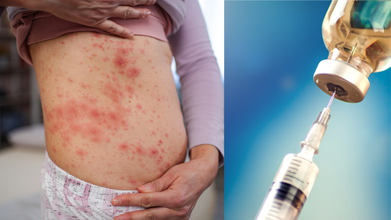
Measles is a highly contagious virus that spreads through direct contact or through the air when an infected person coughs or sneezes.
Symptoms typically appear seven to 14 days after exposure and may include:
high fever,
cough,
runny nose,
red eyes,
rashes across the body.
Measles And Vaccination
Measles is a vaccine-preventable disease that can cause devastating complications, including blindness, pneumonia, encephalitis, and long-term immune dysfunction.
The reports of deaths from Bangladesh indicate the presence of a significant 'immunity gap,” allowing the virus to take hold, said Dr. Jayadevan. He added that among the unvaccinated, measles is one of the most contagious viruses on Earth—spreading even faster than COVID-19.
Dr Neha Rastogi, Senior Consultant - Infectious Diseases, Fortis Gurugram, told HealthandMe that although the Measles-Rubella (MR) vaccination campaign has played a major role in reducing cases and preventing large-scale outbreaks by building community immunity in India, "there is still some risk of Measles spread in India".
"Although cases have declined significantly, outbreaks can occur due to gaps in vaccination coverage, especially in rural or densely populated areas. Migration, low awareness, and missed immunization doses also contribute to the risk,” she added.
How Does Measles Spread
"Measles spreads rapidly because it is a highly contagious viral disease transmitted through respiratory droplets when an infected person coughs or sneezes," Dr Rastogi told HealthandMe.
She noted that crowded living conditions, poor ventilation, and low immunity levels increase the risk of transmission.
"Lack of awareness, malnutrition (especially vitamin A deficiency), and incomplete or missed vaccination also contribute to outbreaks. The virus can remain active in the air or on surfaces for several hours, making it easy to infect others,” the infectious disease expert said.
The CDC noted that measles transmission may also occur during travel.
"Travelers with fever and other overt signs of transmissible illness, such as coughing or malaise, should be strongly encouraged to delay travel while symptomatic,” it said.
Dr. Jayadevan said that the rising global measles cases are "a reminder that no one is safe until everyone is safe. India must strive to identify those pockets where vaccination coverage is low and undertake intensive corrective measures, taking the community into confidence through effective awareness campaigns".
How To Stay Safe
To safeguard against measles, individuals should ensure timely vaccination, especially for children.
Maintaining good hygiene, such as frequent handwashing and covering the mouth while coughing or sneezing, helps reduce transmission.
Avoiding close contact with infected individuals and ensuring proper nutrition to boost immunity are also important.
Public awareness and community health programs play a crucial role in prevention.
- Follow Us :


© 2024 Bennett, Coleman & Company Limited