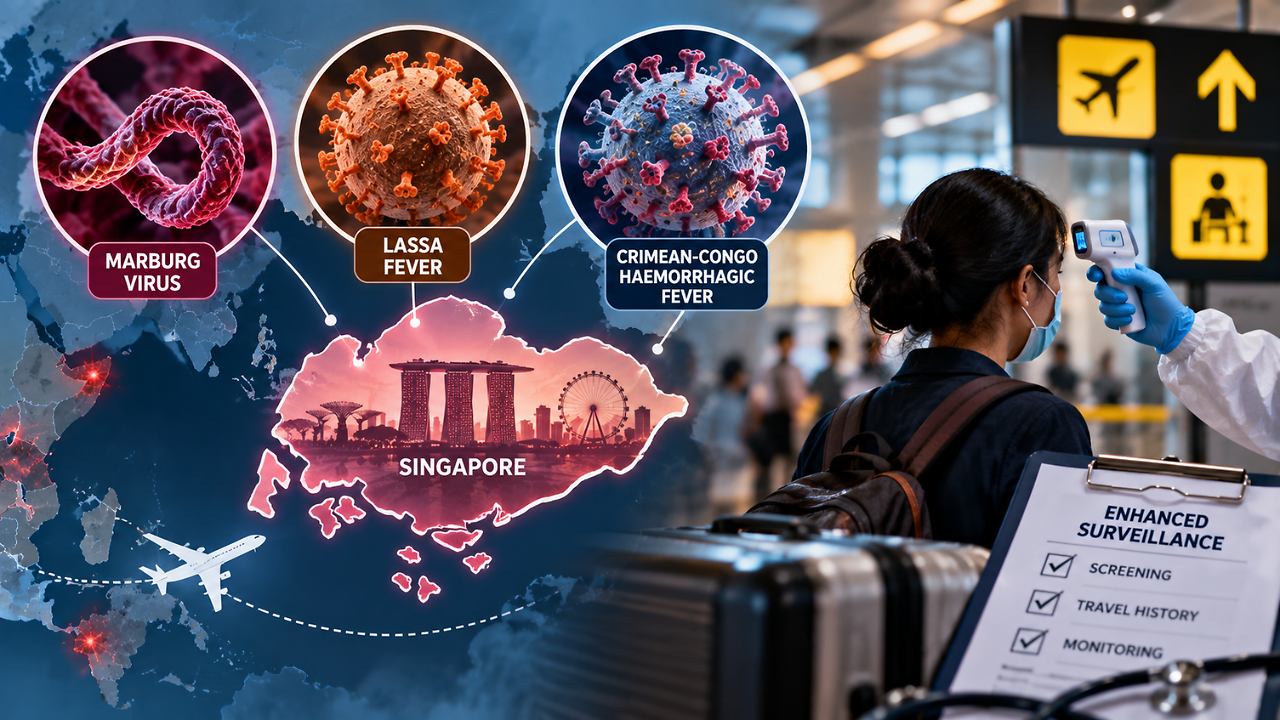
Singapore will increase surveillance of three deadly infectious diseases from October 31, needing doctors and other healthcare professionals to report all suspected and confirmed cases to the authorities.The diseases include Marburg virus disease, Lassa fever and Crimean-Congo haemorrhagic fever (CCHF). All the three can lead to severe illness, and in extreme cases, they can even be fatal. However, Singapore's Communicable Diseases Agency (CDA) has said the current risk posed by these diseases to the country remains low.So Why Is Singapore Monitoring These Three Diseases?The move comes after amendments to Singapore's Infectious Diseases Act in September. The three diseases will be added to the list of prescribed infectious diseases, making notification of suspected and confirmed cases a legal requirement.The authorities aim to detect these diseases earlier to foster a swift public health response, which includes isolation and tracing contacts.The CDA said it has been monitoring the three diseases for some time, “as all three diseases are viral haemorrhagic fevers that can cause severe illness and have the potential for human-to-human transmission”.A CDA spokeswoman told The Straits Times, “While there has been no change to the risk level from these three diseases, which currently remains low, they have been added to the IDA to strengthen our overall surveillance and preparedness efforts.”From October 31, doctors and laboratories will be legally required to notify the authorities of suspected as well as confirmed cases of the three diseases. The CDA said it continuously monitors infectious disease developments both locally and internationally.“As part of our preparedness efforts, CDA periodically reviews and updates the list of infectious diseases under the IDA to ensure that Singapore remains ready to respond to infectious disease risks,” the agency's spokeswoman said.The three diseases will also be added to Singapore's list of “dangerous infectious diseases”, bringing the total to eight. The five already listed are Ebola disease, Middle East respiratory syndrome coronavirus infection (MERS-CoV), plague, severe acute respiratory syndrome (SARS) and yellow fever.Also read: People With Rare Diseases Have Higher Recorded COVID-19 Rates: UK Study Based On 62.5 Million PeopleMore About The Three Diseases Marburg virus disease, Lassa fever and Crimean-Congo haemorrhagic fever belong to a group of viral illnesses that can cause severe complications, including bleeding and organ complications in some patients. Their routes of transmission differ, making timely diagnosis, reporting and anti-spread measures crucial.According to the World Health Organization (WHO), there are currently no approved vaccines or specific treatments for any of the three diseases, but vaccine development is under way for Lassa fever and Marburg virus disease. The diseases also differ in their geographical distribution, typical severity and how they spread.Crimean-Congo Haemorrhagic FeverCrimean-Congo haemorrhagic fever is mainly transmitted through bites from infected ticks or contact with infected livestock. It can also spread through exposure to the blood or other bodily fluids of an infected person.Symptoms can begin suddenly and include fever, muscle pain, dizziness, sore eyes and sensitivity to light. In severe cases, patients may develop liver, kidney or lung failure. According to WHO, the fatality rate can be as high as 40%.Also read: GLP-1 Drugs May Lower Risk Of Heart Complications, Infections After SurgeryLassa FeverLassa fever is mainly found in parts of West Africa. People can become infected through contact with food or household items contaminated with the urine or faeces of infected rodents. Human-to-human transmission can also occur through direct contact with an infected person's blood or bodily fluids.Most infections cause no symptoms or only mild illness. Symptoms can include fever, sore throat, muscle pain, nausea, vomiting and diarrhoea. Severe cases may present with facial swelling, bleeding and low blood pressure.The overall fatality rate is at around 1%, but it can rise significantly among patients hospitalised with severe illness.Lassa fever can also have serious consequences during pregnancy. According to the information cited by The Straits Times, foetal death rates can exceed 80% in the third trimester, while maternal death rates can exceed 30%.Hearing loss is another possible complication. Up to 25% of patients may experience hearing loss after recovering from the infection, and many do not regain their hearing. Marburg Virus DiseaseMarburg virus disease is a rare but severe illness. Egyptian fruit bats are considered its natural reservoir, and infection can occur after exposure to infected animals or environments contaminated by them.The disease can also spread between people through direct contact with the blood or other bodily fluids of an infected person, or through contaminated materials.Symptoms often begin with sudden high fever, severe headache and muscle aches. Some patients develop bleeding, confusion and other serious complications. The fatality rate is around 50%, according to the WHO.