
- Health Conditions A-Z
- Health & Wellness
- Nutrition
- Fitness
- Health News
- Ayurveda
- Videos
- Medicine A-Z
- Parenting
Measles Alert Issued After Exposure At Two Major US Airports: All You Need To Know

Credits: Canva
New Jersey health authorities have issued an alert for travelers who passed through Newark Liberty International Airport on December 19, warning of a possible measles exposure.
According to the state Department of Health, an infected passenger who does not live in New Jersey traveled through at least two airport terminals that day. Officials said anyone who was in Terminal B around 7 a.m. or Terminal C around 7 p.m. may have been exposed to the highly contagious virus. Authorities do not know where the individual was during the hours between those times.
As per NBC News, health officials have issued warnings about possible measles exposure for travelers passing through Boston and Denver.
Measles Alert Issued After Exposure At Two Major US Airports
People who were exposed could begin showing symptoms as late as January 2, as per NBC News. Health officials are urging anyone who believes they may have been exposed or who develops symptoms to contact their local health department or healthcare provider before visiting a clinic or hospital.
Officials noted that special arrangements can be made for medical evaluation to reduce the risk of spreading the virus to other patients and healthcare workers.
Measles Symptoms and Health Risks
Measles typically begins with a high fever, cough, runny nose, and red, watery eyes. A rash usually appears three to five days after symptoms start. It often begins as flat red spots along the hairline and face, then spreads downward to the neck, torso, arms, legs, and feet.
In some cases, measles can lead to serious complications, including pneumonia and encephalitis. Pregnant individuals face added risks, such as miscarriage, premature delivery, or having a baby with low birth weight.
What Is Measles?
Measles (rubeola) is a highly contagious viral infection causing fever, cough, runny nose, red eyes, and a characteristic full-body rash, spread through air and surfaces, which can lead to severe, even deadly, complications like pneumonia or brain swelling, though it's preventable with the measles vaccine, as per Mayo Clinic.
The virus is extremely infectious, with one infected person potentially infecting up to 90% of unvaccinated close contacts, and remains contagious for hours in the air or on surfaces
How Measles Spreads
Measles spreads easily through the air when an infected person coughs or sneezes. The virus can remain airborne for up to two hours after the person has left the area. Infection can also occur through direct contact with mucus or saliva from someone who is infected.
Rising Measles Cases and Protection
New Jersey has reported 11 confirmed measles cases in 2025, compared with seven cases in 2024. Across the United States, cases have climbed sharply, reaching 2,012 across 44 jurisdictions as of December 23, the highest number reported since 1992.
State health officials are working with local agencies on contact tracing and outreach to alert those who may have been exposed. Individuals most at risk include those who are not fully vaccinated or who have never had measles.
The MMR vaccine, given in two doses, remains the most effective protection against measles, mumps, and rubella.
Can One Partner's Dementia Raise the Other's Risk? New Study Suggests An Interesting Link

Credit: AI
Do partners and spouses of those suffering from dementia face a higher risk of the disease themselves? A nationwide study involving more than 955,000 married adults has found that people whose spouse develops dementia may face a significantly higher risk of developing the condition themselves.
The study, published in JAMA Network Open, adds to growing evidence that dementia risk may not be influenced by genetics and lifestyle alone, but also by the shared environments, lifestyles and experiences couples build over decades.
How Was The Study Conducted?
Also read: Neurological Disorders Emerging As India's Next Major Public Health Challenge, Say Experts
Researchers analyzed health data from 955,105 married individuals in Taiwan to examine whether being married to someone with dementia influences a person's own likelihood of developing the disease.
The researchers found that spouses of people with dementia had a substantially higher risk of developing dementia themselves compared with those whose partners did not have the condition.
Among women, having a spouse with dementia was associated with a 74% higher risk of developing dementia (hazard ratio [HR] 1.74). Among men, the risk was 69% higher (HR 1.69).
The association remained consistent across different forms of dementia, including:
- Alzheimer's disease
- Vascular dementia
- Other types of dementia
The association appeared to be weaker among couples with higher household incomes or more children, suggesting that social and family support may help reduce some of the caregiving burden.
Dementia Is Not Contagious
Also read: Excessive TV Watching In Midlife May Shrink Brain Areas Essential For Memory, Study Finds
The findings do not suggest that dementia spreads from one spouse to another. Instead, researchers believe the increased risk is likely driven by several shared factors that accumulate over years of living together. These include:
- Similar dietary habits
- Shared physical activity patterns
- Common environmental exposures
- Cardiovascular risk factors such as diabetes and hypertension
- Psychological stress associated with caregiving
- Reduced social engagement and chronic emotional strain
Because married couples often share many aspects of daily life, they may also share health risks that influence cognitive ageing.
Is Caregiving A Factor?
Also read: Cannabis-Based Treatment Shows Promise In Easing Agitation In Dementia: New Clinical Trial
When one partner develops dementia, the other often becomes the primary caregiver. Caregiving can involve years of emotional stress, disrupted sleep, depression, social isolation and physical exhaustion.
Older research has shown that chronic stress may negatively affect brain health through hormonal, inflammatory and vascular pathways, potentially contributing to cognitive decline.
The authors wrote, "The association was evident on relative and absolute scales and varied by family and socioeconomic context."
They added that future studies should directly measure caregiving intensity, lifestyle factors and other shared pathways to better understand why spouses appear to face an elevated dementia risk.
The findings suggest that healthcare providers should pay attention not only to people diagnosed with dementia but also to their spouses. Experts say spouses may benefit from:
- Regular cognitive screening
- Mental health support
- Caregiver assistance programmes
- Stress management
- Maintaining physical activity and social engagement
- Managing blood pressure, diabetes and other cardiovascular risk factors
Early recognition of cognitive changes may allow interventions that help delay progression and improve quality of life.
Where You Live Matters Too
According to recent studies, various factors could influence your risk of developing dementia. Researchers from the University of Southern California studied health data from more than 214,000 adults across 21 countries.
They found that while many well-known dementia risk factors are universal, their impact can vary significantly depending on a person's country.
Previous research has estimated that nearly 45% of dementia cases could potentially be delayed or prevented by addressing modifiable risk factors, including controlling blood pressure, managing diabetes, staying physically active, treating hearing loss, avoiding smoking, and maintaining social life.
Could GLP-1 Weight Loss Drugs Help People Take Fewer Sick Days? New Study Says So
Credit: AI
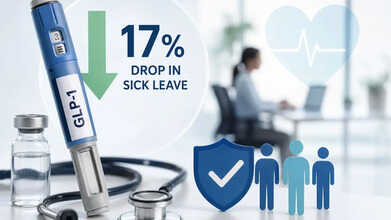
GLP-1 drugs widely used to manage and treat obesity and type 2 diabetes may also help people stay healthier at work. A new study finding that the medications were associated with a 17.3% reduction in absence due to sickness among employed adults.
The study, conducted by researchers from the University of Copenhagen, the University of Chicago, Duke University, and the ROCKWOOL Foundation, analyzed nationwide Danish health and employment records to examine whether GLP-1 treatment affects the conditions of labour market.
Researchers found that people who started GLP-1 therapy experienced significantly fewer episodes of medically certified sick leave lasting longer than 30 days compared with similar patients who began treatment later.
"We find that GLP-1 treatment reduces long-term sickness absence by 17.3% over four years," the researchers wrote in the working paper.
The reduction became more pronounced over time, increasing from around 0.8 percentage points in the first two years after treatment began to 1.1 percentage points during years three and four.
Benefits Of GLP-1 Drugs Beyond Weight Loss
Also read: Can Ozempic-Like GLP-1 Drugs Slow Aging, Boost Longevity?
GLP-1 receptor agonists, including Ozempic and Wegovy, have become best known for helping people lose weight. However, researchers say their benefits may extend well beyond weight loss. The study also found that patients receiving GLP-1 therapy had:
- Fewer emergency department visits.
- Lower use of cardiovascular medications.
- Reduced reliance on long-term sickness benefits.
Together, these statistics translated into estimated annual savings equivalent to 1.3% to 1.5% of an employed person's yearly income through fewer prolonged absences from work.
"Our findings suggest meaningful fiscal spillovers from GLP-1 treatment through reduced sickness absence," the authors said.
However, the researchers found no significant evidence that the medications increased overall employment, labor-force participation, or earnings during the four-year follow-up period.
How Can GLP-1 Drugs Reduce Sick Leave?
Also read: Novo Nordisk Launches Awiqli In India: All About The World's First Once-Weekly Insulin
The researchers believe the medications likely improve people's overall health enough to reduce serious illnesses that keep them away from work.
GLP-1 drugs work by mimicking a hormone called glucagon-like peptide-1, which helps regulate appetite, blood sugar and digestion. They are known to:
- Improve blood sugar control.
- Promote substantial weight loss.
- Lower the risk of cardiovascular complications.
- Reduce obesity-related health problems.
These health improvements may translate into fewer hospital visits and fewer prolonged medical absences.
Researchers Warn
The researchers cautioned that the findings should not be interpreted as evidence that GLP-1 drugs automatically improve workplace productivity.
The study was based on Danish national data, where healthcare access and paid sick-leave policies differ from those in countries such as the United States and India.
In addition, the study focused on patients prescribed GLP-1 medications for medical reasons, including obesity and type 2 diabetes, rather than people using the drugs primarily for cosmetic weight loss.
The findings add to a growing body of evidence suggesting GLP-1 drugs may offer benefits beyond managing diabetes and obesity. Previous research has linked these medications to lower risks of heart disease, kidney disease, obstructive sleep apnea, and certain liver conditions.
If confirmed across different countries, the latest findings suggest that the drugs could also provide broader economic benefits by reducing long-term sickness absence and easing the burden on healthcare systems.
Is Your Allergy Medicine Safe? FDA Recalls Antihistamine Tablets Over Life-Threatening Contamination Concerns
Credit: AI
Millions of Americans rely on cetirizine, the generic version of Zyrtec, to keep seasonal allergies at bay. But a recent nationwide recall has raised concerns after some tablets were found to be contaminated with another medication, prompting FDA to warn consumers to check their medicine bottles.
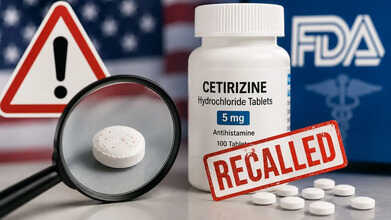
The US Food and Drug Administration (FDA) has announced that India-based company Unique Pharmaceutical Laboratories, a division of J.B. Chemicals & Pharmaceuticals Ltd., is voluntarily recalling four lots of Cetirizine Hydrochloride Tablets USP 5 mg because of potential cross-contamination with ranitidine, a medication used to treat heartburn and stomach ulcers.
Why Was The Allergy Medicine Recalled?
According to the FDA, the recall was initiated after a pharmacy technician noticed unusual tablets. Some cetirizine tablets had red dots or discoloration, which led to a proper investigation. The company later confirmed that certain tablets had been cross-contaminated with ranitidine during manufacturing.
The FDA, in its recall announcement, said, "Unique Pharmaceutical Laboratories is voluntarily recalling four lots of Cetirizine Hydrochloride Tablets USP 5 mg to the consumer level due to cross contamination with Ranitidine."
Although no adverse events have been reported so far, the company is recalling the medication as a precaution because taking an unintended drug could pose health risks for certain patients.
Why Is Cross-Contamination A Grave Concern?
Cross-contamination occurs when traces of one medication accidentally end up in another drug during manufacturing or packaging.
In this case, people expecting to take an allergy medicine could unknowingly consume ranitidine which could lead to adverse effects.
While ranitidine was once commonly used to treat acid reflux and heartburn. The medication decreases the amount of acid made in the stomach, according to MedlinePlus and the U.S. National Library of Medicine.
The accidental exposure is particularly concerning for people who are hypersensitive to ranitidine or its ingredients.
According to the FDA, these individuals could experience reactions ranging from mild allergic symptoms to potentially life-threatening conditions.
Also read: Common Antidepressant May Ease One Of Long COVID's Debilitating Symptoms, Landmark Trial Suggests
Which Medicines Are Affected In The Recall?
Consumers should check the lot numbers listed in the FDA recall notice to determine whether their medication is affected. The recall involves:
- Product: Cetirizine Hydrochloride Tablets USP 5 mg
- Package: 100-count HDPE bottles
- Distributor: Rising Pharma Holdings Inc.
- Expiration: October 2028
- National Drug Code No. – 16571-401-10
- Lot numbers – GY825029, GY825030, GY825031, GY825032
What Are The Potential Health Risks?
Also read: Wildfire Smoke Could Hurt IVF Success; Here's Why Doctors Say You May Want To Delay Your Appointment
Although Unique Pharmaceutical Laboratories said it has not received any reports of adverse reactions related to the recalled tablets, the contamination could pose a serious risk for people who are allergic or hypersensitive to ranitidine.
According to the recall notice, individuals who unknowingly take the contaminated tablets could experience anaphylaxis, a severe and potentially life-threatening allergic reaction that requires immediate medical attention. Symptoms of anaphylaxis may include:
- Difficulty swallowing
- Loss of consciousness
- Hypotension (low blood pressure)
- Dyspnea (shortness of breath)
- Angioedema (sudden swelling beneath the skin)
- Swelling of the throat or face
- Pruritus (itching)
- Urticaria (hives)
What Should You Do If You Have The Recalled Medication?
Consumers who have the affected cetirizine tablets should stop using the product and check whether their bottle belongs to one of the recalled lots. Anyone who develops symptoms like swelling of the face or throat, difficulty breathing or swallowing, hives, or dizziness after taking the medication should seek immediate medical attention.
- Follow Us :


© 2024 Bennett, Coleman & Company Limited