
- Health Conditions A-Z
- Health & Wellness
- Nutrition
- Fitness
- Health News
- Ayurveda
- Videos
- Medicine A-Z
- Parenting
Measles Outbreak In UK: Virus Spreads Among Unvaccinated Children In London

Credits: Canva
Measles Outbreak In UK: A measles outbreak has been confirmed in London's north east area, noted the BMJ. As per the medical journal, the outbreak is among the unvaccinated children. The medical journal also noted that there have been 96 laboratory confirmed cases of measles in England between January 1 to February 9, 2026 and more than a third, which is 34 cases are from Enfield. BMJ also noted that Enfield is also the area with lowest vaccination rates.
As per the data by the UK Health Security Agency or the UKHSA, only 64.3% of 5 year-olds Enfield received both doses of the measles, mumps, and rubella or the MMR vaccine in 2024 and 2025. The majority (74 of 96, 77%) of measles cases confirmed in the UK so far this year were in children aged 10 and under. Some 64% of cases have been in London, 26% in the West Midlands, and 4% in the East Midlands.
Read: Unique Symptoms Of Measles In 2026 And How Long Does The Infection Last?
Measles Outbreak In UK: Previous Cases And How It Made A Comeback
Last month, the World Health Organization revoked the United Kingdom’s measles elimination status after the virus was found to be circulating continuously for over a year.
In 2025, a child in Liverpool died after contracting measles, prompting renewed pressure on the NHS and government to address its return. England recorded 959 laboratory-confirmed cases that year. Although lower than the 2,911 cases in 2024, it still marked the highest annual total since 2012.
Vaccine uptake has steadily declined over the past 12 years. Only 84.4% of children in the UK receive both doses of the MMR vaccine by age five, far below the 95% coverage needed for herd immunity.
Why Has Measles Return To The UK?
In late 2023, measles outbreaks were reported in the UK, which led to a surge in cases in 2024. Vaccination uptake at the end of 2024 was 92% for the first dose, however, for the second dose, it was below 82%.
Dr Vanessa Saliba, consultant epidemiologist at UKHSA said, "Infections can return quickly when childhood vaccine uptake falls - measles elimination is only possible if all eligible children receive two MMRV doses before school. The NHS is making vaccination easier, including offering the second MMRV dose earlier at a new 18-month appointment to boost uptake and support elimination goals."
Read: UK Loses Measles Elimination Status: Why Is This Disease Making A Comeback?
She also noted that children and adults must get vaccinated as NHS also offers catch-up jabs.
Dr Baharat Pankhania, from the University of Exeter, as reported by the BBC said, "Measles is an infection that can be prevented by vaccine - and it's extremely concerning that in the UK we now have pockets of low or no vaccine uptake. We urgently need to remedy this situation." Pankhania also noted that there is a need to make the access to GPs easier, and for an effort that could immunize babies in their homes and counter wrong information around vaccine safety.
UK Faces Shortage Of This Common Pain Medicine Till June

Credits: Canva
A shortage of prescription-strength co-codamol is set to continue until at least June, leaving thousands of chronic pain patients across the UK uncertain about how they will manage daily symptoms. The Scottish government has confirmed limited availability of the strongest 30/500mg tablets, while health boards warn alternative medicines may not fully cover demand.
The shortage is linked to delays in authorization by the Indian government for exporting key codeine-based ingredients needed to manufacture the drug.
Patients Told To Taper Use
Many patients say they first learned of the disruption through calls from local health services. Some have already been advised to slowly reduce their dose to avoid withdrawal symptoms.
Jocelin Harrison, who has relied on the medication for more than three decades after five spinal surgeries, said she was contacted by NHS Lanarkshire and instructed to cut down gradually.
“The only advice I’ve been given so far was to reduce the tablets and try to manage my withdrawal symptoms,” she said, as reported by the BBC.
“I was not offered any other advice or possible replacement pain killers and it’s a great worry for me and other chronic pain sufferers throughout Scotland and the UK.”
Doctors warn that abruptly stopping co-codamol can trigger headaches, nausea, sweating and a sudden increase in pain, particularly for long-term users.
Why Does This Drug Matter So Much?
Co-codamol combines paracetamol with the opioid codeine and is commonly prescribed after surgery or for persistent musculoskeletal conditions. It comes in three strengths: 8mg, 15mg and 30mg of codeine with 500mg paracetamol.
The lowest strength is available over the counter, but the stronger forms require a prescription and are widely used by patients with chronic pain. Because codeine can cause dependence, tapering rather than stopping suddenly is considered essential.
Health boards say supplies of alternative strengths are also limited, making it difficult to simply switch everyone onto another version.
Guidance issued locally states patients, except those undergoing cancer treatment, should gradually reduce usage until stopping completely. No new patients will be started on the medication until supplies stabilize.
What Are The Alternatives?
NHS Grampian has urged pharmacists to prioritize existing stock carefully. However, it stopped short of telling patients to immediately begin cutting back, highlighting variation in local guidance.
Officials acknowledge substitutes exist, but warn they cannot meet the expected rise in demand from patients switching medicines.
Authorities Now Work On Solution
Scotland’s chief pharmaceutical officer Alison Strath said the issue ultimately sits with UK-wide medicine supply systems but confirmed discussions are ongoing.
“Supply issues are expected until June 2026 and we are in regular contact with the UK government to seek assurances they are doing all they can to resolve this,” she said, adding that affected patients will be contacted directly about alternative treatment options.
The UK Department of Health and Social Care said most medicines remain readily available and manufacturers are working to restore production.
The shortage highlights the global nature of generic drug manufacturing. Medicines such as co-codamol 30/500mg are typically produced using ingredients sourced from India and China, meaning regulatory or production delays overseas can quickly affect patients at home.
For now, patients are being urged not to contact GP practices unless advised and to wait for further instructions from their health providers.
India AI Summit: Union Health Minister Nadda Launches SAHI And BODH Initiatives To Boost AI In Healthcare
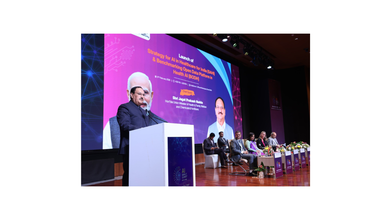
The Union Minister of Health and Family Welfare, JP Nadda, today launched two key national initiatives -- the Strategy for Artificial Intelligence in Healthcare for India (SAHI) and the Benchmarking Open Data Platform for Health AI (BODH) to boost the role of AI in the country's healthcare ecosystem.
The initiatives, launched at the India AI Summit at Bharat Mandapam, in the national capital, are aimed at promoting safe, transparent, and accountable AI in healthcare. It will also help strengthen the digital health ecosystem for equitable healthcare access.
What is SAHI and BODH?
SAHI is a national guidance framework to enable the safe, ethical, evidence-based, and inclusive adoption of AI across India’s healthcare system.
It aims to provide strategic direction on governance, data stewardship, validation, deployment, and monitoring of AI solutions, while supporting States and institutions in responsible adoption aligned with public health priorities.
"SAHI is not merely a technology strategy but a governance framework, policy compass, and national roadmap for the responsible use of AI in healthcare,” said Nadda.
He stated that SAHI will guide India in leveraging AI in a manner that is ethical, transparent, accountable, and people-centric. Nadda also emphasized that SAHI provides a structured framework for collaboration, ensuring that innovation flourishes while public interest remains paramount.
The second initiative, BODH, was developed by the Indian Institute of Technology Kanpur in collaboration with the National Health Authority. It is a privacy-preserving benchmarking platform that enables rigorous evaluation of AI models using diverse, real-world health data without sharing underlying datasets.
As a digital public good under the Ayushman Bharat Digital Mission, it is designed to strengthen trust, transparency, and quality assurance in Health AI deployment.
"The collaboration between Government and academia has led to the development of BODH -- the Benchmarking Open Data Platform for Health AI -- which provides a structured mechanism for testing and validating AI solutions before deployment at scale,” said Nadda.
Nadda reiterated that AI solutions must be rigorously evaluated for performance, reliability, and real-world readiness. Together, SAHI and BODH represent India’s commitment to building a trustworthy, inclusive, and globally competitive health AI ecosystem grounded in innovation, responsibility, and public trust.
AI An Indispensable Enabler to Viksit Bharat
Earlier, delivering the keynote address at a session themed “Innovation to Impact: AI as a Public Health Game-Changer”, at the Summit, Anupriya Patel, Union Minister of State for Health and Family Welfare, highlighted AI as an "All-Inclusive Intelligence".
She also emphasized AI's potential in addressing "health inequities across the country".
Patel called technology -- particularly AI "an indispensable enabler" in India's race towards the vision of a Viksit Bharat by 2047.
She highlighted the potential role of AI on India’s vast and diverse population, the rural–urban divide, and the dual burden of communicable and non-communicable diseases, which present unique challenges.
She also noted that AI has been integrated across the entire continuum of healthcare -- from disease surveillance and prevention to diagnosis and treatment.
H3N2 Not Just Common Cold, Experts Say Do Not Self-Medicate

Credit: Canva
While the national capital is seeing a significant rise in H3N2 Influenza A cases, experts explained that it's not just the common cold and people must not try to self-medicate.
Speaking to Health And Me, multiple experts stressed the need to treat the virus properly, as its symptoms can last longer and potentially lead to pneumonia.
What Is The H3N2 Virus?
H3N2 is a subtype of the Influenza A virus that causes seasonal flu. The symptoms are often stronger and more persistent, with many patients reporting prolonged fatigue, cough, breathing difficulty, and slower recovery.
It is highly contagious, spreading via respiratory droplets (coughing/sneezing) and contaminated surfaces. The symptoms usually last 5–7 days, with treatment focusing on rest and symptom management.
Dr. Mohit Saran, Consultant - Internal Medicine and Diabetologist, Manipal Hospital, Gurugram, told this publication: “H3N2 is not just a common cold. While symptoms may not appear instantly, they can lead to high fever, constant cough, body pain, and breathing issues. In some people, this can also increase the risk of pneumonia or the need for hospitalization if not managed early.”
The experts attributed the surge in the disease to factors such as changing weather, fluctuating temperatures and reduced immunity.
Who Is At The Highest Risk For H3N2?
Children, youngsters, senior citizens, pregnant women and people with low immunity or with conditions such as asthma, diabetes, or heart problems are more vulnerable to H3N2. Health care professionals and people who are exposed to crowded places may also be affected by this disease.
Dr. Atul Gogia, Head of Infectious Diseases, Sir Ganga Ram Hospital, told Health and Me that the H3N2 virus "predominantly affects elderly people and those who have comorbid illnesses".
"We need to be especially careful because this illness predominantly affects individuals with comorbid conditions, the elderly, and those who are more vulnerable to developing complications that may require hospitalization,” he said.
Why Does H3N2 Last Longer Than The Common Flu?
Symptoms of H3N2 infection can last for two to three weeks, with a lingering dry cough and fatigue being common.
The virus often affects the lower respiratory tract, leading to more intense coughing and breathing discomfort. Young children, older adults, and individuals with chronic health conditions are at higher risk of complications.
"H3N2 is considered more infectious because of its ability to mutate quickly and adapt to the human host. This high mutation rate allows the virus to evade the immune system more effectively and can lead to more severe outbreaks. It spreads easily through respiratory droplets, direct contact, and contaminated surfaces,” explained Dr. Manisha Arora, Director - Internal Medicine at the CK Birla Hospital(R), Delhi told HealthandMe
"Frequent changes in its surface proteins, a process known as antigenic drift, make it harder for the body to recognize and fight the virus, which can result in more hospitalizations and, in severe cases, increased mortality,”
How Can The Disease Be Prevented?
H3N2 can be prevented through regular handwashing, wearing masks in crowded places, avoiding close contact with people who are sick, and avoiding self-medicating. Flu vaccination, timely medical consultation for long-term fever, and adequate rest help reduce the risk and further spread of the condition.
The experts recommended that all adults above 18 consider annual flu vaccination ideally in August or September, unless they are currently experiencing flu-like symptoms.
Maintaining good hygiene, eating nutrient-rich foods, staying hydrated, and following healthy habits can help boost immunity.
- Follow Us :


© 2024 Bennett, Coleman & Company Limited